
Shifting the balance – Mares’ hot streak puts spotlight on weight allowance
The results of Australia’s best sprint races are trending in a way that promises to reignite a debate about the machinations of a weight scale that has been the cornerstone of racing around the world for more than two centuries.
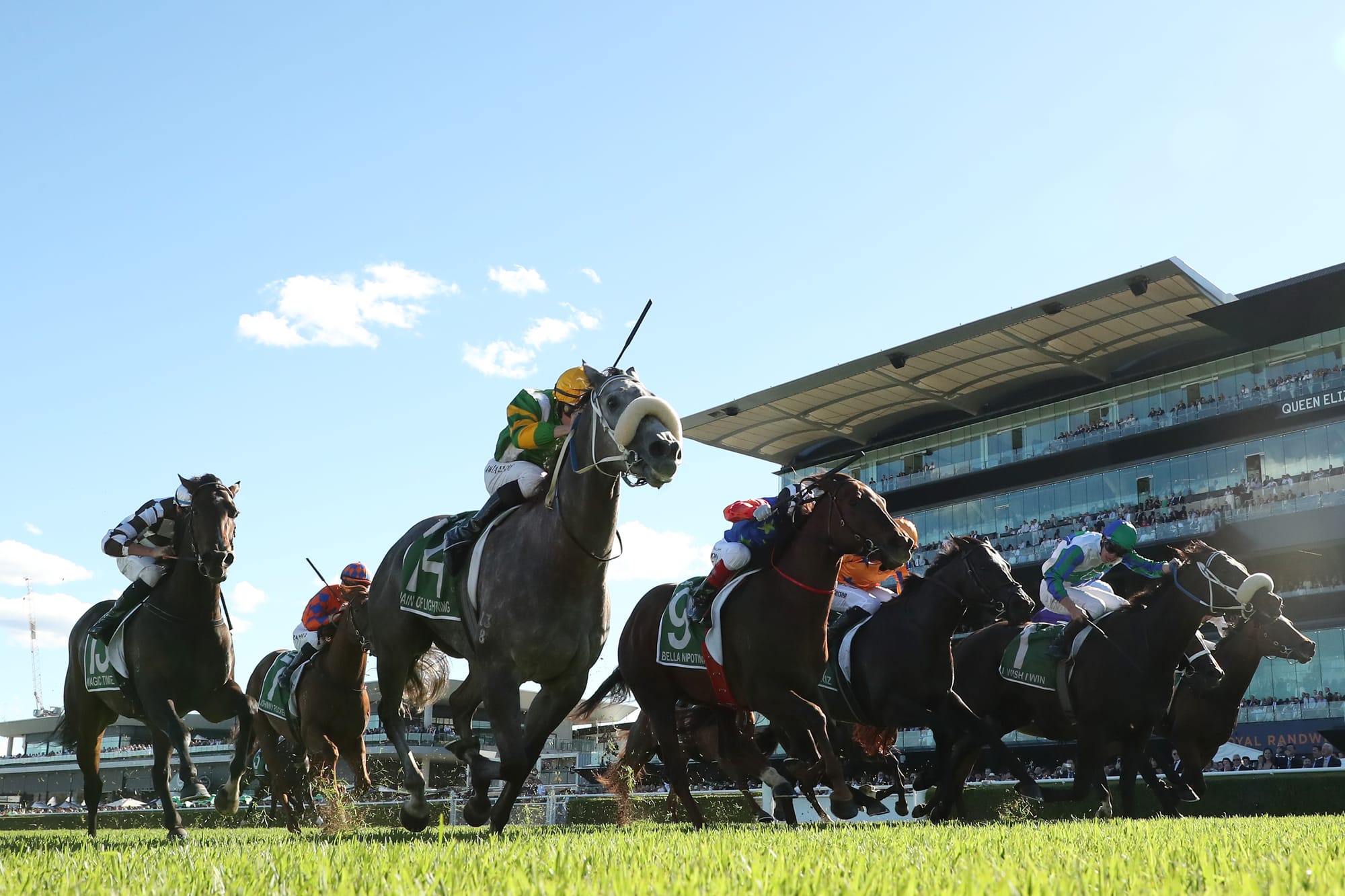
Mares have captured all but three of the 11 Group 1 sprint races up to 1200 metres open to all-comers in Australia so far in 2023/24.
Certainly, this statistic has been bolstered by the supremacy of the New Zealand mare Imperatriz and her victories in the Moir Stakes, the Manikato Stakes, the Champions Sprint, the Lightning Stakes and the William Reid Stakes.
But it would be imprudent to ignore the contributions of Chain Of Lightning (TJ Smith Stakes), Benedetta (The Goodwood) and Zapateo (The Galaxy) to a streak that might well run through the Queensland winter carnival.
Include Lady Laguna’s Canterbury Stakes (1300m) success and Magic Time’s win in the All Aged Stakes (1400m) on a bottomless Randwick track and the merit or otherwise of Australia’s concession for mares and the weight-for-age scale in general are up for discussion.
Beyond our sprints, mares have also taken a lead role, thanks to Pride Of Jenni’s autumn middle-distance daredevil tactics.
The shift in power during 2023/24 could continue in the Doomben 10,000 on Saturday.
More than 50 per cent of the entries are female, comprising four race mares and one filly.
The representation includes Chain Of Lightning and Bella Nipotina, mares who have secured open Group 1 wins during their careers and it won’t be a shock if they do it again in Brisbane.
The 2kg allowance given to Australian female racehorses over their male counterparts is at the heart of any discourse on the subject of mares excelling.
It has been for most of this century: from the exploits of Sunline to Makybe Diva’s Melbourne Cup three-peat to Black Caviar’s unblemished career.
And then there was Winx, the greatest of them all.
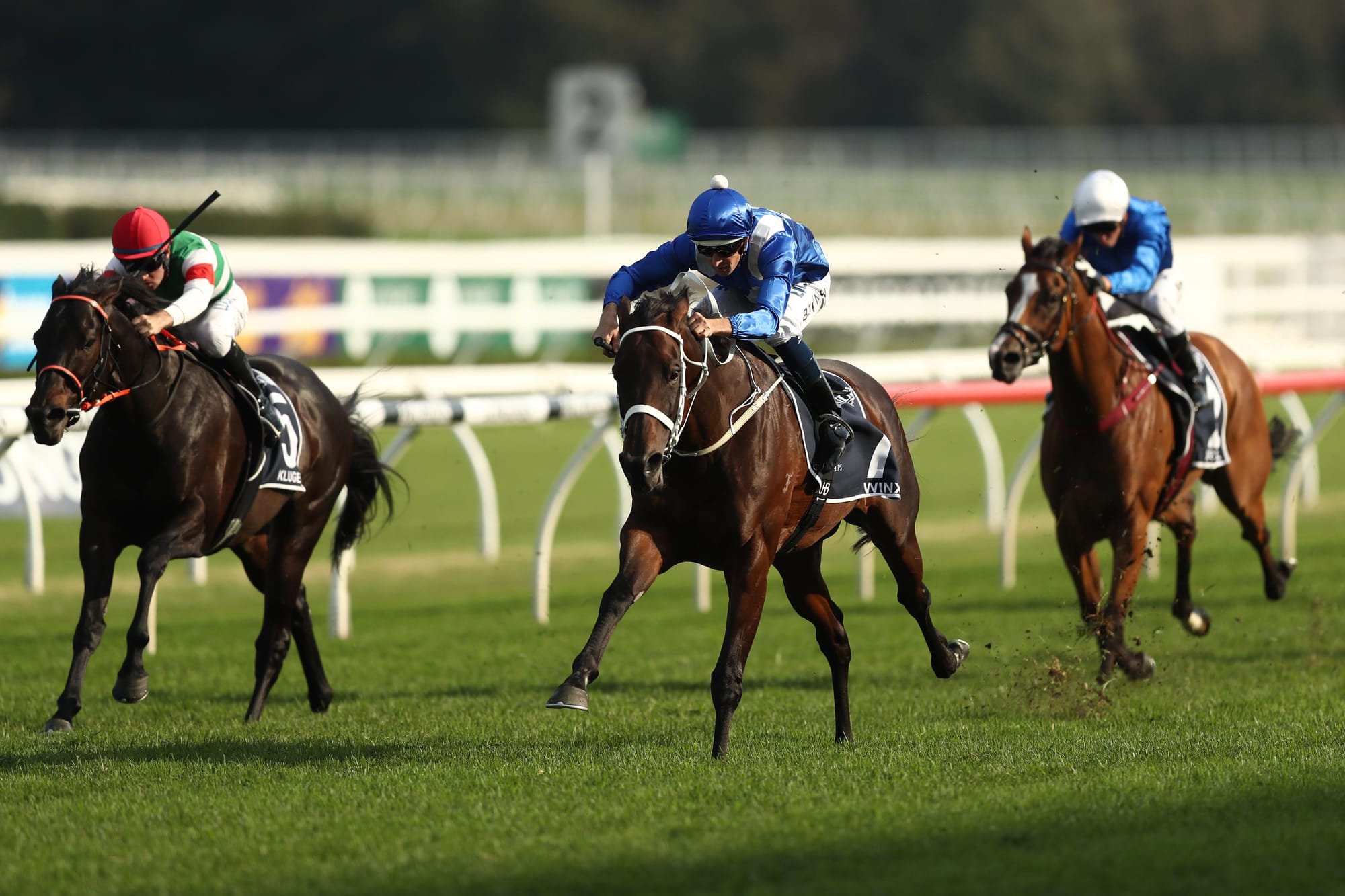
The allowance varies slightly between countries, but these tweaks are nevertheless based on a weight-for-age scale that was first implemented in the UK in 1860 and remains the foundation for handicapping worldwide.
So, what are we dealing with here? A potential revolution in Australian racing or an atypical set of results.
Recency bias is obviously an overriding factor in this so what would a much larger sample of results show when it comes mares matching it with colts, entires and geldings in Australia’s most important races?
One of Australia’s foremost rating authorities says any study about the impact a 2kg mares’ allowance has on modern-day racing across the board should be compiled without taking into account the extraordinary achievements of Winx and Black Caviar.
“I think that in considering the topic, the records of Winx and Black Caviar need to be excluded from any analysis,” Daniel O’Sullivan told The Straight.
“No one could claim that removing the 2kg weight allowance would have diminished their dominance of Australian racing.
“They are extreme outliers. We may go 50-plus years before we see two mares of their calibre again.”
With that in mind, O’Sullivan has delved deep into his database to provide The Straight with an analysis of mares who have competed in Australian open-age and sex Group 1 races under all weight conditions since August 2009.
“We may go 50-plus years before we see two mares of their calibre again.” – Daniel O’Sullivan
His research found that 15o4 mares have competed at this level and 121 of them have won at a strike-rate of 8 per cent with a median starting price of $17.
For comparison, 1542 entires also had 121 victories at a 7.8 per cent strike-rate, while 4617 geldings were Group 1 entries with 311 victories at a strike-rate of 6.7 per cent.
Interestingly, three-year-old fillies have a strong record at the same level, producing 19 winners from the 157 who took up the challenge.
That is a 12.1 per cent strike-rate with a median starting price of $11.
“I think the message here is that only the very good fillies attempt to tackle open-age and sex Group 1 races,” O’Sullivan said.
“So you can’t compare them in the same way to other groups of the population, especially when the sample size is so much smaller.
“I think the right comparison is comparing the record of older mares versus older males and there is no real difference.”
Benedetta wins The Goodwood
Using a conservative ratings calculation of 2kg is equal to a half-length margin, O’Sullivan has taken the exercise a step further to present a series of hypothetical scenarios on how the 121 Group 1 races won by mares might look without their 2kg advantage.
The data revealed that 36 of those wins were by less than a half-length, and in 25 instances, the runner-up was a male horse.
Based on this scenario, mares would have won 96 Group 1 races from the same 1504 runners at a 6.38 per cent strike-rate if it is assumed that a lack of a weight allowance negated a half-length margin and that a male horse would have won.
“We also then have to add those wins back to the tally of male horses, which increases their strike-rate,” O’Sullivan said.
“I think that shows, even with some conservative assumptions that removing the allowance could potentially shift the balance against the females.”
“Removing the allowance could potentially shift the balance against the females.” – Daniel O’Sullivan
Arrowfield Stud bloodstock manager Jon Freyer agrees with O’Sullivan’s analysis, suggesting this season’s female dominance is an anomaly.
“The two kilos is a reasonable allowance. The mares have had some great results this season, albeit skewed by (Imperatriz) … but nonetheless she’s very good,” he told The Straight.
“Average that out over three years, five years, 15 years and it comes back to where you would expect it to be – and where you would want it to be.”
Freyer believes that cautious placement and a large number of lucrative races against their own kind usually ensure that only our pre-eminent mares are tested at an elite level.
“When you are thinking about running a mare in a race such as the TJ Smith Stakes, you are only ever going to run the best ones,” he said.
“You would run your top mares if they are going super well otherwise you don’t and you run them in a lesser race.”

But prominent bloodstock agent Suman Hedge is adamant the current weight scale deserves scrutiny, especially in age-specific races.
“Nobody can logically tell me why in age racing there’s an allowance,” he told The Straight.
“Fillies are able to race against fillies for considerable prize money in stakes races and then they are able to race against colts and get a leg-up for it.”
Under Australia’s metric system, fillies contesting a Golden Slipper under set weight conditions once received a 3kg advantage over their males until this was reduced to 2kg in 2005.
In 2008, Australia dropped the overall allowance for mares from 2.5kg to 2kg and Hedge believes the time is right for another review.
“It certainly seems to me that it is unfair because I haven’t come across a single person who can give me a legitimate reason as to why that (weight difference) exists.
“If there is someone, let them come forward and tell me why. It’s always healthy to have these discussions and work it out.”
“I haven’t come across a single person who can give me a legitimate reason as to why that (weight difference) exists.”- Suman Hedge
At a weight-for-age scale, handicapping allowances are factored in for physical differences because of maturity or gender, but Hedge says there are obvious examples of mares towering over their male opposition.
“There’s no science behind it because some of those fillies are bigger than the colts and stronger than the colts and they weigh more and then they get a weight allowance,” he said.
“Black Caviar was bigger and stronger than any colt. She was a massive tank. This big physical beast of a horse and then they give her an allowance as well.
“To me it just seems to be a bit outdated and I think there should be a bit of a think-tank on it. I don’t see how we have to artificially stimulate that part of the industry.”

But removing an allowance to create a level playing field where simply the best horse wins could be counterproductive, especially in Group 1 races open to all-comers.
Based on the conservative estimates O’Sullivan offered on the impact of weight where 2kg is worth a half-length if the allowance was removed, there is a school of thought a slight bias against mares could exist.
“That’s something we need to be very cautious about as it has the potential to impact the makeup for Group 1 races, reducing the incentive for females to tackle the males at the top level,” O’Sullivan said.
with Bren O’Brien
 Bren O’Brien
Related Articles

Straight Talk – Kylie Rogers on Flemington’s future, a look at the private mares market and the World Cup’s impact on wagering
In this week’s Straight Talk, we feature a chat with VRC CEO Kylie Rogers, examine potential changes to syndication, analyse trends in breeding and bloodstock and explore the World Cup’s impact on wagering and the challenges of illegal betting.
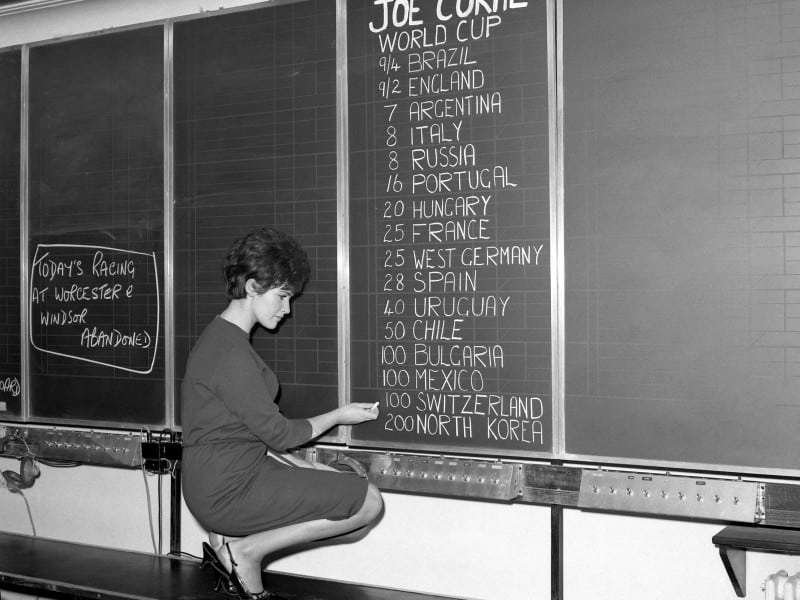
‘30 Super Bowls or 20 AFL grand finals’ – Why the World Cup is wagering’s most valuable sporting event
The 2026 FIFA World Cup is projected to generate a record $US60 billion in legal wagering, underscoring the tournament’s unrivalled value to bookmakers and regulators worldwide.
Rowe On Monday – A fruitful Femme for Murray, Monds’ time to reflect, Hutch hails new investment and a Libyan dream lives on
In this week’s Rowe On Monday, Peter Murray on owning a sudden blue hen, Linda Monds reflects on the state of the industry, Sebastian Hutch on where the new investment is coming from and Dr Ahmed’s Australian flavour to his Libyan thoroughbred renaissance.
