
🔒 🔒 A Geelong-term view: Victorian club targets land-use strategy for bold racecourse property improvements
Geelong Racing Club is aiming to transform an underused part of its racecourse into a potential source of long-term funding, while delivering new sporting, residential and community opportunities for Victoria’s second-biggest city.
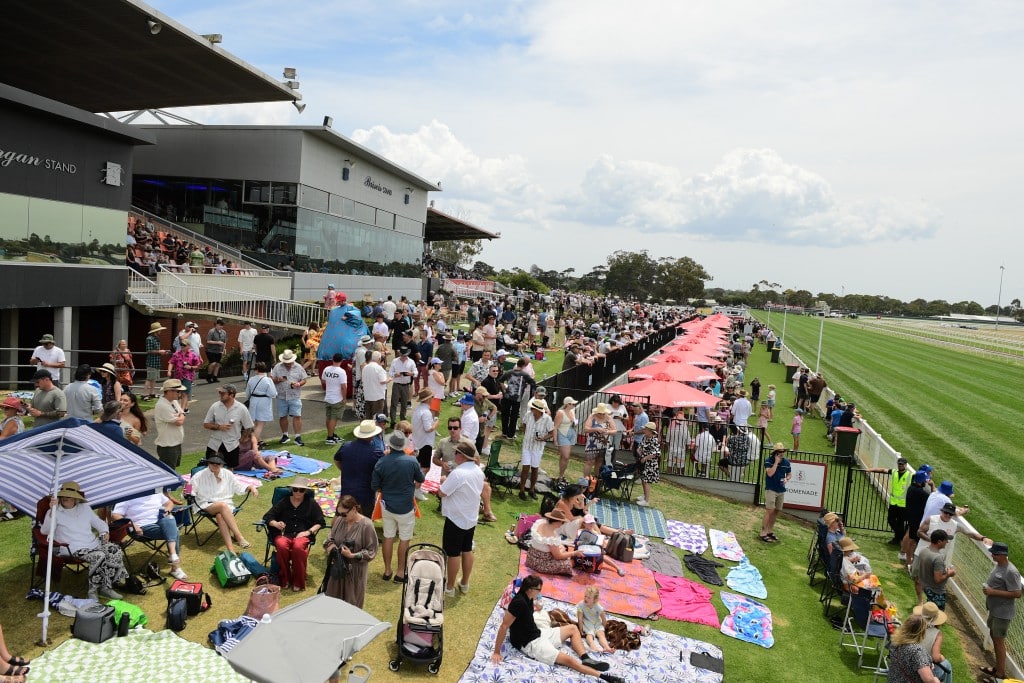
Geelong Racing Club is exploring a property development play that could reshape its precinct with housing, commercial uses and community sport as it seeks to unlock income from underutilised Crown land to fund a major racecourse upgrade.
The ambitions remain at an early stage, with chief executive Luke Rayner stressing any significant change would require government approval and detailed feasibility work before a preferred use could emerge.
With the racecourse reserve held as Crown land, a conventional sale is not an option for Geelong, prompting the club to frame the proposal instead as a community project that could also deliver value to Victoria’s second-biggest city as well as the racing industry.
“For the use of the land to be altered, it would have to have a range of benefits that were deemed to be appropriate for that to occur,” Rayner told The Straight.
Geelong is the sole committee of management and tenant of the Geelong racecourse, located 4km south of the city’s central business district. Any change to the Crown land’s use would require ministerial approval and potentially a series of statutory processes depending on the eventual proposal.
That makes securing political support required to undertake the next stage of precinct feasibility a key priority for the club.
Rayner said the club was waiting for November’s state election before seeking to work with the incoming government on the detailed analysis needed to establish whether its aspirations could be realised.
“What we need to do is get some funds to (finance) the next stage of a business feasibility or precinct feasibility (study),” he said.
“That would have to be undertaken and then that plan would include all of the conversations that we’ve had in terms of developing the best possible plan for a number of outcomes, including potential revenue to be reinvested into the facility.”
The emerging concept could encompass residential, commercial and sporting uses, with the latter potentially helping address infrastructure pressures confronting the rapidly growing regional city of 300,000 people.
Rayner said the club was conscious of identifying local deficiencies rather than imposing a development model without regard to the needs of the wider Geelong population.
“We’re very cognisant of, potentially, what are the pinch points within the Geelong community, whether it be in the community space, whether it be in the sporting space,” he said.
That could eventually see the racecourse become part of a larger sporting precinct, with possibilities ranging from netball courts and soccer pitches to hockey fields, depending on the priorities identified through the feasibility process.
The attraction for the Geelong club is that a mixed-use scheme could create an income stream capable of helping finance the substantial investment required to modernise its racecourse.
Residential development is likely to form part of that equation because of its potential value, but Rayner made clear the objective is not simply to monetise Crown land for the racing club.
“Ultimately, we want to see more activity here, a greater use here, potentially a multi-faceted outcome scenario where we’re just one of the beneficiaries,” he said.
That distinction is significant given the status of the property and the public interest attached to Crown land, particularly if any eventual proposal involves changing its permitted use or disposing of part of the reserve.
Rayner said a scheme based solely on generating money for the racing club would have little prospect of winning government approval, whereas one incorporating housing, sport and wider community interests would provide a stronger case.
“At the end of the day, it’s a Crown land reserve for the benefit of racing in this sense or recreation,” Rayner said.
“We should be bringing people into the precinct, we should have people around the precinct, we should have multiple activities, potentially multiple sports.”
There is also a firm ceiling on what Geelong can achieve through its existing racing and training operations, which helps explain the attraction of finding alternative uses for parts of the site.
Unlike Pakenham and Cranbourne, where larger holdings have allowed substantial expansion of training infrastructure, Geelong is effectively landlocked and has little capacity to add tracks or stabling.
“Ultimately, we want to see more activity here, a greater use here, potentially a multi-faceted outcome scenario where we’re just one of the beneficiaries” – Luke Rayner
The club operates as a boutique training centre, with about 100 horses working each morning, but Rayner said there was no realistic prospect of materially increasing that number at the existing location.
“We’re a known quantity from a racing and training point of view,” he said.
Geelong races 26 times a year and, with its footprint largely fixed, the challenge is how to make the site work during the vast majority of the calendar when it is not hosting meetings.
That question extends to the club’s customer facilities, which Rayner believes require an investment of more than what can realistically be funded through normal racing operations.
“For genuine racing and training clubs, which is what Geelong is, we don’t have this other bankroll outside of our racing activity and our training activity,” he said.
Racing Victoria has been briefed on the proposal and is across the club’s drive to find additional revenue without compromising its established racing and training operations.
The more immediate hurdle is unlocking the next phase of planning on Crown land and establishing whether the numbers can support a proposition sufficiently attractive to government, racing and the community.
“We’re going to try and be the lead proponent in finding a way where we could get some outcomes for multiple stakeholders,” he said.
Related Articles
🔒 🔒 Racing WA acts to safeguard Railway’s Group 1 status amid international ratings scrutiny
The Railway Stakes has emerged as another battleground in Australian racing’s changing relationship with international authorities and the increasingly exacting standards governing Group 1 status.
VRC joins push to host global champions showdown as ATC makes Sydney bid
The battle to host a potential international showdown between Ka Ying Rising, Autumn Glow and Sheza Alibi is intensifying, with both the Australian Turf Club and Victoria Racing Club publicly stating their case to host a champions-versus-champions clash.
Melbourne Cup trainers punted from Macedon Lodge – Symons and Laxon on hunt for alternative stables
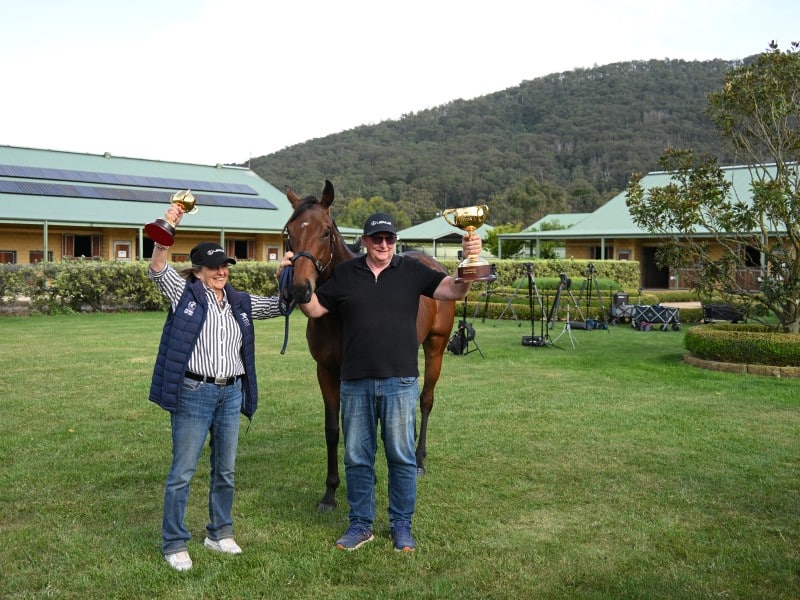
Sara Ryan will have sole control of Macedon Lodge after John Symons and Sheila Laxon’s tenure at the Victorian training facility was terminated with immediate effect.
