
North American breeding industry contracts again as Kentucky’s influence grows
The Jockey Club is projecting 16,500 North American foals in 2027 as stallion numbers fall about three times as fast as mare coverings, while Kentucky’s grip on the industry tightens, mirroring patterns which run through Australia’s own breeding figures.
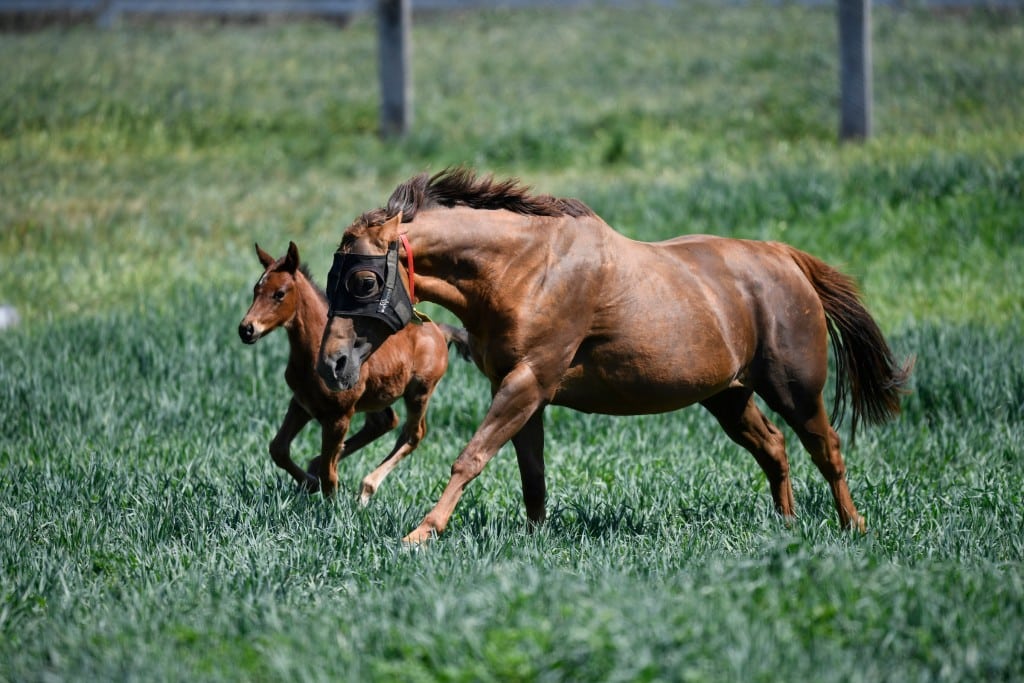
The Jockey Club has projected a North American registered foal crop of 16,500 for 2027, down 500, or 2.9 per cent, from its 2026 estimate of 17,000.
The registry’s separate United States figures show 11 consecutive annual declines from 2016 through the 2026 estimate, with the crop falling from 21,529 in 2015 to an estimated 15,850 in 2026 — a drop of 26.4 per cent. The 2027 projection does not include a separate US estimate.
The wider North American total, which includes Canada and Puerto Rico, rose by 21 foals in 2025 before resuming its fall.
Registered foal crop, North America (United States in brackets)
- 2015: 23,050 (21,529)
- 2018: 21,298 (19,774)
- 2021: 19,123 (17,868)
- 2024: 17,279 (16,171)
- 2025: 17,300 estimated (16,025 estimated)
- 2026: 17,000 estimated (15,850 estimated)
- 2027: 16,500 projected (no US breakdown)
The 2027 projection is drawn from Reports of Mares Bred. Through October 1, reports showed 23,932 mares covered by 670 stallions in North America during 2026, and The Jockey Club expects another 2,000 to 3,000 mares to be reported.
Stallion numbers are falling faster than the number of mares reported bred. Reporting stallions dropped 9.2 per cent year on year, from 738 to 670, while mares bred fell 3 per cent. The average book rose from 33.4 to 35.7 mares.
Stallions and mares bred, North America (through October 1)
- 2022: 880 stallions, 26,744 mares
- 2023: 825 stallions, 26,202 mares
- 2024: 771 stallions, 25,263 mares
- 2025: 738 stallions, 24,662 mares
- 2026: 670 stallions, 23,932 mares
Of the 670 stallions, 519 covered fewer than 50 mares. Four covered 250 or more, led by Sierra Leone (293), Tiz the Law (288), Citizen Bull (261) and Gun Runner (250).
Kentucky is absorbing a growing share of the market. Its 187 stallions covered 16,677 mares, a 1.9 per cent rise even though it stood two fewer sires.
Kentucky’s portion of North American coverings is now 69.7 per cent, compared with 66.4 per cent in 2025, while the state has 27.9 per cent of stallions. Its average book size climbed from 86.6 to 89.2 mares.
Outside Kentucky, mares bred fell 12.5 per cent to 7,255 and stallion numbers fell 12 per cent to 483. Louisiana coverings fell 43.3 per cent, Ontario 23.2 per cent, Florida 14.6 per cent and California 13.9 per cent. New York went the other way, rising 14.2 per cent to 1,278 mares, and Oklahoma rose 25.8 per cent.
For the first time, the registry published commentary alongside its figures.
“The industry’s challenge is no longer simply declining foal crops. The data show breeding activity becoming increasingly concentrated in one state and among fewer stallions,” The Jockey Club said.
It has created a director of State Breeder and Provincial Programs role to identify successful state-bred schemes and help replicate them elsewhere. Its Mare Incentive Program, which waives registration fees for 2027 foals of mares that appeared to have left production, attracted 180 mares.
The North American numbers show a similar pattern to Australia’s. Australian Stud Book figures showed 11,283 live foals in 2025, down 4.84 per cent and less than half the 1989 peak. Mares served fell 7.61 per cent to 15,410, while active stallions fell from 411 to 349, a drop of about 15 per cent.
In both countries the stallion ranks are thinning faster than the number of mares covered. The mares that remain are being sent to fewer sires, with most North American coverings in Kentucky and most Australian coverings in NSW.
Related Articles
🔒 🔒 The Hunter tension – How coal and the breeding industry continue to live side by side
Decisions over two key Hunter Valley mining projects in recent weeks have highlighted the uncertainty facing the coal and thoroughbred breeding industries, two pillars of the region’s identity. Warwick Barr examines the history and the future of the relationship between the two.
Fastest breeze, highest price as Nolen’s Showtime colt shines at Magic Millions
Experienced vendors Tal Nolen and Kenmore Lodge’s Cameron and Kellie Bond came out ahead at a “patchy” Magic Millions Horses in Training Sale with multiple six-figure sales including three of the top four highest-priced lots.
Rowe On Monday – Digging for diamonds, Pinatubo’s strong spring and session plans for Magic Millions
In this week’s Rowe On Monday, G1G’s Gary Diamond on buying, selling and trading future and current stars, some second-season spring joy for Pinatubo and some food for thought as Magic Millions prepares its January catalogue.
