
Appealing for a solution – What’s at stake as NSW racing legal battle reignites?
While the Australian Turf Club defends its right to stay out of Racing NSW-imposed administration at the NSW Court of Appeal, the racing regulator will argue that its effectiveness relies on its power to intervene in major club matters.
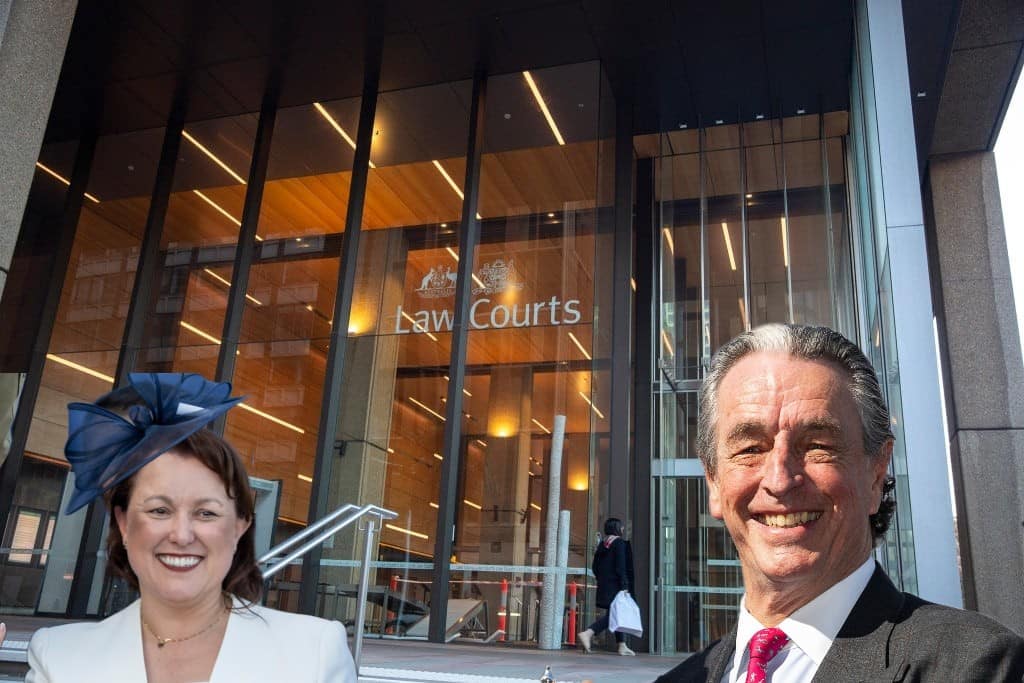
The biggest change in the power dynamic of the relationship between Racing NSW and the state’s clubs is set to be determined at a key Supreme Court of Appeal hearing on Thursday and Friday in Sydney.
Racing NSW is challenging the Supreme Court ruling handed down by Justice Francois Kunc in February, which denied its right to place the Australian Turf Club into administration.
Justice Kunc said at the time that under the Act, Racing NSW’s powers were limited to the supervision and regulation of the racing of galloping horses as referred to in the Australian Rules of Racing.
It did not, according to the ruling, extend to matters including concerns about the financial condition and corporate governance of race clubs.
The ruling, more broadly applied, would likely make the imposition of administration by Racing NSW on race clubs illegal, something it has done on at least four previous occasions under the Thoroughbred Racing Act.
That includes Hawkesbury Race Club, which has been under administration since 2021 due to costs imposed by legal action. It remains under the control of Racing NSW-appointed administrator Jo Moore, with James Heddo in place as chief executive.
When Racing NSW confirmed it would appeal the Supreme Court decision the following month, it said the ruling had placed the funding of race clubs in the state in a precarious position and would “significantly restrict Racing NSW’s ability to fund important club activities such as infrastructure, facilities and operational support that underpin racing across NSW”.
Racing NSW chief operating officer Graeme Hinton, who will be the interim chief executive with the racing regulator when Peter V’landys takes leave in July, underlined the hearing’s importance this week.
“What that case is about is just confirming the way that our Act has been structured and what powers it provides to us,” Hinton told SEN Track.
“Our board had little choice but to run the appeal because the judgment that came down had some very … what we consider to be odd rulings that made some pretty significant restrictions on our Act, and we needed to have those clarified.”
While the ATC’s then four-person board, chaired by Tim Hale, managed to stave off its dismissal firstly via a Supreme Court injunction in December and then Justice Kunc’s ruling in February, it faces the prospect of being ousted should Racing NSW’s appeal succeed.
Former Myer boss Bernie Brookes took the board’s number to five when he was appointed to a casual vacancy in March. The process of appointing two further board members is underway.
At the original hearing, the ATC had also unsuccessfully attempted to argue three alternative reasons for the improper appointment of administrator Morgan Kelly, including that it conflicted with the Corporations Act and was repealed by the Clubs Merger Act.
Intriguingly, Kelly has been appointed by the ATC to conduct an independent review of the club’s hospitality operations as part of an interim agreement which secured the ATC ongoing funding from Racing NSW in April.
However, should Racing NSW’s appeal be dismissed, it raises major questions about whether the current Thoroughbred Racing Act is fit for purpose.
It is why Hinton said the regulator had no choice but to appeal. He insisted it was a matter of principle and that PRAs govern from a position of strength.
As per the original hearing, Scott Robertson SC will represent the ATC, while Racing NSW has listed Justin Gleeson SC and Oliver Jones SC to lead its legal representation.
The Court of Appeal case will be heard before three judges, Justices Jeremy Kirk, Kristina Stern and Acting Justice John Griffiths from 10:15am on Thursday.
Any court ruling could be quickly superseded by changes in the Act, which is currently under review by former state health minister Brad Hazzard.
Hazzard’s review is expected to be delivered in the coming months, but Racing Minister David Harris said it may be difficult to get any recommended changes through this parliament, meaning reform could have to wait until after next March’s state election.
Julia Ritchie, a former long-term member of the Australian Turf Club Board, who led the Save Rosehill campaign, and is a key member of a reform group calling on Hazzard to make major changes to Racing NSW’s power base, told the Straight Talk podcast that the review would provide an important point of inflection for the industry.
“I think we’ve got the opportunity to make some good change. We’re all waiting to see what Brad Hazzard comes out with,” she said.
“I think it’s the first time maybe our industry has actually galvanised to actually put pen to paper, meet with him, and have opinions about our industry. Because often we talk amongst ourselves, but no one acts on it. So I do think it’s a watershed moment right now.”
Author

Related Articles
Construction industry figure appointed chair of New Zealand Thoroughbred Racing
Owner, breeder and administrator Paul Humphries has been elected chair of New Zealand Thoroughbred Racing, replacing the outgoing Russell Warwick in the critical post.
Hazzard review contract extended again, but submission deadline approaches
A key review into the NSW Thoroughbred Racing Act is expected to be completed within days, with a revised July 31 deadline for Brad Hazzard to deliver his report.
Member Exclusive Member Exclusive ‘Falling short’ – WA’s ChemCentre transfers staff after delays to race day swab testing results
Amid WA trainers’ concerns about delays in swab results, Racing and Wagering Western Australia has confirmed extra resources have been deployed to testing company ChemCentre.
