
🔒 🔒 ‘Falling short’ – WA’s ChemCentre transfers staff after delays to race day swab testing results
Amid WA trainers’ concerns about delays in swab results, Racing and Wagering Western Australia has confirmed extra resources have been deployed to testing company ChemCentre.
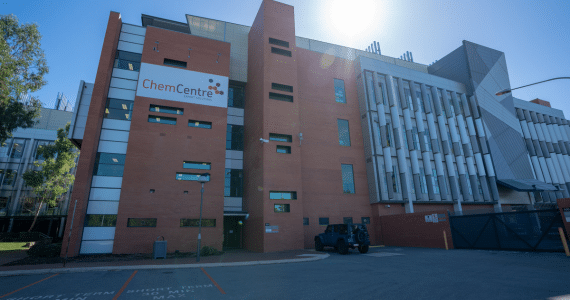
The laboratory contracted by Racing and Wagering Western Australia to test for prohibited substances across the state’s equine and greyhound codes has conceded it failed to meet all of its obligations.
In a bid to overcome delays in the reporting of results from swab samples taken from Western Australian thoroughbred, standardbred and greyhounds, ChemCentre has deployed extra staff to the testing for prohibited substances within the racing industry.
The admission by ChemCentre comes as the Western Australian Racehorse Trainers Association went public with its dissatisfaction about ChemCentre’s performance.
“Delays in reporting sample results to the regulator by ChemCentre WA have been ongoing and are placing an unreasonable burden of risk, uncertainty and stress on participants,” the trainers’ association executive officer Warwick Bradshaw said.
“Failure to make sample results known for a number of months, when the turnaround period should be measured in a week, is not a matter of the science, but of management.
“Resultant delays to steward inquiries creates financial impact on industry and jeopardises participation and confidence.”
ChemCentre said it was unable to respond to questions asked by this publication, instead deferring to RWWA “given our confidentiality agreement with our client”.
RWWA chief racing integrity officer Denis Borovica confirmed that 95 per cent of tests carried out by ChemCentre for the industry are “conducted within agreed timeframes”.
“(However), a small number of positive samples have recently been reported beyond the contracted 25-day period set down for reporting,” Borovica said in a statement to The Straight.
“ChemCentre has advised RWWA that it has deployed additional resourcing to address these delays in reporting.”
Borovica also said that ChemCentre, a WA government agency that last year was recognised as the state’s Innovator of the Year, plays an important role in racing’s integrity process.
“RWWA works closely with ChemCentre, which provides analytical services for prohibited substance testing across all three racing codes,” he said.
“RWWA takes more than 9000 samples for analysis each year across WA’s three codes of racing, with more than 99.5 per cent of those samples being reported as negative.”
Borovica confirmed that 95 per cent of tests performed by ChemCentre, which provides specialised chemical and forensic science services to the Office of the State Coroner and WA police, are “conducted within agreed timeframes”.
“(However), a small number of positive samples have recently been reported beyond the contracted 25-day period set down for reporting,” he said.
“ChemCentre has advised RWWA that it has deployed additional resourcing to address these delays in reporting.”
Delays in reporting test results can cause financial issues for racing participants, with some prize money not paid out to connections until the swabs taken either pre or post-race have been declared clear of prohibited substances.
Bradshaw accused ChemCentre of “falling short” and, in doing so, had failed trainers who may have inadvertently had more horses test positive
“It has certainly affected or impacted at least one trainer and probably more in this current circumstance where you’ve got a swab that was tested in January and then the results aren’t made known to RWWA until May or June and in between times there’s another (positive) swab to the same drug (that trainers may be charged with using),” Bradshaw told The Straight.
“Certainly, there are two harness trainers’ cases where they had the same treatment regime, the same reasons (for the positive swab), and they would arguably have changed the way they do things (if they had known about the first positive).
“It’s a long way from ideal and it’s not necessarily RWWA’s fault, either.”
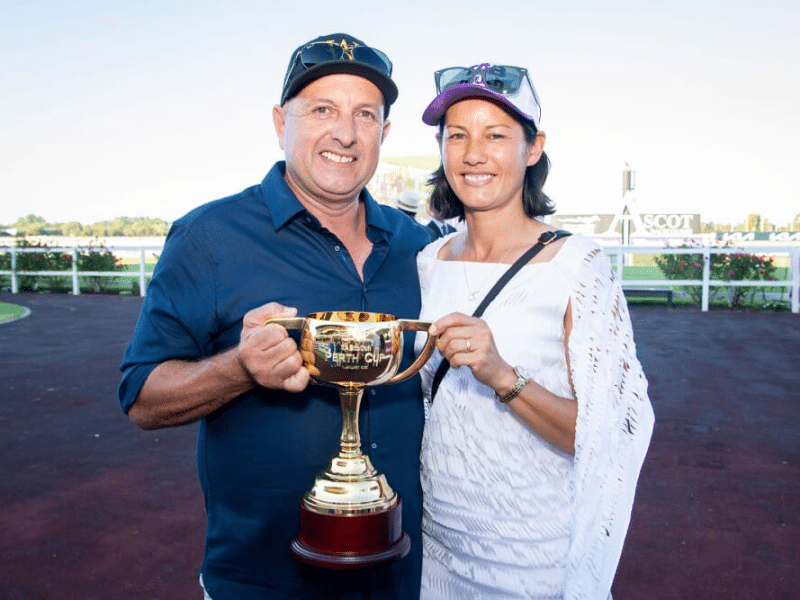
The highest-profile case currently overshadowing racing in Western Australia involves trainers Grant and Alana Williams whose case from last year’s Kalgoorlie Cup remains ongoing.
The Williamses pleaded guilty to the charge of presenting Starry Heights to race with Ritalinic acid in the six-year-old’s system.
Ritalin is used to treat humans who suffer from Attention-Deficit/Hyperactivity Disorder (ADHD).
Starry Heights was fatally injured during the race, with a post-mortem uncovering the presence of the banned substance.
The Williamses were initially stood down from training by Racing WA stewards, but they successfully applied for a stay of proceedings via the Racing Penalties Appeal Tribunal (RPAT), which was granted in February.
The Straight is not suggesting that ChemCentre’s testing was necessarily delayed in the Williamses case.
At the resumed inquiry in late May, Racing WA stewards agreed to adjourn the matter to a date to be fixed.
When the inquiry resumes, further evidence is expected to be heard “in relation to the question of contamination as an explanation for the presence of the substance and other matters relevant to penalty”.
Author

Related Articles
Year-long ban imposed on Grant and Alana Williams after Starry Heights’ ADHD drug positive
Prominent Perth trainers Grant and Alana Williams face 12 months on the sidelines after stewards penalised them following a positive swab after the 2025 Kalgoorlie Cup.
🔒 🔒 Racing Queensland posts lower surplus but growth in wagering powers a profitable year
Growth in returns from wagering helped keep Racing Queensland in the black in 2025/26, with a $6.6 million profit excluding government grants.

Does Racing NSW’s rapid executive baton change help or hinder Graeme Hinton?
In the four days since Peter V’landys confirmed his departure, Racing NSW’s board has already chosen the man to replace him as chief executive. Graeme Hinton was the obvious choice, but Bren O’Brien questions whether the haste of his appointment might undermine how his leadership is perceived.
