
🔒 🔒 ASIC raises syndicator limits but retains licence and disclosure rules
Horse racing syndicates can now raise up to $750,000 and accommodate up to 75 owners under a revamped ASIC regime, though regulators have retained strict licensing, disclosure, and governance obligations.
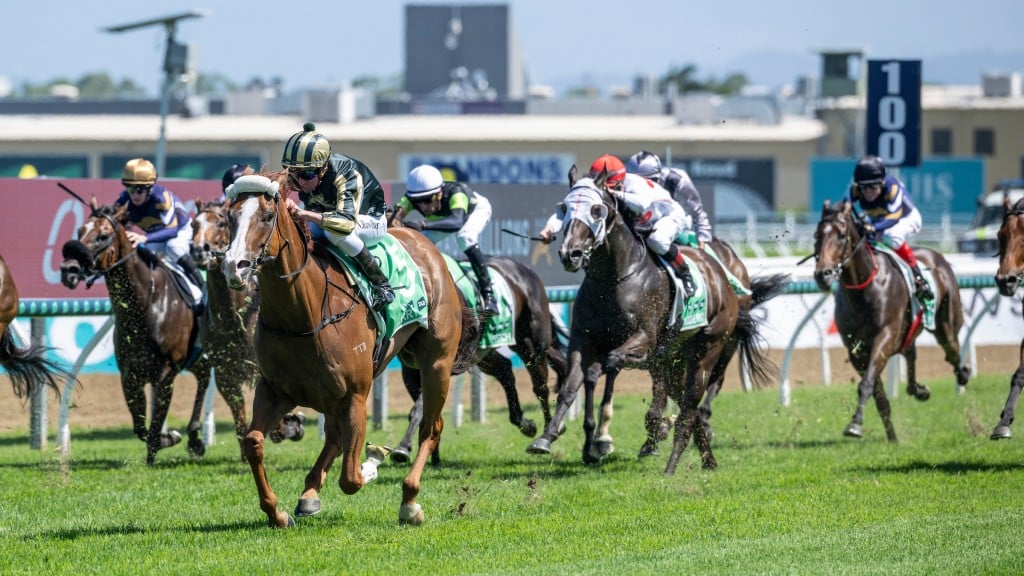
Financial regulator ASIC has lifted horse racing syndicates’ limits for relief from scheme registration from $500,000 and 50 participants to $750,000 and 75, after confirming a new regulatory regime that has already taken effect.
The changes mean that eligible promoters can now raise more and bring in more owners without having to obtain ASIC registration for the syndicate under managed investment scheme rules.
The new horse-schemes instrument still requires a promoter using that relief to hold an Australian financial services licence (AFSL) authorising services for the syndicate.
As before, each Product Disclosure Statement (PDS) must be approved by an ASIC-approved lead regulator, usually the governing racing body in each state, before it is given to prospective participants.
The promoter must be registered with that regulator, and the syndicate must also be registered there.
While the changes didn’t address all the concerns raised in 17 submissions during the consultation process, ASIC said it will update and simplify Regulatory Guide 91, Horse breeding schemes and horse racing syndicates, in the coming months.
Of those submissions, ASIC said nine addressed the amount raised by a syndicate, and seven of those supported a higher limit, citing rising yearling prices and other syndication costs. Eight of the nine submissions addressing participant numbers supported an increase.
Suggestions for the amount limit ranged from $650,000 to $1 million, while proposed participant limits ranged from 75 to 200.
ASIC chose to raise both existing caps by 50 per cent, saying material provided by respondents on yearling and other costs supported a proportionate increase, while the higher participant limit was intended to keep syndication affordable as the amount raised increased.
ASIC declined proposals to index the amount limit annually to the consumer price index. It said fixed thresholds offered “certainty and clarity for stakeholders” and could be assessed at the next review.
Racing Australia supported retaining ASIC’s Instrument but argued in its submission that it should be modernised to reflect current syndication practices, while preserving strong investor protections through improved disclosure, transparency and governance requirements.
Its key recommendations included increasing the participant cap from 50 to 100, lifting the fundraising cap from $500,000 to $750,000 with CPI indexation, permitting fractional ownership structures, strengthening disclosure and governance requirements for syndicates, and maintaining ASIC oversight thresholds with ongoing indexation and streamlined administration.
Its final submission was more measured than the draft submission, which ASIC distributed across industry in May and called for greater changes, including reduced regulation.
However, ASIC left the disclosure requirements unchanged, saying they support informed participation and make documents from different syndicates comparable.
The remade instrument continues to make an AFSL a condition of the racing-syndicate registration relief.
ASIC said industry participants and lead regulators could develop standard templates or streamlined PDS approval processes within the existing rules.
A PDS must still identify the horse and state its purchase or passed-in price. It must also disclose fees and costs, along with any actual or perceived conflicts involving the promoter or manager. Lead regulators must approve advertising before it is published.
The speed of this approval process frustrates syndicators, as does the different standard applied to trainers, who can sell, but not promote, shares without going through this process.
Significantly, ASIC also retained the “whole of horse” condition after submissions sought more scope for fractional ownership and arrangements mixing syndicate interests with other forms of ownership.
Participants in a syndicate must have unencumbered title to, or lease, the whole of its horse. ASIC said allowing multiple syndicates in the same racehorse could let promoters circumvent the amount and participant limits.
ASIC also retained a requirement to lodge financial statements annually, saying it gives lead regulators a way to monitor syndicates’ financial operations.
The co-regulatory model also remains in place. Approved racing bodies supervise promoters and syndicates day to day, while ASIC oversees the lead regulators.
Racing Australia was nominated to lead the response on behalf of the regulators in each state, although integrity body QRIC also made a submission.
While QRIC supported increasing both thresholds, it also cautioned against changes that may weaken consumer protections.
QRIC noted that many syndicate participants are first-time investors with limited experience in managed investment schemes.
It has been undertaking an ongoing review of racehorse syndication in Queensland and found that compliance issues often stem from a lack of awareness rather than burdensome regulations, leading QRIC to advocate for greater education, monitoring and oversight by ASIC.
QRIC also opposed removing the requirement for syndicators to hold an Australian financial services licence, arguing that AFS licence obligations provide important investor safeguards.
Syndicators spoken to by The Straight said compliance and consumer protections remained their main concerns, given ASIC’s new instrument for regulating the industry.
Author

Related Articles
Godolphin sets European yearling colt record with 4.6m-guinea Tattersalls purchase
A 4.6 million-guinea (AU$9.18 million) Night Of Thunder colt purchased by Godolphin at the Tattersalls October Yearling Sale set a new European yearling colt record.
Princess Zahra urges global breeders to preserve genetic diversity
Speaking a day after Daryz’s repeat Arc win, Princess Zahra delivered the keynote address at International Federation of Horseracing Authorities’ (IFHA) 60th conference and called on a comittment to breeding diversity and for racing leaders to show new fans the equine care that sits behind the sport.
Rowe On Monday – Next stop Flemington for Cunningham, the dash to Dubai and Marine One anticipation for Brown
In this week’s Rowe On Monday, Tim is back in the hotseat and chats to Phil Cunningham about star colt The Next Episode, looks ahead to the Dubai season and profiles a Western Australian stallion poised to make an immediate mark.
