
🔒 🔒 Status anxiety – What the demotion of The Metropolitan tells us about the future of the Victoria Derby
The Victoria Racing Club is pulling out all stops to preserve the Group 1 status of the Victoria Derby, but the current uncertainty about its future has been a long time coming, writes Bren O’Brien.
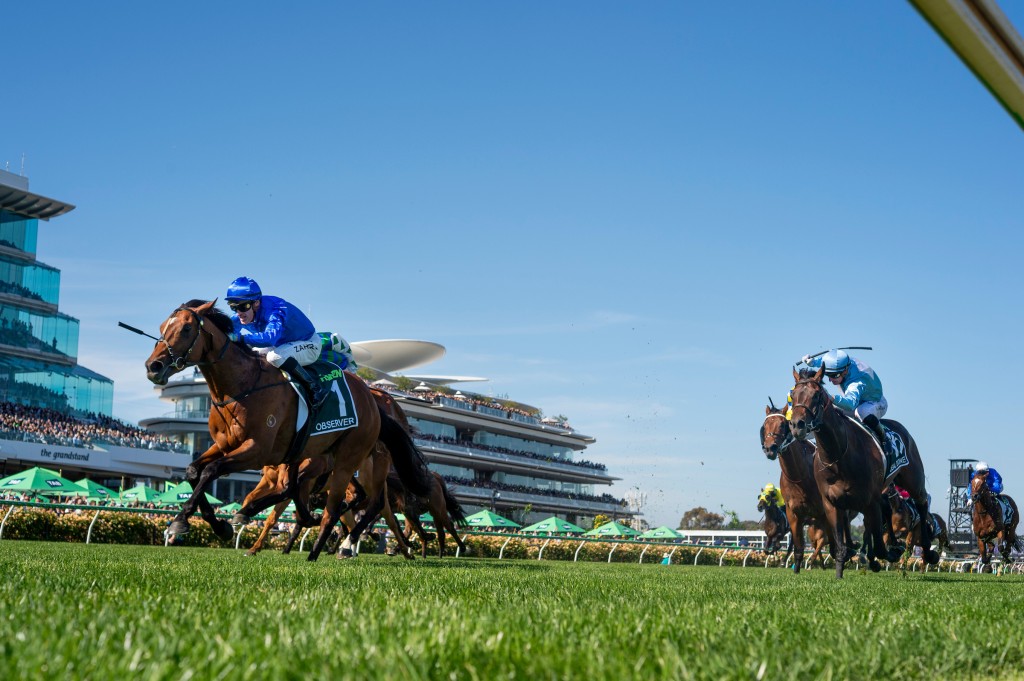
Comment: The mourning for the loss of the Metropolitan’s Group 1 status was relatively restrained when it was announced in August, but when it runs at Group 2 level for the first time on Saturday, there will be a sense of unwanted history.
It has been 14 years since a Group 1 race in Australia has lost its status, with the WATC Derby demoted in 2012. In a sobering lesson for those hoping for The Metropolitan’s future revival, the WA Derby was among the races further downgraded to Group 3 last week.
Racing NSW decided the fight to retain The Metropolitan’s status by altering the race’s conditions wasn’t worth having. It conceded to the Asian Pattern Committee, now in control of Australia’s black-type calendar, that it would need to be downgraded.
On the surface, there has been some impact: Saturday’s field of 13 is the smallest in five years and short of the average of 15.2 over the past decade. It remains at $750,000, unchanged since 2015.
But the alternative was changing the fabric of a race which had switched to set-weights and penalties before, from 1995 to 1999. A change back to that would have risked the field size plummeting further, adversely impacting wagering.
The surprise wasn’t that The Metropolitan lost its status; it was that it was the only one of the 76 existing Group 1 races to do so. Others have effectively been placed on warning, including another spring feature, the Victoria Derby.
But unlike Racing NSW and the ATC, which reluctantly accepted that The Metropolitan’s Group 1 status wasn’t worth trying to preserve, the Victoria Racing Club and Racing Victoria are not ready to accept the prospect of the marquee event of the opening day of the Melbourne Cup carnival being downgraded.
Derby Day has set the scene for Melbourne Cup day every year since 1869, and that history is what RV and the VRC want to lean on heavily in preserving the race’s status.
Last week, however, they put forward a modern solution to the Derby’s quest to retain its elite status: a prize money boost to $3 million, in a bid to attract higher-quality three-year-olds to the Flemington feature.
While other measures are being put in place, including better pathways for three-year-old stayers, the extra $1 million is designed to circumvent the Derby being demoted via a primarily ratings-based system.
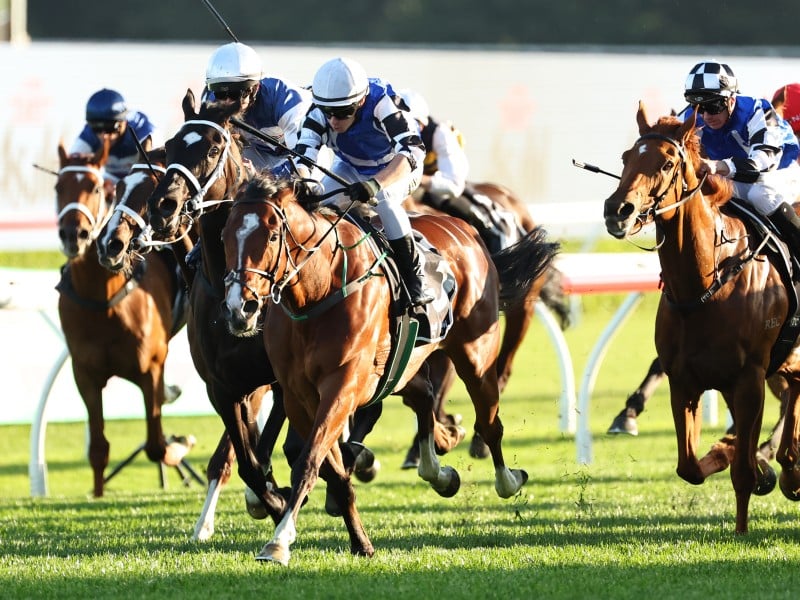
The brutal truth for the VRC is that its marquee opening-day event is, at the least, unfashionable and, at worst, an anachronism in the Australian racing program.
There is also an argument that the problem has been exacerbated by two key strategic pivots by the VRC over the past 30 years.
The first is the internationalisation of the Melbourne Cup, which has been a fillip for the quality of the race, but a considerable roadblock for emerging locally bred stayers.
While the two-mile handicap is a better race than it was before 1993, the flow of potential stayers from Derbies to Cups has slowed to a trickle.
In the 10 years before Vintage Crop’s famous first international Melbourne Cup win in 1993, the average number of local four-year-olds to contest the Cup was 6.7 per year.
In the next 10 years, that fell to 6.1. Between 2003 and 2012, as more international runners were brought over, the average number of local four-year-olds fell to 4.9 per year.
A pattern then emerged: internationally bred horses were imported to remain in Australia, further choking opportunities for locally bred stayers. In response, the breeding industry moved further away from breeding horses that would contest future Derbies and Cups.
From 2013 to 2022, there was an average of just 1.6 local four-year-olds contesting the Melbourne Cup. The last Victoria Derby winner to contest the Melbourne Cup the following year was Johnny Get Angry in 2021.
Over the past three years, an average of one locally bred four-year-old has contested each edition.
The Melbourne Cup may be an extreme example, but the influx of imported stayers makes it nearly impossible for a locally bred three-year-old to improve their rating at four. That, in turn, damages the Derby’s potential to improve its rating.
Combined with this is the influence of Hong Kong buyers looking for Derby prospects, although that is more at play with the Queensland Derby, another Group 1 currently under a stay as it bids to lift its rating performance.
The other change occurred in 2006, when the VRC moved another three-year-old feature to the opening day of the carnival. The converted Ascot Vale Stakes, soon renamed the Coolmore Stud Stakes, has become the “most valuable” race of Melbourne Cup week.
That potential windfall comes from a colt’s residual value: a win in the 1200-metre race adds at least $20 million to his price tag.
Again, this is not a criticism of the establishment of the Coolmore Stud Stakes. It is the best innovation in Victorian racing this century, giving a championship element to the best three-year-old sprinter of the spring.
But what it has done is highlight the declining relevance of the Derby from a “betterment of the breed” perspective.
Godolphin won the Derby with Observer and the Coolmore Stud Stakes with Tentyris last year. The Derby winner’s service fee at Darley was $38,500 this year, while the Coolmore victor stands at $88,000.
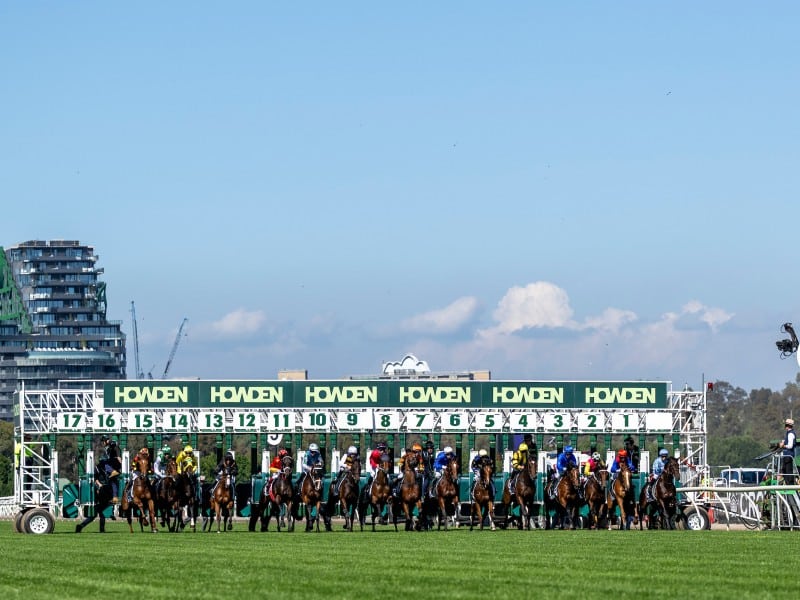
The VRC has sought to combine the commercial appeal of the Coolmore with the prestige of the Derby, but having its cake and eating it was always going to present a problem.
One has suffered compared with the other.
However, in 2026, the Victoria Derby will be worth $3 million, while the Coolmore is worth $2 million. No punter in the country, not even an avowed traditionalist, could argue that the Derby will be the higher-rated race.
Beyond tradition, the Derby has lost its prestige and is in serious danger of losing its Group 1 status.
If the prize money boost doesn’t work, the only other lever may be reducing the distance to 2000 metres, something many argue will destroy the race’s character.
Racing NSW realised it couldn’t save The Metropolitan as a Group 1. Having ploughed enormous money into its spring sprint program over the previous decade, it made its move long ago.
An inactive pattern prolonged the final determination until this year, but the strategy had set that in stone some time ago.
The argument for retaining the Victoria Derby’s Group 1 status goes beyond ratings. It is also about the race’s historical importance in a national context.
Unfortunately for Australian racing, it does not have the right to preserve Group 1 races. That has always sat with the Asian Pattern Committee.
It also forfeited the right to determine its future for other black-type races when it ceded power to the APC after a long period in which its racing authorities could not agree on what they wanted the sport to look like.
Author

Related Articles
More than winners – the bonds behind an owner’s bid for a Cox Plate-Spring Champion double
Wayne Shelton shares ownership of a Cox Plate runner and a Spring Champion Stakes contender and is grateful for the trainers, friendships and family ties that have shaped his involvement in racing.
The Classic factor: Guineas quinella out to end three-year-old Cox Plate drought
Three-year-olds have always added an extra dimension to the Cox Plate. Warwoven and Blind Raise give the Caulfield Guineas quinella a Cox Plate start for the first time since 2021. But what does the current drought in three-year-old success, the longest in the race’s history, tell us about the changing shape of the race?
Geelong victory propels import Point Of Law into Melbourne Cup reckoning
Formerly raced by King Charles III, Point Of Law has rocketed to Melbourne Cup favouritism after winning the Geelong Cup at his first Australian start for Ciaron Maher.
