
Harness Racing’s $781m contribution: How the code’s financial model has transformed
A new national economic study shows Australian harness racing generated more than $781 million in racing and wagering expenditure in 2024/25, highlighting the industry’s growing reliance on corporate bookmakers, race fields fees and point-of-consumption taxes as fixed-odds betting continues to eclipse the traditional tote.
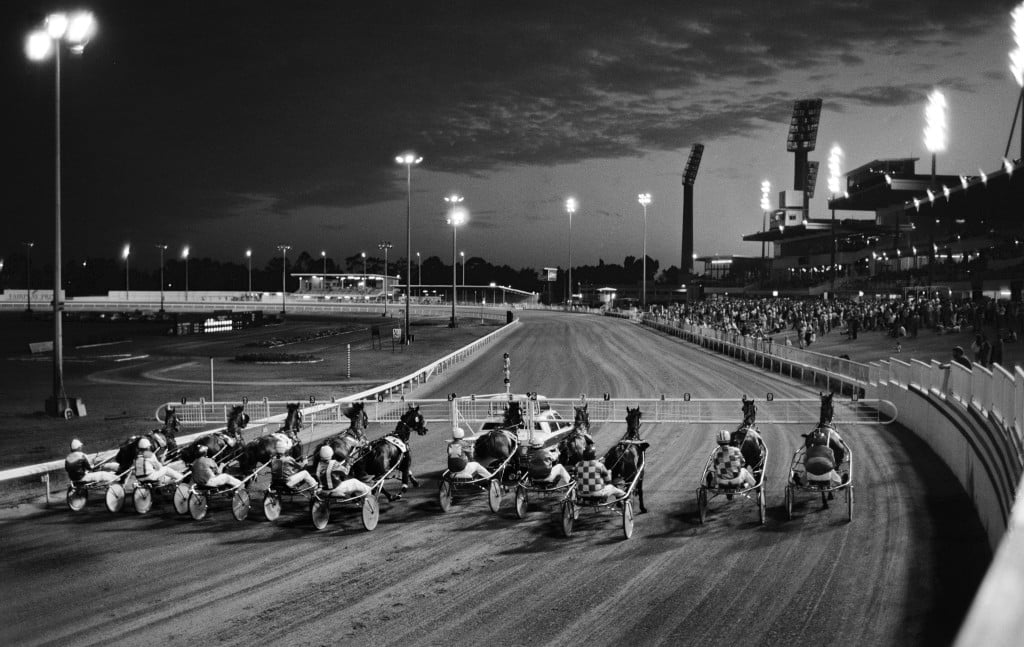
Australian harness racing generated more than $781 million in expenditure through racing and wagering activities in 2024/25, reflecting a funding and commercial environment that has changed considerably since the industry’s previous national economic assessment.
The figure, published in Harness Racing Australia’s (HRA) FY25 Size and Scope Study prepared by Independent Economics and Research (IER), covers a broader range of activity than the wagering distributions reported in the previous national study, which was based on 2010/11 data and published in 2013.
That assessment estimated that more than $384 million flowed to harness racing from net totalisator wagering revenues.
Australia’s wagering landscape has altered significantly since.
The latest $781.1 million estimate incorporates product fees paid by wagering operators to racing authorities, point-of-consumption taxes, betting companies’ operating expenditure attributable to harness racing, customer spending on race club products and off-course spending associated with attending the races, and other non-wagering revenue generated by racing authorities and clubs.
The two figures are therefore not directly comparable.
But they do indicate how the financial framework surrounding Australian racing has evolved, particularly with the expansion of corporate bookmakers.
Race fields legislation is now an established mechanism for racing authorities to charge wagering operators for using race field information. In 2012, the High Court dismissed appeals by Betfair and Sportsbet against the NSW fees.
The major subsequent change was the introduction of point-of-consumption taxes, which require wagering operators to pay tax according to where their customers place bets, rather than where the businesses are licensed.
This has coincided with a fundamental shift in how punters gamble on harness racing, according to Harness Racing Australia chief executive Richard Goodbody.
“Fixed odds are absolutely eclipsing parimutuel betting on a ratio basis these days,” he told The Straight.
The TAB win pool on the $2 million Eureka, the world’s richest harness racing event, was a modest $40,021 at Menangle last Saturday night.
Goodbody said enticing a new generation of punters to a parimutuel system was an obvious challenge for Tabcorp.
“I guess that’s why they’ve moved to One Pool to try and increase that liquidity,” he said.
“But it’s also about trying to get punters that have got accustomed to betting fixed odds versus betting through the parimutuel – how do you swing them back to the totes?”
Goodbody said macroeconomic pressures would continue to weigh on discretionary household expenditure.
“Wagering itself is generally discretionary … and we’re acutely aware as an industry that if we’re not experiencing turnover growth, it’s very difficult to be able to grow revenue,” he said.
IER’s latest assessment breaks down the $781.1 million in racing and wagering expenditure by state, with NSW accounting for $238 million, Victoria $227.6 million, Western Australia $146.5 million and Queensland $113.9 million.
Expenditure was $32.8 million in South Australia and $22.3 million in Tasmania.
The report distinguishes this expenditure measure from the industry’s broader economic contribution, which it calculates at $1.77 billion in gross value added, alongside $1.32 billion in direct expenditure and $931.3 million in household income.
Key findings include:
• $1.77 billion in total value-added economic contribution to the Australian economy;
• 11,372 full-time equivalent jobs sustained through harness racing activity;
• $931.3 million in household income generated;
• $1.32 billion in direct expenditure generated by the industry;
• 30,776 roles occupied across the industry, including owners, breeders, trainers, drivers, employees and volunteers; and
• 86 racing clubs operating across Australia, conducting 1709 race meetings and 14,177 races.
Goodbody said the IER report represented an important milestone for Australian harness racing and provided valuable evidence of the industry’s significance.
“It provides an important national picture of the size, scale and contribution of our industry, supported by detailed economic and participation data,” he said.
“While those headline figures are impressive, what is particularly important is understanding the breadth of the industry and the thousands of people and businesses whose livelihoods and activities are connected to harness racing.”
Regional Australia accounts for 55 per cent of the industry’s value-added contribution, representing more than $971 million, while more than 67 per cent of occupied roles are located outside metropolitan areas.
The country’s 86 harness racing clubs conducted 1,709 meetings and 14,177 races during the assessment period.
Goodbody said the findings demonstrated the code’s connections with regional businesses and communities.
“Harness racing has a substantial footprint in regional Australia,” he said.
“Our clubs, breeders, trainers, owners and participants support local businesses, create employment opportunities and contribute to the social fabric of communities right across the nation.
“From veterinary services, farriers and feed suppliers through to transport operators, accommodation providers and local hospitality businesses, there is an extensive network of people and businesses that benefit from the activity our industry generates.
“These are important contributions that are not always visible when people look solely at what happens on race night.”
Goodbody said attracting participants and audiences, investing in clubs and infrastructure and creating opportunities for the next generation were among HRA’s priorities.
“We all want to see Australian harness racing become bigger and better,” he said.
“It’s been an exciting week for the industry with the TAB Eureka taking place at Club Menangle, and events like this showcase the quality, ambition and potential of Australian harness racing.
“But our ambition extends well beyond any one event. We want to build a stronger, more sustainable industry right across Australia, and this report provides an important foundation as we work towards that.”
Related Articles

🔒 🔒 BetMakers chair sets out case for Tabcorp takeover before key vote
BetMakers executive chair Matt Davey told shareholders at the annual general meeting that the board backed Tabcorp’s $267 million takeover offer after weighing it against the time, capital and risk of growing the wagering technology company independently.

Waterhouse VC – The new pathways reshaping America’s online gambling market
Waterhouse VC examines how unmet demand for online gambling in the US is driving the rise of sweepstakes casinos, racing-based gaming products and skill-based wagering platforms, creating opportunities for technology providers that can navigate evolving regulatory frameworks.

🔒 🔒 NT Wagering Commission seeks new chair and three members as licensee turnover reaches $42.7 billion
The Darwin-based regulator that oversees $42.7 billion in annual wagering turnover across more than 10 million Australian accounts could be set for a major refresh as the Northern Territory Wagering Commission seeks a new chair, deputy chair and two members.
