
Deakin to carry the flame that Doriemus lit for Henderson 30 years ago
In a McDonalds carpark, by the side of the Hume Highway, Terry Henderson did the bloodstock deal that would spark a path to becoming one of the world’s most successful syndicators. Matt Stewart charts the OTI journey.
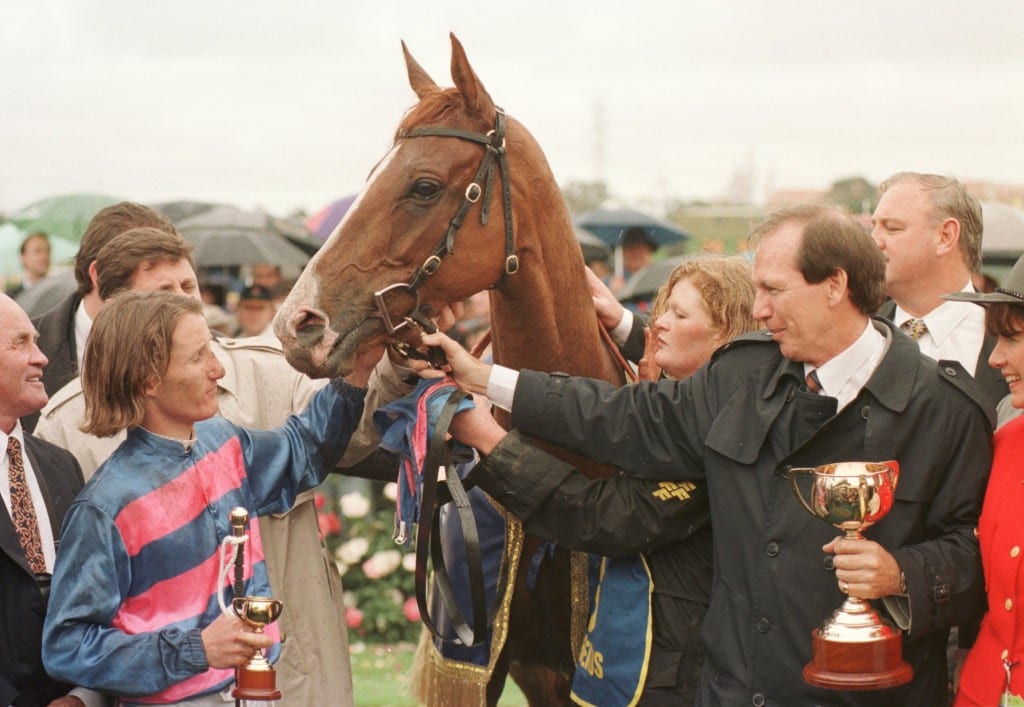
In the context of horse racing, OTI, Terry Henderson and the evolution of modern life and communication, it’s been a long 30 years since Doriemus won the Caulfield Cup.
The day Henderson sealed the Doriemus deal, he was a 43-year-old Melbourne businessman, a former accountant and financial advisor to truckies who’d parked his white 1978-vintage Porsche Sportomatic in the carpark of the McDonalds at Benalla and was on the phone to arm-wrestle with wily New Zealand trainer Jim Gibbs.
It was the era of faxes and landline telephones. Mobile phones were still a novelty and Henderson remembers his first, a clunky contraption connected to a handset via a brick-sized battery jammed under the passenger seat.
Communication and swift deals are essential in horse syndication and this was a primitive era of trailblazers.
It was the era of the short-hop internationals. Henderson and others hadn’t yet discovered the staying horses of Europe and New Zealand was the prime nursery and launchpad for Cups prospects.
Back then, the Caulfield and Melbourne Cup stood a million miles above everything else, linked by rich history and long-range forecast doubles that dominated racing’s substantial storylines.
It was the era of young lions David Hayes and Lee Freedman. There were no pop-ups, no splitting of the elite horse ranks between Melbourne and Sydney. In 1993, the only Everest was a mountain in Nepal.
Henderson concedes much has changed since Doriemus.
“Broadly speaking, back then racing was about the sport, now it’s about the business,” he said.
The Cups still mean a great deal to Henderson – “I guess I’m a purist” – but he acknowledges the Everest has now trumped at least the Caulfield Cup.
“I’ll put it to you this way. I’d still go to the Caulfield Cup but my son (Ben) would go to the Everest. In many ways, it’s a generational thing,” Henderson said.
So it’s 1993 and Henderson pulls up at the Maccas carpark on the side of the Hume Highway and eventually convinces Gibbs of the terms of purchase for a wiry, lean little horse who would go on to take the 1995 Cups double, be beaten a whisker in the Melbourne Cup two years later and be OTI’s catalyst horse.
What began mostly as an indulgence for Henderson and original partner, former Test cricketer Simon O’Donnell, is now one of world racing’s most successful and recognised syndicates and a major importer of stock mostly earmarked for Cups.
Its bumble-bee livery is as recognisable at Chantilly as Caulfield where longshot Deakin will run for the syndicate in Saturday’s Cup.
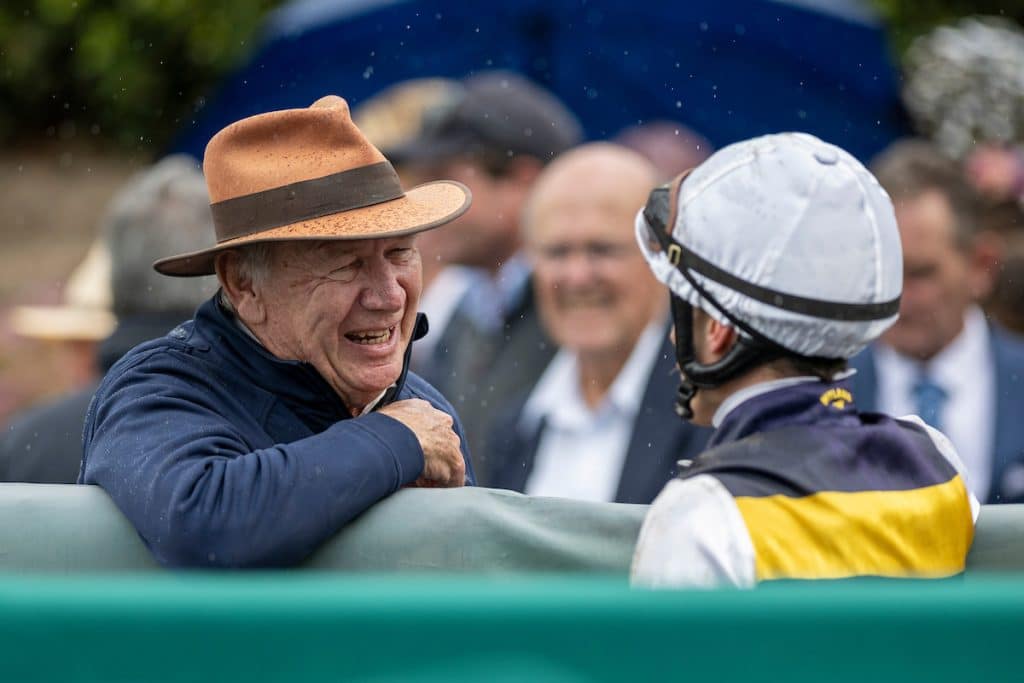
Before Dormieus, Pacers Australia had mostly raced standardbreds with legendary Kiwis Roy and Barry Purdon. Henderson’s booming consultancy business had an office in Auckland and Henderson began attending the Alexandra Park trots on a Friday night where Pacers Australia’s champions Chokin, Holmes DG and The Unicorn lit up the sport.
In New Zealand in the late 80s and early 90s the gallops played second fiddle to the trots. Henderson paid more for Holmes DG than he did Doriemus.
The late Colin Hayes nudged Henderson towards major involvement in the gallops. Henderson and a few mates had raced a couple of horses with Hayes back in the 1980s. Success with top-class mare Send Me An Angel further whetted the appetite.
The gallops had grandeur. As a businessman, Henderson had long enjoyed international travel.
He once wrote a book on the world’s great running tracks, once galloped across the Sahara in some desert race and has walked Spain’s famous Camino many times. He once sat in a hotel in Venice and banged out the first half of a fictional novel about a kid from a South American village who became a Wimbledon champion.
For Henderson and his syndicate, life was a global experience.
Eight of OTI’s 18 Group One winners have been offshore, mostly in Europe. Docklands, named after the Melbourne precinct, won the Queen Anne Stakes at Royal Ascot in June, cheered home on track by Henderson and his mostly wealthy syndicate members.
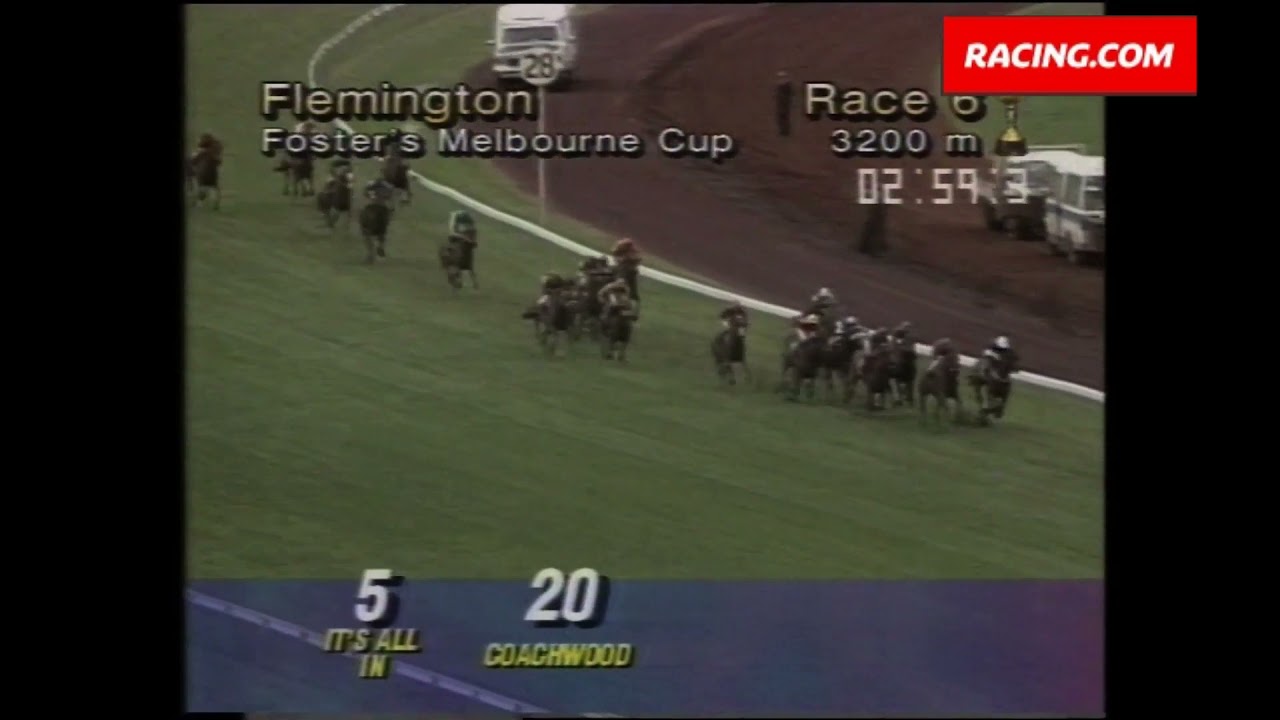
This was all kick-started by the plain, wiry and ill-bred Doriemus.
Henderson had become friends with New Zealand Herald racing editor Mike Dillon, a regular at the Alexandra Park trots.
“Mike sent a video to me of this horse; you know, one of those old cassette-type videos,” he said.
“Jim Gibbs had just won a race with this horse, Mike sent me the video saying he thought he was a real stayer. Gibbs wanted $100,000 for him.
“I’d originally earmarked him for Gerald Ryan but (another journo) Danny Power was working for Lee Freedman at the time and had seen the tape and asked if he could send it to Lee, then Lee rang and it went from there.”
Freedman had buyers, including Keith Biggs, a Western Australia native who’d made his fortune in the nickel boom, and Dick Austin, owner of the Mt Lyell Hotel in Kalgoorlie.
Doriemus was split 50/50 between Freedman’s clients and Pacers Australia. Henderson had wired a $5000 holding deposit to Gibbs, who’d agreed to the $100,000 price tag only for Doriemus to storm to an impressive maiden victory before being exported to Melbourne.
This led to a hint of seller’s regret and hard-ball negotiation in the Maccas carpark at Benalla.
Henderson chuckles at the memory: “We sorted out our little differences.”
Pacers Australia became OTI in 1999. The first incarnation was O’Donnell Thoroughbreds International, then OTI. “When Simon and I got together it was pretty much a hobby. We wanted to indulge our interests in racing and bring people along for the ride,” Henderson said.
O’Donnell left in 2015 and focused on creating what has become a popular app for suburban football leagues.
“When Simon left we decided to really commercialise the business and I feel we’ve been able to cultivate our love for the racing scene, give clients a great experience and come out of it with a few quid,” Henderson said.
About six hundred client invoices are dispatched each month. There are over 200 horses scattered around the world, including 25 breeding stock.
“Most of the horses are funnelled towards Australia but our clients do get a big kick out of racing horses in elite races in Europe,” Henderson said.
In the 30 years since Doriemus won the Caulfield Cup, Henderson says racing has evolved. For the better? He’s not sure.
“Racing turned from a sport into a business, the power of the big betting companies, all of that,” he said.
“The purists will tell you it’s no longer a sport and I think they’re right. I have a personal passion for racing and you try to deal with the horses and push the politics to the side.
“You’ve got the politics, the V’landys’, the strange machinations of the Melbourne Racing Club and the Victoria Racing Club and its economics, but above all that, at the heart of it, is still the sport.”
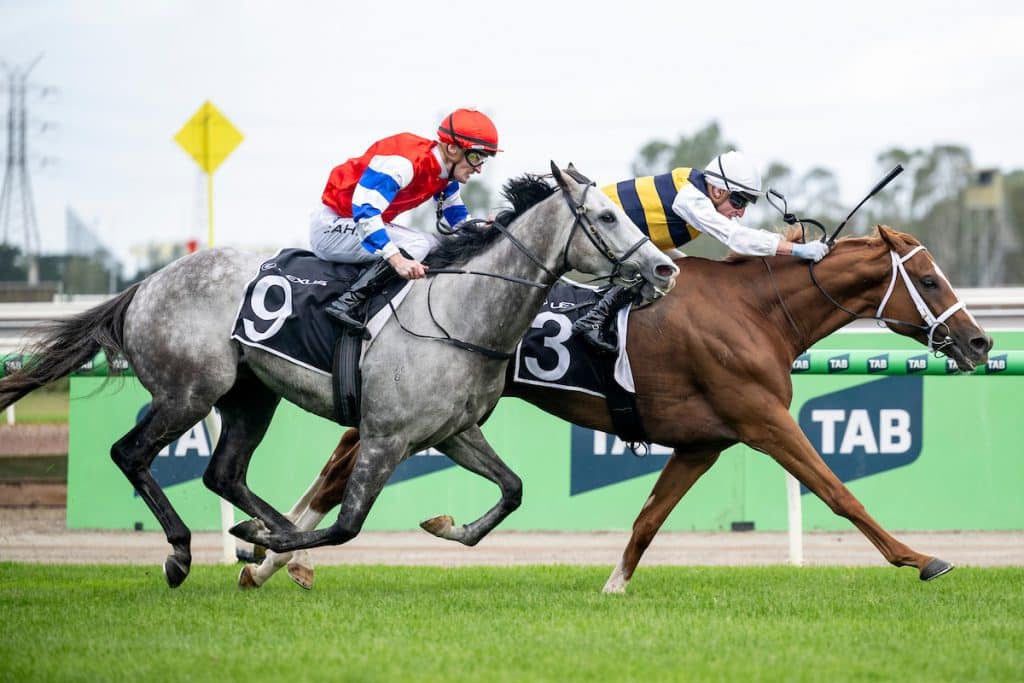
For OTI, the Cups remain as aspirational as they were 30 years ago, when Doriemus blazed through the Melbourne spring.
“For me, yes, because I’m a traditionalist but the Caulfield Cup has probably slipped to the sixth or seventh most important race when once it was top three,” Henderson said.
“A number of races, like the Everest and Golden Eagle, have usurped it in the psyche of the younger generation. But it’s still very aspirational for internationals and an international syndicate like ours. It’s a handicap race worth $5 million. That’s still very appealing.”
Deakin is a Henderson home-bred, ironically by an international sire called Australia. He was passed in at the Arqana weanling sales in France, retained by Henderson and raced for two wins under Joseph O’Brien before joining Phillip Stokes.
The story of Deakin hints at a shrinking racing world that OTI and other big syndicates have embraced as a son of an Irish horse called Australia, bred in France, once trained in Ireland and now at Pakenham as a $19 chance for one of Australia’s great handicap races.
Last week, OTI was granted a licence to syndicate in New Zealand, the great thoroughbred nursery and Cups force where the story began with Friday nights at the trots and a horse deal nutted out in that carpark in Benalla.
“I felt really good about that. I have such a connection to New Zealand. It does feel like we’ve come full circle,” Henderson said.
THE OTI FILE
Winners – 466 individual winners, over 1190 race wins
Black Type – 158 Group and Listed winners, over 455 stakes performances (top 3)
Group 1 Winners – 18
Derbies – Syndicate has won all Group 1 Australasian Derbies – Victoria Derby (Kibbutz), SA Derby (Femminile), Australian Derby (Quick Thinker), QLD Derby (Brambles, Warmonger), NZ Derby (Vin de Dance)
Global – Won stakes class races in eight different countries. Horses in Australia, New Zealand, France, England and Ireland. More than 50 trainers.
Best horses – Gailo Chop, Docklands, Manighar, I’m Thunderstruck, Lady Laguna
Best Season – 2023/2024 – 114 winners @ 15 per cent SR, included 20 black-type or feature race wins
Current Season – 25 winners @ 14.7 per cent SR (at 14/10)
Related Articles
“A lack of fairness, confidence and commercial morality in the ATC’s company affairs” – Racing NSW releases letter to ATC
Racing NSW has responded to the Australian Turf Club directors’ challenge to its authority to put the club into administration by publicly releasing a damning letter it sent to the ATC advising of its reasons for its actions.
ATC directors defiant as administration case is adjourned
Racing NSW’s attempt to push the Australian Turf Club into administration has been stalled until at least Thursday, with the Supreme Court of NSW preventing the club’s directors being removed until a further hearing.

ATC fights back against Racing NSW’s administration action
Racing NSW’s authority to impose administration on the Australian Turf Club will be determined by a Tuesday Supreme Court hearing after it was the subject of a dramatic legal challenge by the directors of the club’s board.