
Run The Numbers – A Romantic odyssey
As Romantic Warrior closes in on becoming the first horse to earn more than AU$50 million in prize money, Run The Numbers looks at world racing’s biggest earners.
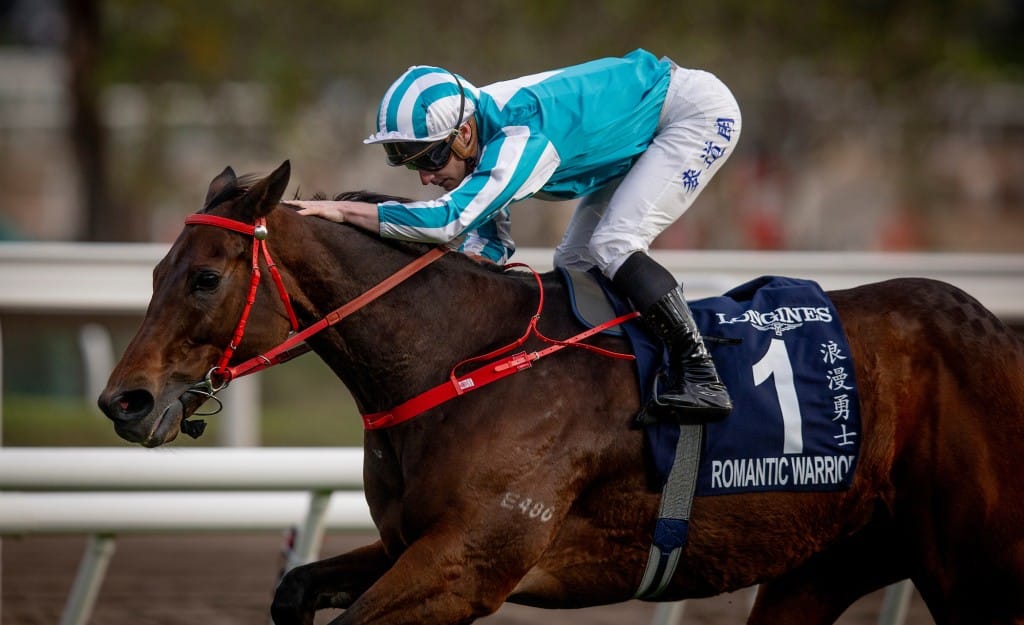
For every start that Romantic Warrior has stepped out on the track, he has averaged a staggering AU$1.7 million in prize money.
Winning Hong Kong’s richest race on four occasions has certainly helped the bank balance of owner Peter Lau, with those quartet of Hong Kong Cup wins accounting for just under AU$16 million of the AU$46.4 million (HK$240.1 million) he has earned in his career.
Sunday’s race win, the 11th Group 1 victory of his career and the 10th under the guidance of James McDonald, was worth HK$22.4 million, the equivalent of AU$4.3 million.
A note that we have chosen Australian dollars as a comparative measure, given it is the predominant audience of The Straight.
The seven-year-old son of Acclamation now has 20 wins from 27 starts, with five seconds. The only two times he was unplaced was in the 2023 Turnbull Stakes and the 2022 Hong Kong Classic Cup.
It’s an extraordinary record, and one he will look to build on when he travels to the Middle East next year, where a continuation of that form would result in him breaking through AU$50 million, nearly twice the AU$26.4 million that Winx earned in her extraordinary career.
He is easily the highest earning horse in history, some AU$14 million more than Golden Sixty, who racked up his AU$32.3 million at a rate of $1.04 million per start.
The only current Hong Kong horse who would seem likely to surpass Romantic Warrior is his fellow international day hero Ka Ying Rising, who completed his second straight win in the Hong Kong Sprint on Sunday.
Now a winner of 16 races straight, Ka Ying Rising has amassed just over half of Romantic Warrior – AU$23.3 million, or HK$122.6 million, but with trainer David Hayes predicting he could have another 20 starts (he currently has 19), he could conceivably bridge the gap.
His career per start average is AU$1.22 million, but it is notable that this campaign he has banked AU$10.8 million, or AU$2.68 million per start. On that run rate alone, the world’s highest-rated sprinters could add considerable extra prize money in the coming years.
Voyage Bubble, who won back-to-back editions of the Hong Kong Mile, has earned more prize money than Ka Ying Rising, but as a seven-year-old has a lot less upside to come. He now has the equivalent of AU$24.5 million in the bank, at a per start average of AU$627,272.
Calculating comparative prize money is not easy when you have horses from different jurisdictions, let alone horses who have prize money from multiple countries in different eras.
Forever Young, who has raced in Japan, Saudi Arabia, the United Arab Emirates and the United States, is the next best current horse behind Romantic Warrior.
His overall prize money, depending on how you cut it, is AU$29.1 million, or a tick short of $3 billion yen. He has only had 13 starts, so he is going at AU$2.2 million per start.
In 2025, the Japanese dirt superstar had just four starts and earned the equivalent of AU$22.7 million at AU$5.68 million per start. If he was to repeat the dose next year, he would also surpass $50 million.
It would be appropriate if the two horses who staged one of the most memorable battles in 21st century global racing in this year’s Saudi Cup, were in a race to become the richest earners of all time.
The above calculations are based on 2025 rates. Ushba Tesoro, the recently retired Japanese globetrotter, won 2.6 billion yen, or AU$25.2 million, based on a straight conversion to yen on today’s rates.
Equinox, another recent champion, won 2.2 billion yen in a career that finished in 2023, which on today’s conversion rates is AU$21.5 million.
Gentildonna, whose death in November prompted a national outpouring of grief in Japan, is an example of how fluctuating exchange rates can change rankings. Under the conversion rate for yen when she retired in 2014, her earnings are around US$19.6 million, but her overall earnings in yen, 1.7 billion, only puts her seventh of all Japanese horses.
It’s a similar story with Orfevre, who earned US$19.3 million in the early 2010s, but whose total in yen was 1.58 billion, which on today’s rate is considerably less.
Winx is the Australian horse upon which all others are measured when it comes to prize money. She earned AU$26.45 million, while Bella Nipotina has AU$22.8 million, Nature Strip AU$20.8 million and Via Sistina AU$19.4 million.
Author

Related Articles

Run The Numbers – King’s latest successes put female jockeys on brink of 50 Australian Group 1 wins
As Rachel King builds her own formidable Group 1 record, she is also helping female jockeys power towards a significant milestone: 50 Group 1 wins in Australia. Run The Numbers dives into the major contributors from Diane Moseley to Siena Grima.
Run The Numbers – The elevated state of the global yearling market
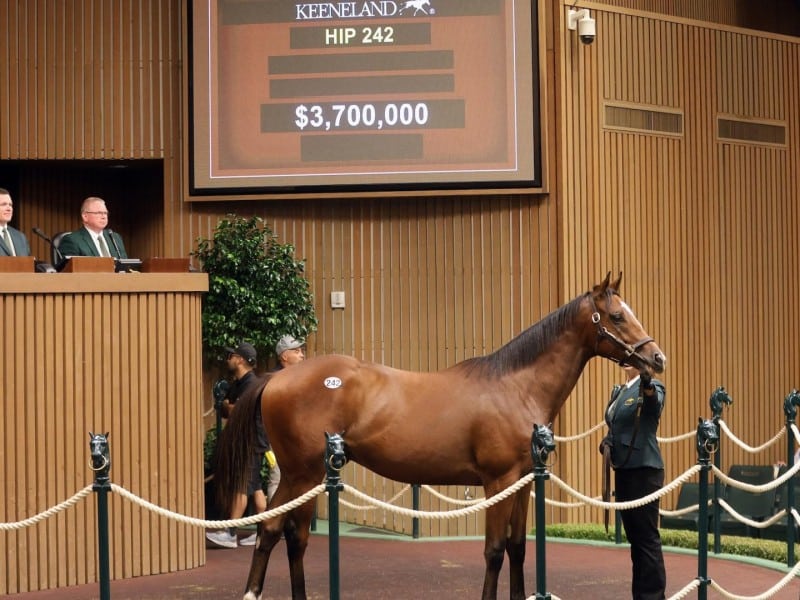
With US$536 million spent across 12 sessions, the recently completed Keeneland September Sale was the highest-grossing yearling sale in history. Run The Numbers looks at whether it speaks only to the American market or reflects a broader global demand for elite bloodstock.
Run The Numbers – An influence runs Deep into the next generation
Legendary Japanese sire Deep Impact made a major mark on Australian racing from less than 50 runners. Does the emergence of Sheza Alibi point to that influence continuing to his sire sons as well? Run The Numbers takes a look.
