
🔒 🔒 Hinton urges industry to brace for wagering impact of gambling reforms
Incoming Racing NSW chief executive Graeme Hinton has warned gambling reforms will weigh on wagering activity, even as the industry claims it helped shape a final package that better protects racing revenues.
Racing NSW expects federal gambling reforms to affect future wagering activity, with the regulator still working to establish the financial implications of changes it says could have been far more damaging to the racing industry.
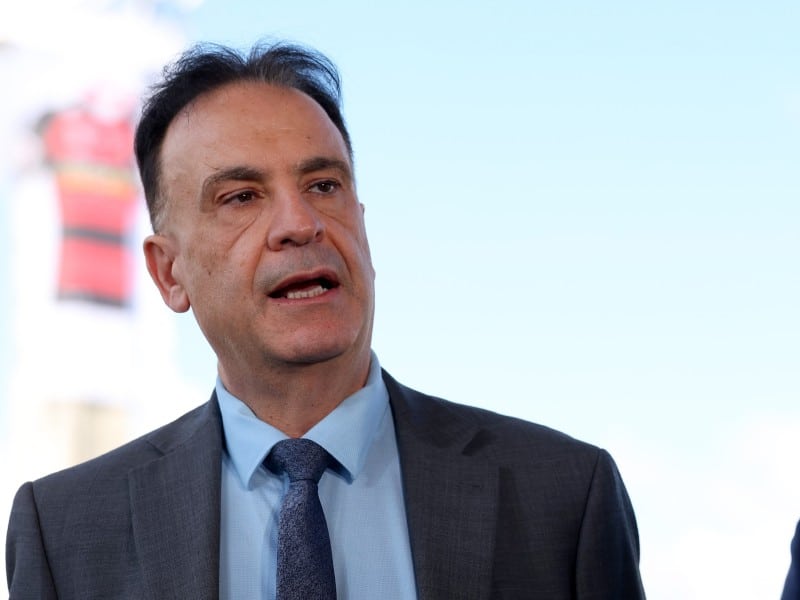
Incoming chief executive Graeme Hinton acknowledged the reforms would have an impact, with Racing NSW continuing to work with the Australian Communications and Media Authority and the Federal Government to determine their full implications.
But Hinton says the final package represents a significant improvement on the original recommendations of a parliamentary inquiry into online gambling, which he warned would have had “catastrophic consequences for the Australian racing industry”.
Hinton claimed the initial recommendations of a landmark parliamentary inquiry into online gambling threatened wagering revenue and the capacity of racing to sustain prize money, employment and funding for race clubs.
Although the Commonwealth’s subsequent proposals were less severe, Racing NSW remained concerned that restrictions would substantially reduce wagering income.
The organisation joined Racing Australia and Racing Victoria in lobbying for measures it considered proportionate, evidence-based, and mindful of the relationship between wagering and the funding of racing.
“These efforts ultimately resulted in a substantially improved Bill, including significant exemptions and protections for the racing industry,” Hinton, as chief operating officer, wrote in Racing NSW’s 2025/26 annual report.
Racing NSW said the final legislation adopted a more measured approach to broader restrictions while providing meaningful protections for people experiencing gambling harm.
It will continue to assess the changes with federal and state authorities, while maintaining its focus on illegal offshore wagering, which it considers a risk to consumers and a threat to legitimate racing revenue.
Racing NSW’s 2025/26 annual report recorded wagering revenue of $302.76 million, virtually unchanged from the $302.84 million reported in the previous financial year.
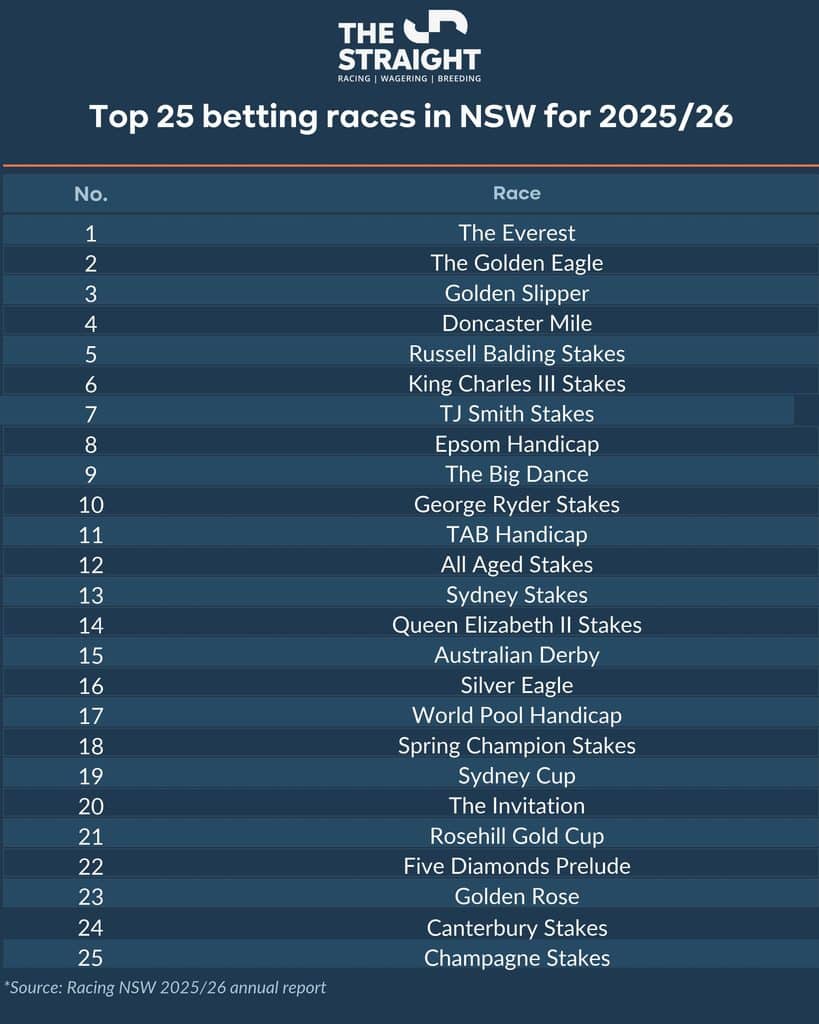
The annual report confirmed The Everest remained the most wagered-upon thoroughbred race in NSW, ahead of the Golden Eagle and Golden Slipper, with the Doncaster Mile and Russell Balding Stakes completing the top five.
The King Charles III Stakes ranked sixth, followed by the TJ Smith Stakes, Epsom Handicap, The Big Dance and George Ryder Stakes.
The figures come as Racing NSW continues to reshape its commercial relationship with Tabcorp, including its approval of One Pool.
“Racing NSW secured important protections to ensure that all existing NSW TAB customers will continue to wager through the NSW TAB, while new TAB customers domiciled in NSW will also be allocated to the NSW TAB, ensuring that the associated wagering revenues continue to benefit the NSW racing industry,” Hinton said.
“These protections were a fundamental requirement of Racing NSW’s approval and are designed to safeguard existing NSW industry revenue while ensuring the introduction of the national totalisator provides a net benefit to the NSW thoroughbred racing industry.”
The agreements with Tabcorp extend through to 2031 and include international pooling arrangements and funding for the Golden Eagle.
Hinton said the Tabcorp arrangements provided greater certainty around funding and protected the state’s existing wagering revenue, while creating opportunities to grow the industry’s commercial returns.
Elsewhere in the report, Racing NSW said fee and tax regimes had helped shield the industry from volatility in the wagering sector.
“While wagering activity softened slightly from previous peaks, strong and steady returns from race fields fees along with continued benefits from wagering tax parity and a strong share of the Point of Consumption Tax, ensured ongoing robust funding for the industry and its participants,” the report said.
Related Articles
🔒 🔒 Racing NSW maintains surplus as fresh challenges remain for new leadership
Racing NSW recorded a $13.63 million operating surplus for 2025/26, but as Peter V’landys bids farewell, flat wagering figures point to ongoing regulatory and market challenges in the wagering industry that fuel racing’s commercial strength.
🔒 🔒 Ciaron, the King, the Cup and the kicker
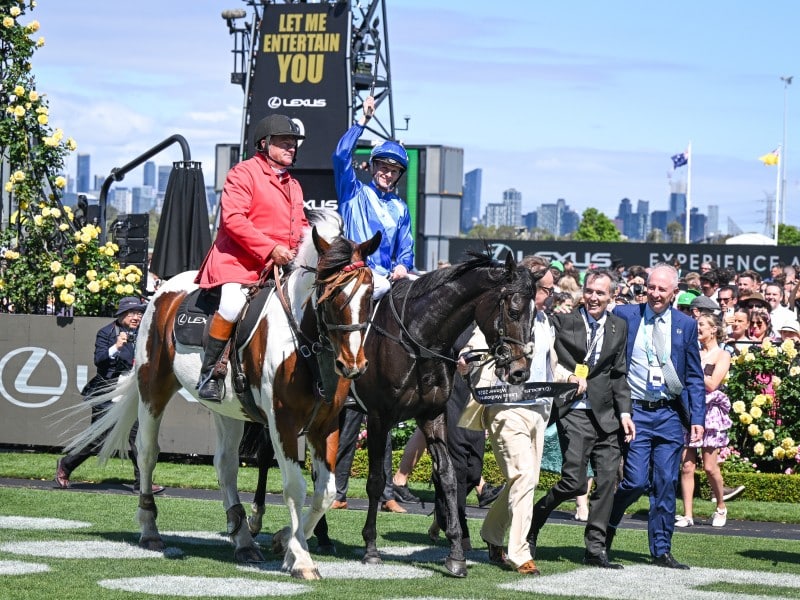
Except for a British law prohibiting monarchs sharing ownership of horses, King Charles would have been a Melbourne Cup-winning owner on Tuesday, but Ciaron Maher’s bloodstock manager Will Bourne revealed there is some reward headed back to England.
Bettering Bart: The lessons from a master that set Maher on a path to his own history
In the backstory of Ciaron Maher, who on Tuesday became the first trainer in the Melbourne Cup’s 166-year history to train the first three horses across the line, lies a brief period of learning all he could from the man whose achievements in Australia’s greatest race surpass all others, Bart Cummings.
