
‘Horse first, catalogue second’ – How George Smith revolutionised Australian bloodstock
George Smith, who died this week aged 91, left an indelible mark on the Australian thoroughbred industry. Matt Stewart reflects on the life of a man of very humble origins whose astute eye for a potential champion underwrote the success of some of Australian biggest trainers.
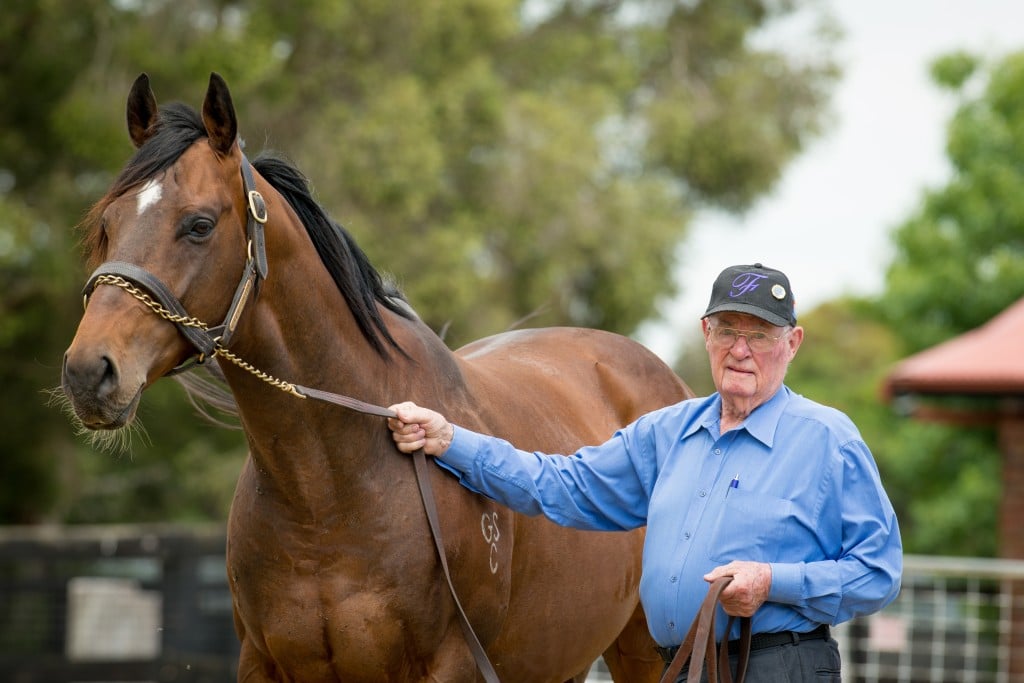
George Smith spent a lifetime turning horses and bloodlines inside out, yet possessed no traditional pedigree of his own.
The extraordinary success of Smith as arguably Australia’s greatest bloodstock expert is even more remarkable given his origins.
Smith, who started out life in an orphanage, became a legend in the elite world of thoroughbreds. He had a mystical quality, a wisdom as untraceable as his own heritage. No one taught him; he already knew.
Horse racing and breeding have historically been a closed circle of horses and humans identified and prioritised mostly by their bloodlines.
In recommending future champions to racing’s bluebloods – Tommy Smith, his daughter Gai Waterhouse, Lee Freedman, Bart Cummings and anyone else inclined to tug his coat – Smith never cared much for pedigree. His mantra in selecting horses for clients, including major sales companies, was horse first, catalogue second.
It was as if his own life story, which concluded with his death this week at age 91 in a nursing home in Sunbury, influenced his criteria for bloodstock. He was drawn more to the animal and its moving parts than to its heritage. He liked big horses with kind eyes and calm dispositions.
He forgave faults.
Smith’s death triggered dozens of tributes from those probably better known than Smith to the racing public. He was one of racing’s behind-the-scenes influencers. He rarely attended the races, but his fingerprints were everywhere.
Five of Waterhouse’s Golden Slipper winners were recommended by Smith. Many of Freedman’s big winners through the 1990s traced to a yearling sale nod from Smith. If Cummings were still alive, he’d acknowledge Smith’s role, although Bart was begrudging in that respect.
Smith was raised in an orphanage in Melbourne’s north and never walked away from his origins. He wasn’t just a tool for the elite.
He spent decades as farm manager at famous Stockwell Stud not far from the Inglis sales complex at Oaklands Junction, a venue where Smith weaved most of his magic, toddling from barn to barn, inspecting young thoroughbreds, seeing things others couldn’t.
At Stockwell, he had an employee named Danny Toye who was short of a quid and tight with a buck. Toye’s wife Teri wanted a horse. She only had a few bob to spend and set Smith the task of finding her champion.
“I came back and said I’ve got one for you, it won’t make much money. Danny was shaking, you’d think he was buying it,” Smith recalled in an interview with Inglis a few years ago.
The tiny colt that Smith liked and no one else did cost $3250 and would become Brawny Spirit, the champion who won the Newmarket Handicap for battling Flemington trainer Mick Winks and the Toyes.
“He won over $1 million. They used to call him a pit pony, he was that small. But he was as long as a battleship with plenty of scope,” Smith said.
This wisdom that made Smith so revered was not taught nor bred into him. It was innate.
Long-time friend, stud owner/manager Mike Becker, says not much is known about the early chapters of the Smith story. “He was an orphan, I know that. Out of a non-Studbook mare, you might say. But it started at a dairy/stud farm.”
Warlaby Stud, just down the road from what is now the Living Legends farm, not far from Sunbury, the Inglis complex and Stockwell Stud, was famous in its day as home to successful stallions Landau, Helios and Dhoti.
The farm ran horses and cattle and Smith arrived there in his teens seeking work. It is presumed he left school at a very early age.
Smith first tended the cows before an incident on the farm convinced stud owner, the famous AE Underwood, that Smith was destined for a life with horses.
“I used to milk cows,” Smith told Inglis Media. “Then one day one got away, kicked the bucket over and I went over (on horseback) and caught it. The old boss said, ‘you’re on the horses now, forget the cows’.”
In 1957, Ken Cox established Stockwell Stud at Diggers Rest and poached a couple of the stallions when Underwood sold Warlaby. Smith was a non-negotiable part of the package.
For three decades, Smith ran Australia’s most famous farm for Cox and it is on this revered property that much of the Smith legend grew, side by side with the legend of a horse called Showdown.
Tommy Smith had seen Showdown win at Royal Ascot in 1963 and suggested to Cox that he secure him. Cox offered $80,000 for Showdown, which was rejected, but he later secured him via syndication.
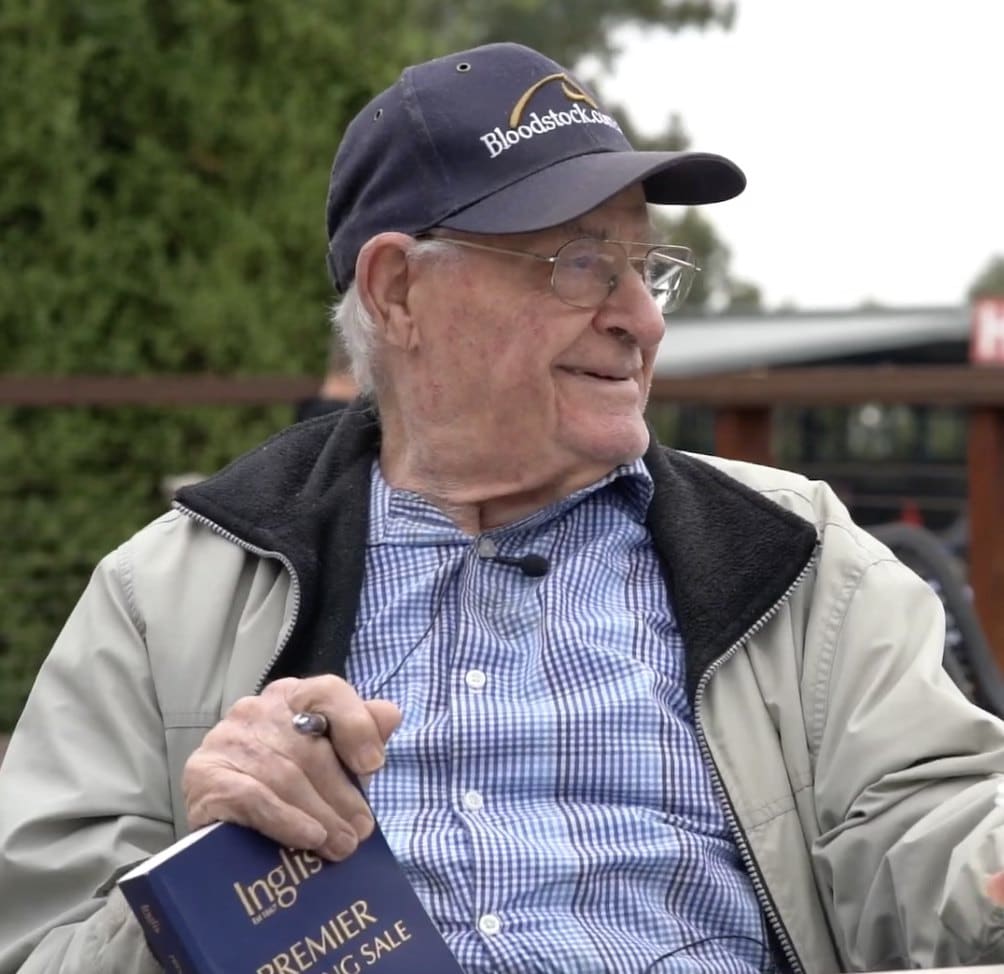
He was Britain’s champion two-year-old and champion miler of 1965, a robust and nuggetty and a perfect fit for Australia’s relatively harsh racing conditions.
The Showdown progeny exploded onto the racetrack, much as the Star Kingdom’s had done a decade earlier. Dual Choice, Prodromus, Royal Show, Silver Sharpe, Leica Show, Love A Show. The list goes on.
Tontonan, one of many of the Stockwell progeny trained by Cummings, was the best. Tontonan won the 1973 Golden Slipper, then the All Aged Stakes, Doncaster Handicap and Oakleigh Plate. Every season, Cox retained a handful he didn’t take to market and Tontonan was one of them.
A handful of Tontonan’s brothers had shown ability “and the next one came along, nice bay colt, and I said to Ken Cox, ‘this is a nice colt. I have one condition; you should keep him. I’d like to race him with you’. That’s how lucky you can be. He won the Golden Slipper.”
A lone horse photo adorned the walls of Smith’s Sunbury home. It was Tontonan.
Becker took over the running of the farm when Stockwell changed hands in the late 1980s, It was owned by Emirates’ Nasser Lootah but has retained the Stockwell name.
Becker said the genius of Smith as farm manager is still evident.
“Everything about the farm has George’s stamp on it. The way it was set up was before its time,” Becker said.
So many racing stories began at Stockwell under Smith’s watchful eye. He was on hand the morning Vain dropped from his mother. Black Caviar’s dam Helsinge stayed there briefly.
He remembers watching a then-unnamed Toy Show galloping through the paddocks. Eight or 10 fillies were charging along the fence line in an adjoining paddock and Toy Show joined in. “She wasn’t mad mentally but she just wanted to run,” he said.
Cox gleaned a great deal by observing the behaviour of young horses in paddocks.
“When they’re out there playing and grazing, some will go to the feeder, eating all the time, others couldn’t care less. They’re the bad doers and they don’t make good racehorses,” he said in that Inglis interview.
The top trainers quickly learned that they needed George Smith. He was a trailblazer. Now, most trainers have a bloodstock guru by their side as they inspect foals in paddocks and yearlings at sales. Smith, the orphan who was taught nothing but knew more than most, was the first.
Brad Spicer was a disciple, as was James Harron.
Spicer said Smith had been “instrumental” in building his knowledge of horses and a successful syndication business.
“He was kind enough to take me around the sales. I was like a kid, a sponge, and I’m forever grateful,” Spicer said.
Smith said he learned as much as he imparted.
“I’ve grown up with a lot of them; Neville Begg, Tommy Smith, Bart Cummings, I’ve learned from them as well. Young people here are grateful for what I’ve done for them and now they’re inspecting yearlings for other people.”
Waterhouse virtually quarantined Smith for a decade, after Lee Freedman released his grip. Smith had identified star mares Northwood Plume and Azzurro for Freedman clients Barrie and Midge Griffiths.
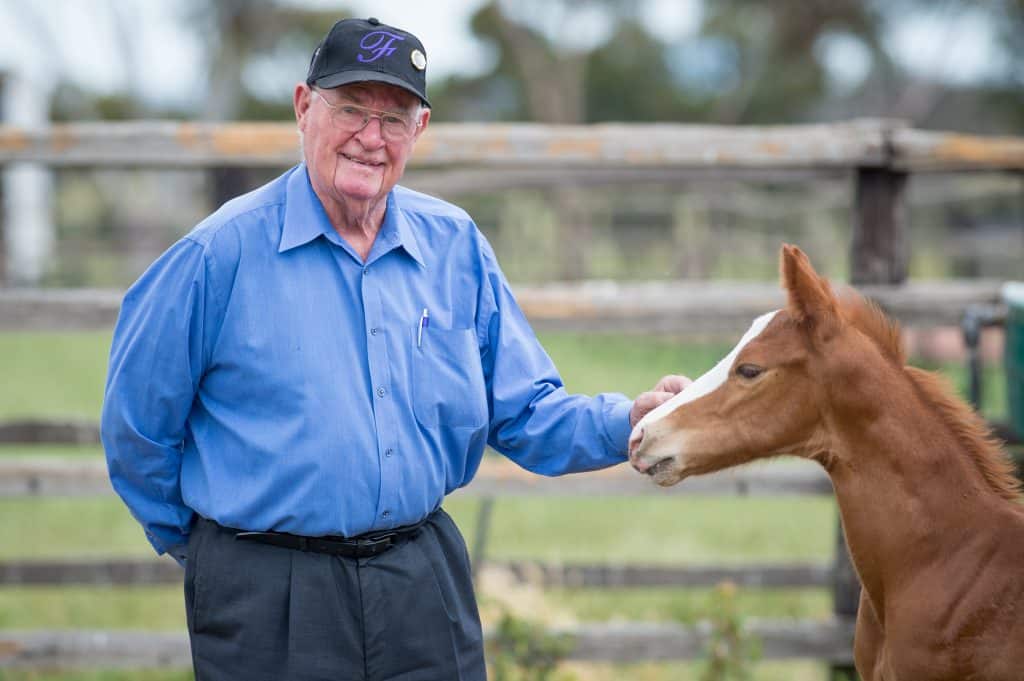
Name any great sales-bought horse trained by Freedman or Waterhouse in a 15-year period and many trace to the keen eye of Smith.
In 1996, Freedman set Smith the task of appraising the hundreds of yearlings at a major yearling sale. Smith recommended just two, leaving Freedman a little bemused.
“They’re the only two you want,” he said. They became Knowledge and Rose Of Danehill and a year later ran one-two in the Blue Diamond Stakes. The story reads as folklore but Lee Freedman confirmed it. “Yep, true. George was a great judge and a good fella.”
Waterhouse said: “It was actually (husband) Rob who recommended this man to me. George and I worked well together. He liked being part of a team and I liked having a team around me.
“He always knew which horse would be the top lot at a sale. He had a death-adder eye for a horse. We had a great working friendship.
“I liked small horses because there was less room for error, but George imparted on me that bigger horses had bigger strides, bigger everything and I took note of that.”
Smith once said: “I used to annoy her (Waterhouse) a bit. Gai used to learn off me a lot and I learned off Gai. She was very tough, like her father Tommy.”
Smith shared some of his secrets in that interview a few years ago.
“I don’t think the perfect horse has ever been born. I never give one a 100, I like to give a good one about an 80, that’s a good mark,” he said, adding he liked “a good hind quarter, a good shoulder.
“I can buy a good horse without looking at the pedigree.
“Temperament. I can look at a horse walking down there, the other horses will be playing up and the other particular horse couldn’t care less. I’ll talk to myself … that’s a horse you should be buying. If they’re mental, they can’t run.
“They have got to have a good eye. The eye and the head, that’s where the temperament comes in. Bone structure; some horses look weak in front but they very seldom break down because the pressure is on the back legs.”
Simon Vivian, a former long-time Inglis director and auctioneer, spent “hundreds of hours driving around farms with George”. And was mesmerised by Smith’s wisdom and its mystery.
“It was very much a natural thing with George. He was a rather circumspect man, basically self-taught. He quite simply trusted his own eye, as simple as that. He had an innate ability to see certain things many others couldn’t,” he said.
Related Articles
🔒 🔒 Hinton heads to Hunter – Racing NSW chief executive and prominent breeders to break bread at Newgate
Racing NSW acting chief executive Graeme Hinton will visit the Hunter Valley next month as major thoroughbred farms attempt to mend relationships between the regulator and the breeding sector.
New Zealand faces up to industry ‘implosion’ with 40 per cent of Group 1s under threat
Racing jurisdictions, led by New Zealand, will use a key Asian Pattern Committee meeting in February next year to argue that changes need to be made to the way Group 1s are rated to protect their status as the country faces a brutal cull of its elite races.
British and Irish foal crop falls for a third straight year
Weatherbys’ Return of Mares puts the combined thoroughbred foal crop for 2026 at 11,312 in Britain and Ireland, down 17.2 per cent on 2023, with Britain falling hardest.
