
More than a feeling – Does the Australian tote still have a pulse?
Gillon McLachlan has made the formation of a national tote the centrepiece of his reform of Tabcorp since taking over as chief executive in August 2024. For the one-time wagering behemoth, there is a lot more at play than just extra liquidity.
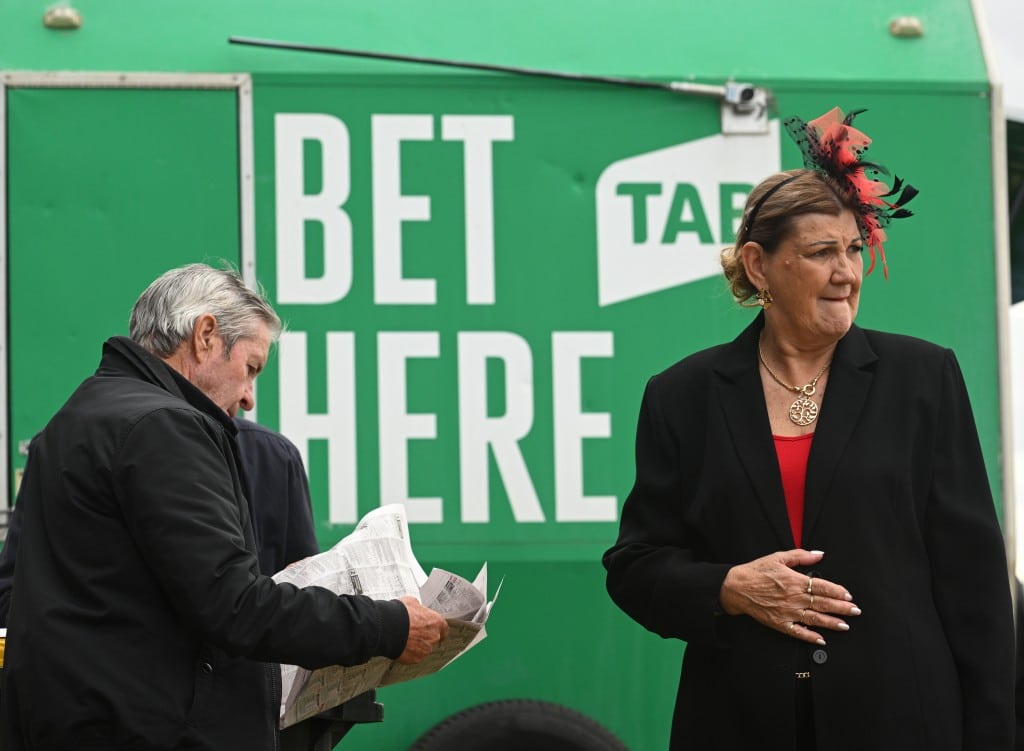
The decline of the parimutuel betting in Australia has been well documented, including in this publication.
As our Run the Numbers feature in August 2024 pointed out, at the turn of the century, $8.1 billion of the $9.5 billion wagered on horse racing in Australia every year went through the tote.
The most recent national figures, published in 2022/23, show that TAB on-course, retail and phone/internet betting contributed $4.3 billion of the $26.4 billion turned over on thoroughbred racing.
Overall turnover on racing in Australia doubled in the 15 years from 2007/08 until 2022/23, while tote turnover more than halved, now making up just 16 per cent.
So in this context, why has Tabcorp chief executive Gillon McLachlan targeted a national tote, a long-time but as yet unfulfilled ambition, as a key plank of the early part of his tenure?
Cynics say adding together three buckets of nothing still equals nothing, and the promised boost in market liquidity is little more than a marketing catchphrase.
But it is clear that McLachlan and his largely newly assembled executive team see a resurgent tote as important to their “retail-forward” philosophy, and some recent data may lend credence to that confidence.
Racing Victoria is one of the few bodies that breaks down its wagering turnover figures and splits parimutuel out in its annual report.
What it revealed was that parimutuel turnover decline, year on year from 2023/24 to 2024/25 on Victorian racing was $72.1 million, while it fell $247.1 million in non-parimutuel betting.
While percentage-wise, parimutuel experienced a greater fall (5.5 per cent compared to 3.7 per cent), there is an argument to be made that the “great collapse” of the parimutuel market is coming to an end.
In fact, the decline in Victorian parimutuel turnover at metro meetings in 2024/25 – 6.1 per cent, was less than it was for non-parimutuel betting, which was down 7.3 per cent.
Across the past five years, since 2020/21, annual parimutuel turnover in Victoria has fallen from $1.59 billion to $1.24 billion, while non-parimutuel turnover slumped from $7.1 billion to $6.3 billion.
In real dollar terms, annual non-parimutuel turnover has reduced by $702 million compared to five years ago, while $353 million a year has departed the annual turnover volume on tote.
The percentage decline is more pronounced (22 per cent parimutuel compared to nine per cent non-PM over five years), but this difference is nowhere near as much as it was from 2019 to 2021, when the percentage of parimutuel to overall turnover slipped from 27 per cent to 18 per cent.
That market share of turnover in Victoria now stands at 16 per cent, which has been stable for the past three years.

Stability is significant, given The Straight has been told that what is happening in Victoria is reflective of other major states in Australia over the past 12 months.
This is why Tabcorp is confident in the virtues of a national tote.
It also fits neatly into their retail-led strategy. What the slump in parimutuel market share during the pandemic lockdown periods confirms is that tote and retail are inextricably linked.
McLachlan identified immediately upon his arrival in August last year that retail, which Tabcorp has a near-national monopoly over but which had been characterised as a weakness, had to become a strategic advantage.
If it was to differentiate its wagering product from its rivals, it needed to lean into that and make betting with TAB a different experience. It has prioritised retail fit-outs and introduced initiatives like Tabtime to generate more buzz about the retail experience. The agency, club or pub-Tab experience is evolving faster now than it has in 30 years.
The early metrics are showing positive signs. Even in the 2024/25 financial year, cash wagering grew 17.5 per cent to $965.7 million, outperforming growth in digital, lending strength to retail.
It’s a similar situation with parimutuel. It may represent just 16 per cent of turnover, but, with the exception of WA, Tabcorp controls 100 per cent of it. Any effort it puts into that space comes straight back to them and not their corporate rivals.
It’s also a rare topic that generates a pretty much unified response among racing administrators. Racing and Wagering WA’s chief executive Ian Edwards told The Straight last week that he only sees upside in the national tote.
“It would be left to Tabcorp to work through all of those necessary approvals, but certainly from our business perspective, it would be a good thing rather than a bad thing,” he said.
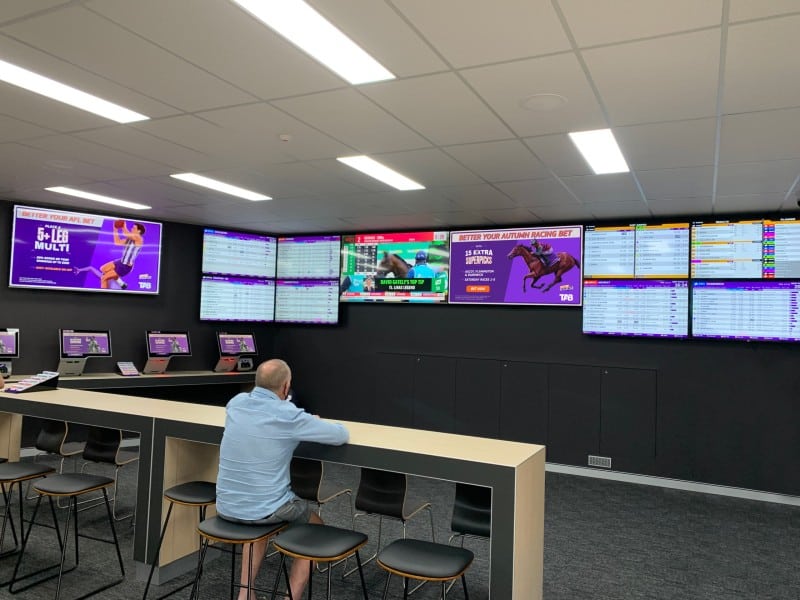
If McLachlan and his team can get sign-off nationally, it would not only be a significant step for the company but also for the Australian racing industry to be on the same page and share the same dividends.
There are so many divides in Australian racing at the moment that Tabcorp could be seen as a unifying force. It has gone through its own considerable pains over the past decade to become a truly national wagering company.
The symbolism of the move would not be lost on McLachlan, who spent much of his previous role in the AFL dealing with club-by-club and state-by-state divides while trying to pursue a national agenda.
It also plays nicely into Tabcorp’s long-term strategy to try once again to become the national brand of wagering in Australia.
Author

Related Articles

Under the influence – Victorian regulator warns gambling promoters of legal risks
Australia’s booming gambling influencer culture is facing unprecedented scrutiny, with Victoria’s watchdog warning social media personalities that some wagering content could breach laws and attract fines exceeding $24,000.
Sydney autumn carnival features drive NZ turnover jump
The importance of Australia’s biggest races to wagering turnover in New Zealand has been borne out in the latest figures released by Entain NZ.

Blake Matthews takes betr CFO reins after interim period
Blake Matthews has been appointed the permanent chief financial officer of corporate bookmaker betr.
