
On the road to rationalisation – Ballesty’s tough calls for the sustainability of New Zealand racing
Matt Ballesty might feel like he’s caught on a roulette wheel, but the former casino executive says he’s enjoying the challenge of being New Zealand Thoroughbred Racing’s new chief executive during a pivotal period for the country’s industry. He speaks to Tim Rowe after two months in the top job.
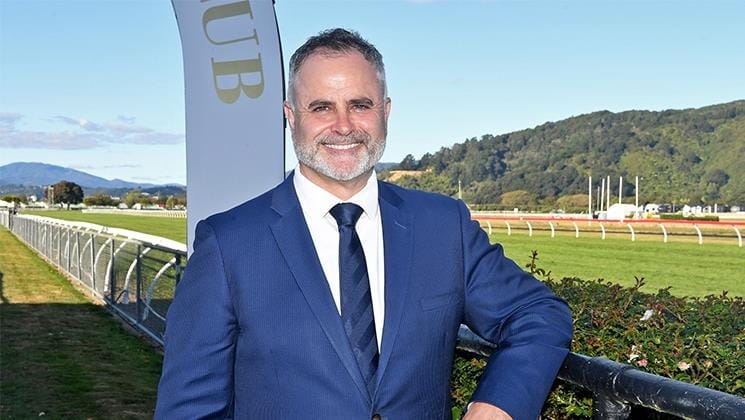
Matt Ballesty was on his way to a hui, a Maori phrase for an assembly or gathering, with the New Zealand thoroughbred industry’s various stakeholders, a meeting that could help shape the future of the sport.
The brainstorming session in Cambridge was the latest face-to-face meet and greet Ballesty has undertaken in his two months in the job as the chief executive of New Zealand Thoroughbred Racing.
It’s important that the former casino executive, himself a small racehorse owner, gets his head around the intricacies of the industry, and quickly.
There has been criticism levelled against Ballesty’s predecessors at NZTR about a lack of tangible action, particularly centring ont the rationalisation of New Zealand’s racetracks, and that the immediate financial boost from wagering giant Entain’s TAB NZ deal could be squandered.
It’s a situation Ballesty, in his interview with The Straight while driving on the motorway from Auckland to Cambridge, says he is all too aware of.
And, importantly, he says he’s up for the challenge and also prepared to make tough decisions, particularly when it comes to the pressing issue of New Zealand’s racetracks, even if it’s not the popular thing to do.
In the 2018-released Messara Report, it was recommended that the number of racecourses be slashed from 48 to 28 and to upgrade the remaining racecourses.
“I think what’s pleasing, and it’s hard to communicate these things, is that there’s a lot of this that is actually underway. Obviously, the reason it’s hard to communicate is that these are sensitive matters,” Ballesty says.
“They (closures) affect certain clubs and there’s a lot of respect and pride that needs to be afforded to those clubs. This is a transition and period that’s not easy, but there is a lot happening.
“To unlock the value of investment, we need to unlock the value of some of the assets that are deemed surplus to the requirements.
“But the reality is that they (NZTR) have tracks that don’t have racing anymore. They may still have some training, but that training can be relocated to areas nearby.”
Ellerslie has sold off land around the prime Auckland racecourse and upgraded its surface. After teething problems, the Strathayr track appears to be racing well, and there’s been synthetic courses built at Cambridge, Riccarton and Awapuni.
 Bren O’Brien
The upgraded turf track at Awapuni was abandoned after just one race on Anzac Day after a horse slipped on the renovated surface. New Zealand isn’t alone when it comes to the bedding down of new surfaces.
In NSW, Gosford’s new surface suffered problems while the Gold Coast’s new turf track had issues and meetings were transferred away from its turf track while the problems were rectified.
Ballesty says New Zealand’s track managers and administrators are “still learning” how to best manage the racetracks.
“We don’t have as many problems at some of the more established tracks because they’ve been around for 50-plus years,” he says.
“So, look, it’s really disappointing for the whole industry and everyone who goes to the races when that happens, it goes without saying, but we’re looking constantly at how we can upskill our existing track managers, how we can bring in expertise from overseas, and then also just making sure that we apply the right amount of patience to letting these tracks grow and get bedded down.

“Everybody was really disappointed (about Awapuni) because we had held trials, we’d taken our time, we’d done jump-outs, we had horses gallop over where the slip occurred, and it’s just one of those things that happened.”
There has been plenty of goodwill achieved through increased prizemoney and initiatives such as the NZ$9 million Champions Day at Ellerslie where the inaugural NZB The Kiwi was run on March 8, three days after Ballesty started as NZTR CEO.
Seen by some as an “outsider” appointment, Ballesty is aware of the goodwill of the aforementioned initiatives and the long-awaited increased stake money won’t last forever.
The 25-year Entain-TAB NZ agreement, a deal which has changed the fortunes of New Zealand racing, is two-and-a-half years in, with the five-year mark a crucial juncture in the long-term relationship.
“I think the simplest way to understand it is that in the first five years, (Entain) makes some guaranteed commitments and that we (NZTR) need to hit certain milestones and we’re tracking towards that,” Ballesty says.
“But the way people need to think about it is that it’s not a year-by-year thing; it’s where we end up in the fifth year and we still have two-and-a-half years to go.
“We’ve got a really good working relationship with Entain. They’re learning a lot about how it works in New Zealand and we’re learning a lot about how it works for them to maximise the wagering aspect of it.
“And I think what they’re really looking for is a business or an industry that is positive about its future and is making inroads into how they make that sustainable and I think we’ll see that.
“We’ve got some really good initiatives that we’re focusing on that we think will make a real difference to give them the confidence.”

The phone cuts out multiple times, but anyone who regularly drives to and from Auckland on that motorway will be aware that the mobile service is intermittent at best.
An Australian who worked in the NSW clubs sector before gaining employment in the gaming industry with Crown Resorts and SkyCity, which saw him work in Macau and later New Zealand, Ballesty was initially going to join the board and consult to NZTR until he was approached to take on the crucial role of CEO as the replacement for Bruce Sharrock.
He says the industry retaining the support of the government, and Racing Minister Winston Peters, who last decade instigated the Messara Report, is crucial to ensuring the ongoing viability of the NZ$1.6 billion industry.
“The Racing Minister is somebody who’s a great horse lover and understands the industry really well,” Ballesty says.
“I think what we need to do for him, to support him in his ministerial role, is to get some plans happening in a much faster timeframe than what’s been happening over the last few years.
“Now that we have the investment from Entain, it’s really important that the industry shows to the minister that we are doing all that we possibly can to make sure the industry grows and is sustainable.
“So, in that way, what we need to do is maintain communication with the government, make sure they’re aware of where we’re up to with our plans, and make sure they are supportive of the direction that we take. (The Minister is) looking to the industry to lead and that’s what we’re trying to do.”

Forming solid relationships with the government and other industry stakeholders isn’t Ballesty’s only mission as CEO. He is also keen to reacquaint himself with a former SkyCity colleague, Racing Victoria CEO Aaron Morrison, and to gain the ear of Racing NSW chief Peter V’landys.
As his counterparts across the Tasman have experienced, Ballesty will have to justify how he cuts up the revenue pie that underpins the New Zealand thoroughbred industry.
“I think it was fair to say that some of the feedback I’ve got thus far is … (participants are) happy to see us spend money as long as it’s going into things that are going to make the industry sustainable, like fixing up some of the tracks or putting in new grandstands or investing the money where we’ll see people come to the races more often,” he said.
“There’s a fear sometimes with sports administrators that they get a chunk of money and then they go and spend it and they’re not really any better off for it. That’s what we’ve got to avoid. We’ve got to make sure that what we do is spend it for a reason.
“Hopefully that’s where we land in the next 24 months. That’s what the focus will be, to spend money in the right places.”
Author
Related Articles
Rowe On Monday – the Selangor Mile edition
Tim Rowe found himself in Malaysia this weekend for the country’s richest race, where ex-Australian horses were to the fore, the punters were back after the distractions of the World Cup, Jett Stanley was making an impression, and a tribute to a New Zealand legend was on display.
Beyond the Slipper: Bott extends the Tulloch Lodge vision
The deal to move into Leilani Lodge represents more than just an expanded footprint for Adrian Bott as he spearheads a strategic pivot away from two-year-old racing, designed to keep his training partnership with Gai Waterhouse at the forefront of Australia’s training ranks.
Two Australian sires titles set to go down to the wire
Home Affairs is chasing down Snitzel in the two-year-old sires standings, while Bivouac and Wootton Bassett remain locked in a tight contest for second-season sire honours.
