
‘Price matters’- Wagering body slams POCT bungle as ACT government predicts revenue growth
The ACT government is banking on a 25 per cent surge in betting tax revenue despite clear signs that its record-high point-of-consumption tax rates have already dented the market.
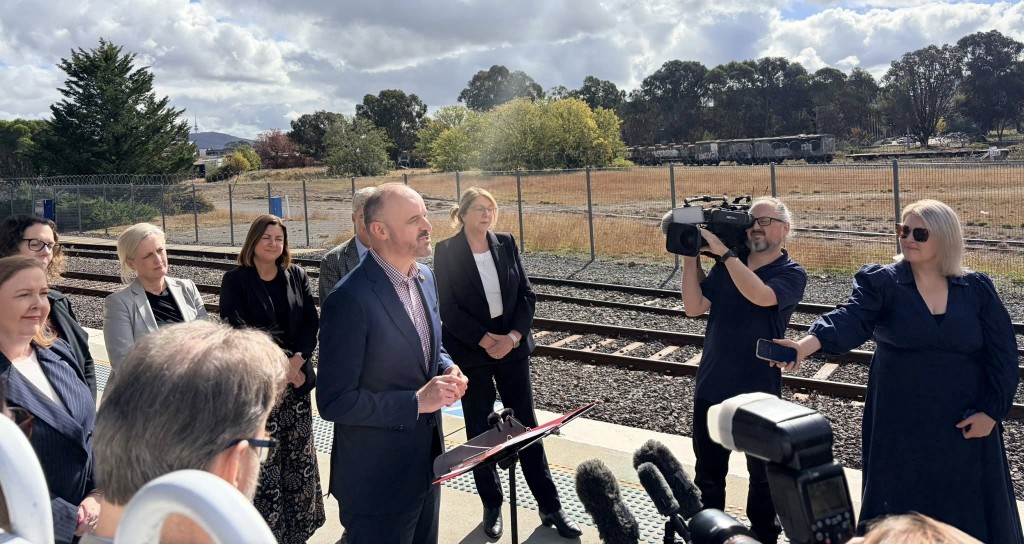
The ACT government projects that revenue from its nation-high point-of-consumption regime will grow by at least 25 per cent over the next four years, despite indications that a tipping point has been reached in the taxation of wagering in the national capital.
The ACT increased its point-of-consumption tax (POCT) rate to 25 per cent in 2024 and initially projected it would generate more than $32 million a year for the Territory’s coffers, only to find that turnover plummeted as taxes rose.
Having fallen $10 million short of projections in the last financial year, the ACT government dramatically revised its forecast for 2025/26 to $23.7 million.
This week’s budget indicated it would meet those expectations, but bullish Treasury projections see that amount rising to $25.3 million next year and increasing by larger amounts over the following three years.
By 2029/30, the Budget projects $30.6 million in revenue from the betting operations tax (BOT), stating that “growth aligns broadly with household income growth”.
Responsible Wagering Australia (RWA), a lobby group for the wagering industry, took the opportunity to highlight the faulty logic applied to raising the POCT rate in the first place, saying it was pushing more Territory gamblers to black-market providers.
“The ACT government increased its tax rate, expecting a revenue windfall. Instead, the Budget papers show revenue remains well below expectations and future forecasts have been revised down yet again,” RWA chief executive Kai Cantwell said.
“Meanwhile, illegal offshore gambling continues to surge to almost $4 billion and is forecast to reach $5 billion by 2029.
“People in the ACT have not stopped gambling. What we’re seeing is more consumers choosing illegal offshore operators over licensed Australian providers.”
Cantwell said there was evidence that higher taxes were simply passed on to punters through lower prices from betting operators, and that this was proving a disincentive.
“Price matters. Illegal offshore operators can offer better prices because they don’t pay tax, comply with Australian regulations or invest in safer gambling protections,” he said.
“The ACT’s experience shows that if governments want to protect consumers and preserve tax revenue, they need policies that strengthen the regulated market and crack down on illegal offshore gambling, not tax settings that undermine the competitiveness of licensed Australian operators.”
Cantwell said the figures should serve as a warning to governments that excessive taxation can undermine the regulated market, reduce expected revenue and push consumers towards illegal offshore operators that pay no tax, contribute nothing to sports and racing, and offer no consumer protections.
The Budget also indicated that gaming tax revenues had increased in the Territory.
BOT is payable by all betting operators whose net ACT betting revenue exceeds the tax-free threshold of $150,000 in a financial year.
Unlike every other jurisdiction, racing in Canberra does not receive a share of BOT as part of its funding agreement. Instead, it has guaranteed funding of around $7.5 million a year through to 2026/27.
The current agreement ensures industry funding through June 30, 2027, and is tied to a formal performance framework.
Author

Related Articles

PointsBet adds to calls warning gambling reforms could strengthen offshore operators
PointsBet has detailed advertising cutbacks, tighter VIP controls and its concerns over compliance costs during its annual general meeting, while urging Canberra to target offshore operators, influencers and payment channels.

Racing and wagering in a scramble to assess impacts of new gambling laws
While initial reports suggest that new gambling laws passed by the federal parliament this week could result in a 10 per cent drop in racing turnover alone, both the racing and wagering industry admit they are uncertain of the precise impact of the changes.
Done deal – Wagering reforms pass through parliament
Bipartisan support from Labor and the Coalition ensured major changes to Australia’s gambling laws have passed through both houses of parliament, more than three years after a key report urged urgent reforms to better regulate the wagering industry.
