
Racing and wagering in a scramble to assess impacts of new gambling laws
While initial reports suggest that new gambling laws passed by the federal parliament this week could result in a 10 per cent drop in racing turnover alone, both the racing and wagering industry admit they are uncertain of the precise impact of the changes.

Racing authorities and wagering companies have been hastily reworking their financial models to try to determine the commercial and funding implications of the changes to gambling laws introduced by the federal government this week.
The changes to the Interactive Gambling Act may have been long anticipated, but uncertainty around key policy details and the impacts of new laws on generosities and bonus bets has both industries scrambling for answers.
Racing Victoria chief executive Aaron Morrison told The Straight that he expects some impact on turnover, likely as much as 10 per cent, but that the details are still being worked through.
“My first answer was that it could be in the order of 5 to 10 per cent of turnover,” Morrison said.
“There’s been modelling done throughout the process, and I think we can safely say there will be some impact for racing, despite the important carve-out we’ve received.”
Morrison revealed he had spoken in depth to members of the Senate after the much-publicised Senate Committee hearing earlier in the month, explaining the impacts a ban on generosities may have.
“They asked me specifically for some more insight into this, and I actually had a very useful session post the inquiry to take them through how it actually worked through the system,” he said.
“If you look at races that actually have a promotion attached to them, you get something like 7 per cent or 8 per cent turnover uplift compared to those that don’t in a similar type.
“Then you’ve got the dynamic of the bonus bets themselves creating their own activity. If they’re bet through, they’re recycled. We tracked that through. It’s 3.2 times on average that they roll through.”
“And then you’ve got your share of multi-bets as well, which is included. So, to get to the 30 per cent turnover figure.”
For Racing Queensland acting chief executive Lachlan Murray, the fact that the full ban on generosities, suggested as a possibility in recent weeks, didn’t proceed was broadly positive, and the racing regulator was looking to analyse the precise impacts.
He praised the coordinated approach taken by the various aspects of the industry.
“It’s amazing what can be achieved when all industry pull in the same direction,” he said.
Wagering industry representatives have been working closely with racing executives in the past few weeks to rally for considered changes.
For the wagering industry, key concerns remain about the application of aspects such as opt-in advertising restrictions and tighter regulation of generosities.
At least one bookmaker spoken to by The Straight said the concept of banning generosities to “red-flag” customers was, at this point, too vague, and could be applied differently by different operators.
The prospect of finding a technical solution to allow online publications to prevent those who opt out from seeing betting ads was seen as unworkable and would require considerable development and implementation time.
That opt-in wagering register doesn’t apply to racing publications and it is that exception where Morrison sees a possible upside for the industry.
Morrison believes wagering operators may increasingly value racing’s media inventory if their ability to market through mainstream sport and other channels becomes more restricted.
“If racing remains a more workable advertising and promotional environment than mainstream sport, it’s reasonable to expect some wagering operators will look closely at how they allocate future marketing investment,” he said.
“We need to be asking ourselves, where are the opportunities potentially? Is that a net positive for us?”
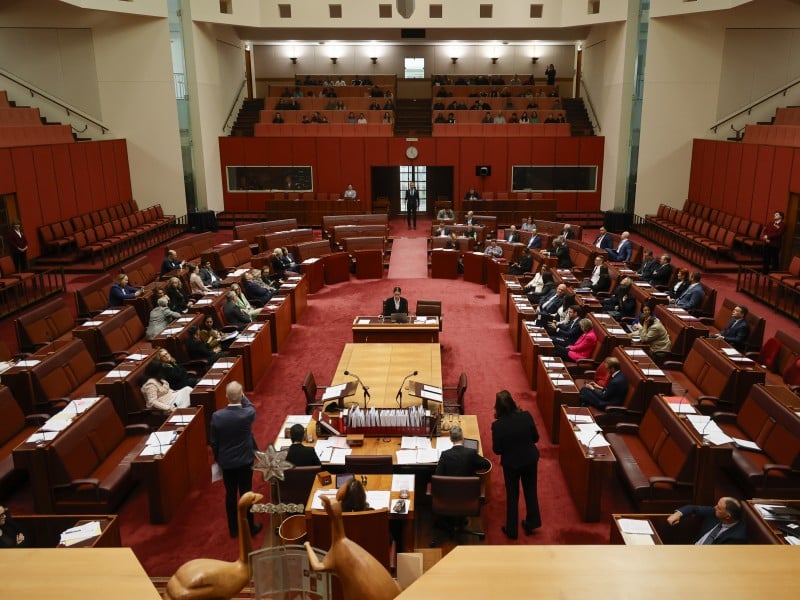
Both the wagering and racing industries have raised concerns that greater restrictions on aspects such as generosities and other advertising could see customers targeted by overseas operators.
“There is likely to be some further leakage offshore from price-sensitive punters with the WSPs having to recover costs of AdStop levy which may have a flow-on effect to their prices,” Morrison said
The other concern from a racing perspective is that a substantial downturn in sports wagering caused by the imposition of greater restrictions could have a knock-on impact.
“A lot of customers first engage with wagering through sports. We have seen studies from the WSPs that show that of those people when they join up for sports betting, only 10 per cent bet on racing,” Morrison said.
“By year three, that’s up to 60 to 70 per cent. And then they become a more predominant racing customer than a sports customer.”
The other aspect raised by at least one bookmaker is that if sports betting declines, and as a consequence funding back to sport falls, sporting bodies may seek a cut of the point-of-consumption taxes that underpin racing funding in many states.
Author

Related Articles

Tabcorp reportedly holds early talks with DAZN over possible Foxtel acquisition
Gillon McLachlan has reportedly sounded out Foxtel’s owner over a possible acquisition by Tabcorp, 18 months after DAZN bought the broadcaster from News Corp.

🔒 🔒 Jason Scott steps in as CEO after acquisition of Amused Group brands
Amused Group’s 10 brands, including Bet Nation and Bet Deluxe, are now under a new licence and new ownership after Matchday Group secured them, prompting a major change of leadership at the Melbourne-based wagering company.

Entain rides global challenges as Australian business posts modest growth
Entain’s Australian revenue rose one per cent in the September quarter, well down on its first-half rebound, but still growing as the global business rides a wave of regulatory changes.
