
Princess Zahra urges global breeders to preserve genetic diversity
Speaking a day after Daryz’s repeat Arc win, Princess Zahra delivered the keynote address at International Federation of Horseracing Authorities’ (IFHA) 60th conference and called on a comittment to breeding diversity and for racing leaders to show new fans the equine care that sits behind the sport.
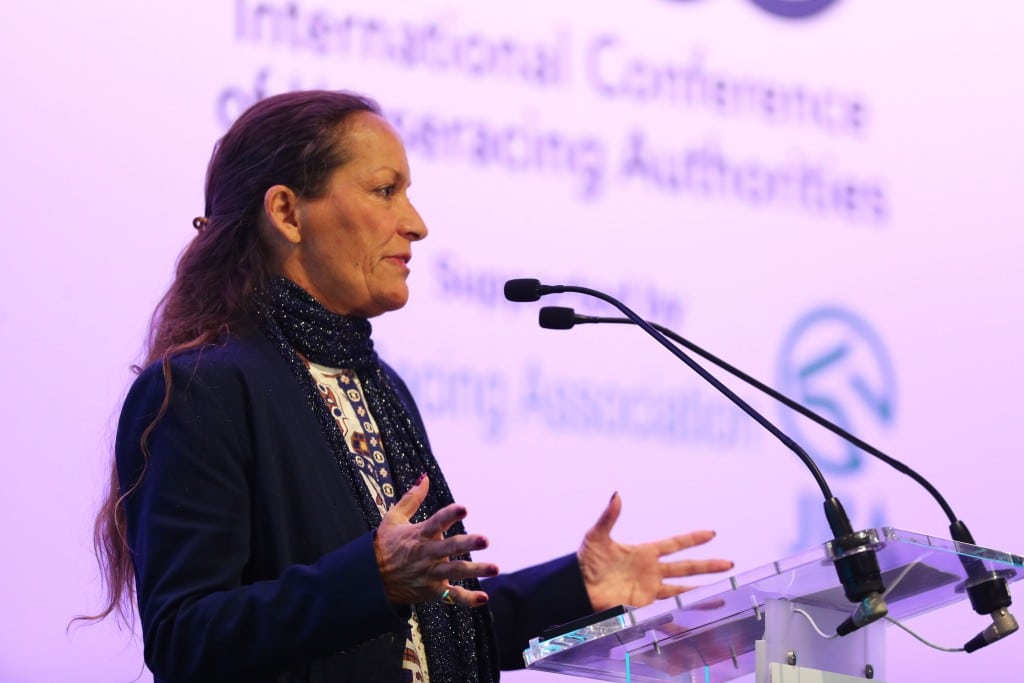
Princess Zahra Aga Khan has urged breeders to maintain a range of bloodlines even when they are out of fashion, while calling on racing leaders to show new fans more of the people and care behind the sport.
Her keynote at the International Federation of Horseracing Authorities’ (IFHA) 60th conference in Paris on October 5 followed Daryz’s second successive Prix de l’Arc de Triomphe victory a day earlier.
The Aga Khan Studs-bred and owned four-year-old became the first colt since Alleged in 1978 to win successive Arcs. The victory was his ninth from 12 starts.
“That horse represents what we do as breeders,” she said of Daryz.
“A horse like Calandagan is probably not something everyone wants to breed at this point in time. It is not necessarily fashionable, but it is necessary.”
Australia’s active stallion population fell to 349 in 2025, from 411 in 2024 and 618 a decade earlier, according to Australian Stud Book figures. The national live foal crop was 11,283 in 2025, down 4.84 per cent on 2024 and less than half the 1989 peak of 23,697.
Zahra urged racing leaders to address misconceptions and make it easier for newcomers to understand the industry, including the work involved in preparing horses to race.
“It’s important for the people in this room to solve the misconceptions in racing,” she said. “Everyone sees the racing part of things, but they don’t see the industry, the number of people employed, and every link in the chain.
“From the covering shed to Longchamp yesterday, that represented literally hundreds of people who had influenced that horse’s life. That is something we need to carry in our hearts, always: the people who are not seen, the people who are not on the racecourse, the people who work behind the scenes.”
More than 150 delegates from about 40 countries attended the Paris conference, which examined the federation’s development over six decades and the challenges ahead. The IFHA said Zahra’s keynote received a standing ovation.
IFHA executive director Andrew Harding’s presentation addressed anti-doping, including gene doping, the International Agreement’s role in regulatory alignment, and the use of science and technology to improve equine welfare.
Harding said the conference and federation had “created the international architecture that has allowed racing to function as a global sport rather than a collection of separate national sports”.
IFHA chair Winfried Engelbrecht-Bresges set out three major challenges for the sport: growing its fanbase, sustaining the thoroughbred and addressing risks to racing’s funding structure.
“The future of horse racing can only be secured by working together to address the key challenges that we face, and the IFHA is at the heart of that coordinated, collective action that we must pursue,” Engelbrecht-Bresges said.
The Hong Kong Jockey Club CEO also honoured the late Louis Romanet, chairman emeritus of the IFHA, who passed away in March.
“Ultimately, the Federation exists because racing authorities recognise that, although our jurisdictions may be different, the future of the sport is a shared responsibility,” said Engelbrecht-Bresges. “That principle was at the heart of Louis Romanet’s work. Louis will be missed dearly, but his legacy will endure throughout the global racing community that he worked so tirelessly to unite.”
Related Articles
Rowe On Monday – Next stop Flemington for Cunningham, the dash to Dubai and Marine One anticipation for Brown
In this week’s Rowe On Monday, Tim is back in the hotseat and chats to Phil Cunningham about star colt The Next Episode, looks ahead to the Dubai season and profiles a Western Australian stallion poised to make an immediate mark.
Epsom win a window back into Dubawi’s dominance
While his sons and grandsons are making the headlines, Dubawi delivered a timely reminder of his own legacy with his sixth Australian Group 1 winner, God’s Window, who elevated himself to elite level with a memorable Epsom win.
🔒 🔒 Lady Of Camelot deal still on the table as date with Extreme Choice looms
Sir Owen Glenn remains hopeful of selling Golden Slipper winner Lady Of Camelot but if not, the star mare could be among a star-studded first book for Go Bloodstock’s multiple Group 1-winning stallion Sir Delius in 2027.
