
🔒 🔒 One Pool, World Pool and lessons from Hong Kong
One Pool’s launch is an important step towards reviving parimutuel betting in Australia. But bigger pools are only the starting point. The test is whether they deliver competitive dividends and rebuild customer confidence – and Hong Kong’s early-season wagering weakness offers a possible warning about the risks.
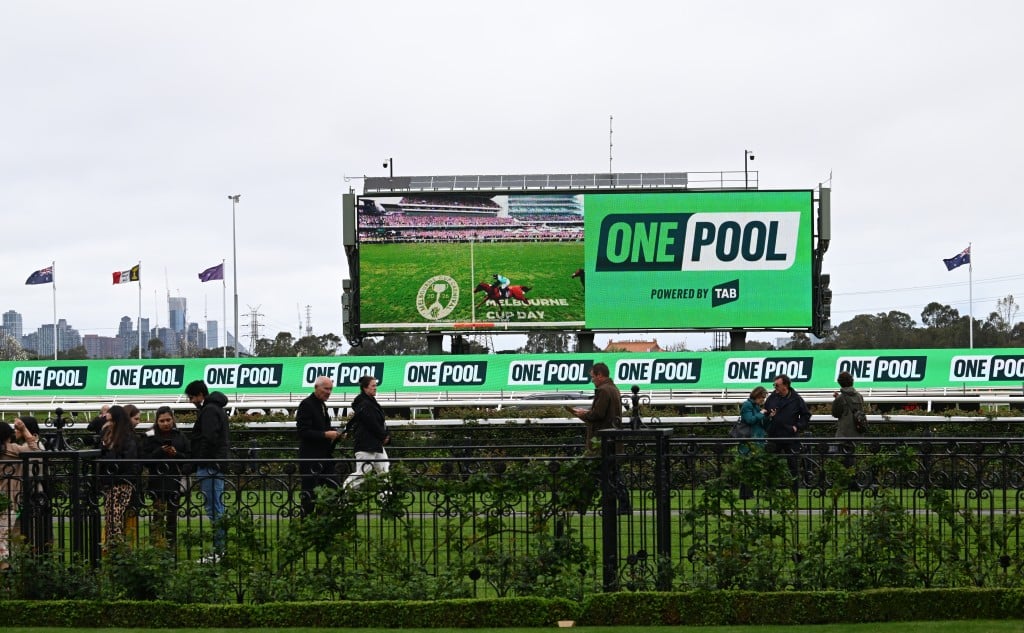
Comment: Saturday’s feature programs at Randwick and Flemington were where the concept of a renewed approach to parimutuel betting in Australia had its first major pub test.
For most punters, it was an easy game to score, with a simple comparison with fixed odds used to judge whether the additional liquidity could deliver One Pool more stable and competitive dividends than the previous three separate state totes.
On that very simplistic scale, fixed odds won the day.
In six of the 10 races at Randwick and seven of the 10 races at Flemington, the fixed odds dividend for the winner was superior to the One Pool dividend. That was a 13-7 success, albeit with the caveat that the final four races at Flemington were integrated with World Pool, which has a higher takeout rate.
The naysayers were out in force on this small but unsurprising sample size. They were especially noisy across social media early in the day when the first race at Randwick saw a successful protest overturn the result.
While “protest payouts” protected the fixed odds punters, those who backed the relegated favourite Columbus on the tote were left out of pocket.
With Tabcorp’s main rivals Sportsbet and Ladbrokes offering Tote-plus 10 per cent across most meetings, it was a tough first day at the office for One Pool.
It was nonetheless an important first step if tote betting, which has been plummeting five to six per cent per year over the last few years, is to find a pulse again.
Speaking to The Straight last week, Tabcorp’s chief wagering officer Michael Fitzsimons described the launch as a platform for another 18 months of product and technology development. Immediate, substantial growth was not the expectation.
One of those opportunities is in Tabcorp’s corporate rivals contributing back into the liquidity of a wholesale model via their derivatives.
Despite Fitzsimons’ optimism on that front, The Straight has been told that is a long way off happening and detailed conversations have not yet begun.
However, the concern for Tabcorp may not be in the intentions of its rivals, or the behaviour of its own customers, but a downward trend in usually captive overseas parimutuel markets.
Hong Kong has been held up as the model example of how parimutuel can thrive for the better part of 20 years.
The Hong Kong Jockey Club’s racing turnover rose 3.6 per cent in FY2025/26, with overseas commingling on Hong Kong races a major driver and World Pool turnover up 23 per cent. Yet, the HKJC is now investigating local wagering declines at five of the first six meetings of the new season.
Local wagering on Sha Tin’s September 27 card was down 11.5 per cent year-on-year to HK$1.359 billion. Turnover on Sunday’s Sha Tin meeting was slightly higher at just under HK$1.4 billion.
Asked by the South China Morning Post last week about the sluggish start, chief executive Winfried Engelbrecht-Bresges cited smaller fields and more selective customers.
Head of racing product Greg Carpenter said the mean stake in the opening five fixtures was “definitely very soft”. The club said its customer base was similar to a year earlier, even slightly better.
Sound familiar?
During Australia’s prolonged wagering slump from 2023 until 2025, the number of active customers continued to rise, but staking slumped.
Cost of living was one of the factors blamed, but anecdotally a lot of punters felt that the increased margins taken by bookmakers in light of increased tax and regulatory costs were taking their toll.
Having spoken to several people on background about the turnover drop in Hong Kong, The Straight has unearthed similar challenges, albeit in a parimutuel context.

Under the HKJC pricing model, 82.5 per cent of each win, place, quinella, quinella place and double pool is paid out as a dividend, representing a 17.5 per cent cut for the HKJC.
That remains unchanged, but what is changing is the variation in prices closer to the jump.
Experienced Hong Kong punters have described the late fluctuations in prices over the past 12 months as “wild” and similar to those which have been impacted by computer-assisted wagering in the United States.
There are suggestions, and these are only suggestions at the moment, that these fluctuations may impact the sentiment and investment of the everyday Hong Kong punter, who has less trust in dramatically diminished dividends.
Adding to this is the rebate system. Under HKJC’s system, any losing bet of HK$10,000 (AU$1836) or above is eligible for a rebate of a prescribed percentage, 10 per cent on win-place and 12 per cent on quinella or quinella place.
That system is a long-established practice of facilitating turnover and greater liquidity.
But sources spoken to by The Straight said that alternative rebate programs, facilitated by overseas tote operators, offer more generous rebates, around 12 per cent, and not just on losing bets.
This has in turn incentivised high-volume bettors, who operate close to the jump and impact prices late in the market. It is understood this impact has been raised with the Jockey Club previously by experienced bettors into Hong Kong.
Price uncertainty is inherent in tote betting. The concern raised here is whether the scale of late changes is making the product less attractive to the customers whose participation it needs to retain.
One of the other reasons posited for a drop-off in Hong Kong investment is the proliferation of World Pool events.
Previously, Hong Kong-based racing punters were in a dead zone between mid-July and early September, but the constant flow of World Pool races, which increased from 296 to 397 in 2026, has given them more options to bet in the usual ‘off-season’.
In addition to World Pool, on Sunday, there was an 11-race Sha Tin card, followed by nine races from Longchamp as part of a commingling agreement.
Hong Kong has always been a market which thrived on product scarcity, with a maximum of two meetings a week, but the growth in additional racing options, including football – we are coming out of a FIFA World Cup – has added more, perhaps too many, options in the market.
Engelbrecht-Bresges considered that “cannibalisation” of the core racing product was a possible cause that the HKJC was examining.
“There’s a certain level now with more product and that is always my concern – what’s the optimal number of product can we have?” Engelbrecht-Bresges said.

Those two factors – the importance of protecting your “core” customer and the dangers of oversaturation of betting options – are something that Tabcorp will do well to pay heed to as they further roll out One Pool.
The fact that the World Pool win takeout rate is 17.5 per cent and One Pool’s is 14.5 per cent is one of the most obvious disconnects and something the Tabcorp chief executive Gillon McLachlan acknowledged in the media last week.
But beyond that, there are aspects such as the way in which rebates are offered, and to whom, which already undermine the faith in parimutuel betting in Australia.
While encouraging the world’s largest racing bettors back into the Australian market would be seen as a win for One Pool, it cannot be done at the expense of the everyday punter who does not operate at the same volume or on the same terms as the professionals.
One Pool should, therefore, be judged on more than the size of its pools. Competitive dividends, the scale of late price movements and the experience of ordinary customers must be part of the assessment.
Hong Kong’s investigation has not established why local wagering has weakened. But the question it raises for Australia is clear: can international liquidity and new products strengthen the tote without weakening the confidence of its existing customers?
For Tabcorp, rebuilding that confidence is not an optional extra. Trust is crucial, especially in an environment where price certainty does not exist.
Author

Related Articles

🔒 🔒 NSW regulators investigating Apollo Tech collapse
Wagering tech company Apollo Tech has entered liquidation, prompting a NSW regulatory investigation into its collapse and possible impact on online bookmakers, as investors question where their money went.

Ex-Brisbane Lions teammates warned over illegal gambling promotions
Ex-AFL players Mitch Robinson and Rhys Mathieson promoted offshore operator Vegastars on Instagram and YouTube, prompting official warnings from regulator ACMA as focus turns to the regulated market ahead of pending crackdowns on influencers in Australia.

Flutter to cut up to 1400 UK and Ireland jobs as gaming tax rises bite
Sportsbet’s parent company will shed up to 1400 roles to offset steeper UK duties, with the cuts part of a group-wide cost overhaul.
