
Racing’s Rich Listers experience fluctuating fortunes on and off the track
For most Rich Listers, racing and bloodstock are sideline interests, distractions from the businesses that have made them wealthy, but that’s not to say their day jobs aren’t at times as volatile as the ups and downs of the thoroughbred industry.
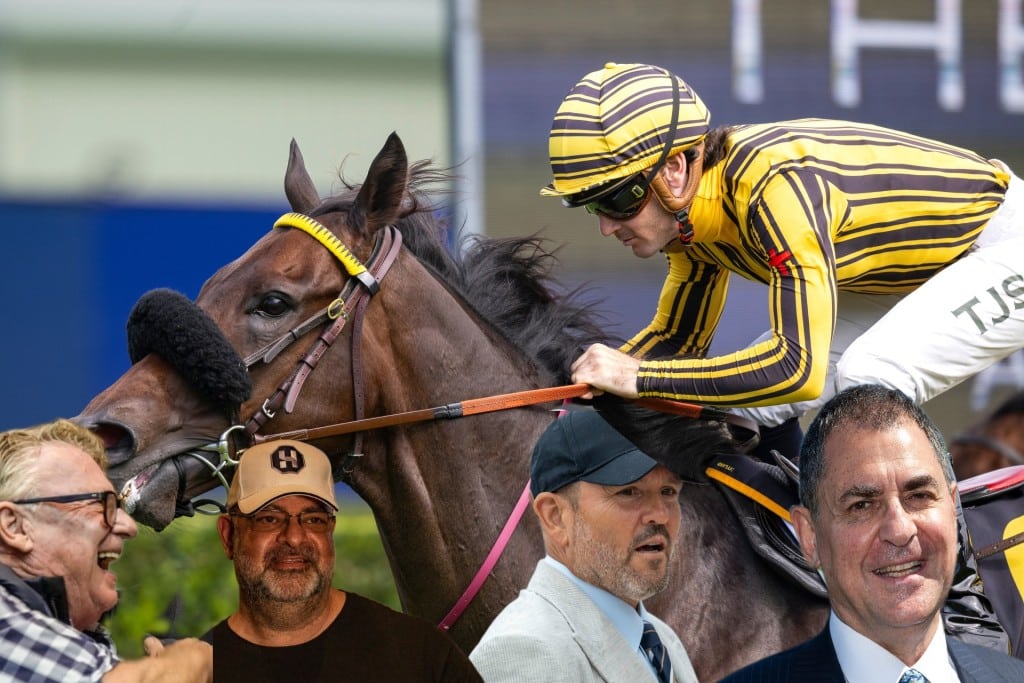
The compilation of lists is often considered easy fodder for media, space fillers that can generate debate.
The top 50 footballers, cricketers or the most influential sporting figures spring to mind, as does the compilation of the world’s best racehorses.
There’s no right or wrong answer, such is their subjective nature.
A more analytical list that, dare we say it, carries more currency is the Australian Financial Review’s annual Rich List, even if it also requires a reasonable amount of educated guesswork.
The long-running table documents Australia’s 200 wealthiest individuals or families, charting the rise and fall of their considerable fortunes.
It follows, then, that those who make the cut – this year required at least $853 million – have more discretionary income than most.
And what better way to enjoy their business savvy than to “invest” some of it in the racing industry.
What makes this year’s Rich List interesting is the number of individuals involved in racing who have been in the top 200 in the past but no longer are.
One of those is Sydney investor Mike Gregg, the man behind Mulberry Racing, which secured a slot in The Everest last year, a commitment of $2.1 million over three years.
Gregg, a relative newcomer to the racing industry who has linked with Hawkesbury trainer Brad Widdup, made much of his fortune via his early investment in WiseTech Global.
After exiting WiseTech Global as a director last year, Gregg has remained a significant shareholder in the Richard White-founded business which has been embroiled in controversy in recent years and again this week.
Gregg doesn’t feature in this year’s Rich List and that in part will be attributed to the steep fall in WiseTech’s share price, which has declined more than 70 per cent in the past year and 21 per cent this week alone.
Gregg, whose Mulberry Racing committed to taking on a $700,000-a-year slot in The Everest for a minimum of three years, was 150th last year.
However, Gregg, his grandson Lachlan Sheridan and their chosen trainer Widdup, have been active at the yearling sales again this year.
According to data from Arion, Mulberry Racing has purchased 41 yearlings since September 2024, at a combined cost of more than $14 million.
While the majority have been purchased at the Australian and New Zealand sales, Mulberry Racing also has a string of horses in training in the United States.
Owing to Gregg’s background in technology, the core of Mulberry Racing’s bloodstock acquisition strategy has been Gregg’s investment in data and software to help identify the yearlings best suited to Mulberry.
Widdup plays a key role in the selection process, too. By using his expert eye for a horse, developed since childhood as the son of a trainer and years working for Godolphin before going out on his own, he provides insight that Mulberry’s software may not be able to identify when he inspects a horse on a sales ground.
“It’s a racing business, but really it’s a data business,” Sheridan told Racing NSW’s It’s Gold podcast this week about Mulberry.
“It’s a hard thing to say to the big players in the game when you’re talking to them and you’re going, ‘oh, we’ve got a team of these data guys that are trying to build software and we think we can do it smarter’.
“It’s a pretty bold thing to say, but we’re kind of backing ourselves to be able to do it smarter.”
He added: “We’ve got a lot of young horses that we’ve purchased using the software that are pretty exciting, and I think we’re going to get to a point, after the patient approach that we’ve taken, where they’re going to showcase themselves on the track.”
Octogenarian adman John Singleton is another long-time Rich Lister whose considerable fortune is not enough to get him in the top 200.
Singleton does, however, still have a small number of horses in training including the Bjorn Baker-trained Blue Door, the debut Kindergarten Stakes-winning Stay Inside filly, and Gerringong.
Now trained by Chris and Corey Munce in Brisbane, Gerringong will wear Singleton’s royal blue and white-crossed sashes – the same colours used by his billionaire racing mate Gerry Harvey – in Saturday’s Group 1 Tattersall’s Tiara at Eagle Farm.
Melbourne Racing Club vice-chair Jonathan Munz, whose wealth is estimated to have increased 10 per cent year-on-year to $2.48 billion, is 69th on the AFR list. He is also set to have a runner in the Tattersall’s Tiara.
Tuileries, a four-year-old daughter of So You Think bred by Munz, races in his GSA Bloodstock red and white silks for trainer Peter Snowden.
Munz’s agent, Kiwi Dean Hawthorne, was a busy man at the Inglis Easter Yearling Sale in March, spending $8.775 million on 15 yearlings.
He was also seen to be an underbidder on more than one occasion.
Munz’s bloodstock portfolio also enjoyed a boost this year, with his stallion Super Seth, the Group 1-winning colt who has made a stellar start to his stud career, selling for A$70 million to Coolmore.
Although Munz did not sell out of Super Seth, the deal between Waikato Stud and Coolmore added significant value to the sire who will stand this year for a fee of $137,500 (inc GST) in his first season in the Hunter Valley.
Meanwhile, retail king Harvey, the co-owner of auction house Magic Millions, Baramul Stud and New Zealand’s Westbury Stud, and his wife Katie Page were 38th on this year’s list with an estimated $4.33 billion.
The couple enjoyed an increase in wealth of 13 per cent, according to the AFR.
In a racing sense, Nick Wakim has preferred to focus on quality over quantity and rarely appears to make a rash decision or impulsive buy despite his available wealth.
And that fortune has skyrocketed from $1.2 billion to $4.36 billion in the space of a year, largely thanks to his Phoenix Lithium mining operation, The business plans to extract and recover 60,000 tonnes of lithium carbonate equivalent every year in California from 2032. He has jumped to No.36 on the AFR list.
Fellow Victorian and racing investor, Woodside Park Stud and Hirsch Racing owner Eddie Hirsch, who made his $2.33 billion fortune via United Petroleum, arguably would not have much time to focus on his thoroughbreds in the past few months.
With the oil supply chain thrown into chaos through the disruption of the Strait of Hormuz, Hirsch would be forgiven for focusing on his day job, which saw him ranked 74th on the Rich List this year.
Hirsch, with the assistance of Mark Dodemaide, has bought at least five yearlings this year, including a maiden foray to the New Zealand Bloodstock Karaka Yearling Sales where he bought colts by Shamexpress and Almanzor respectively.
Nigel Austin of Cotton On, who owns Geelong stud Rosemont Stud alongside his brother-in-law Anthony Mithen, is ranked just one spot ahead of Hirsch in 72nd place with estimated wealth of $2.42 billion.
Young Melbourne-based entrepreneur Ed Craven, the co-founder of crypto-currency gambling company Stake, is worth an estimated $5.2 billion, putting him 32nd overall. Stake is not allowed to take bets from Australian-based punters.
As wagering industry figures have remarked in the past, given the rise of Stake and rival Shuffle, Australia’s biggest legal operator Sportsbet is only the third largest bookmaker on Melbourne’s Collins Street.
Country Victorian Tim Heath, the founder of overseas casino and cryptocurrency betting sites, suffered a tough year as he invested in numerous start-ups, with his balance declining 41 per cent to $1.45 billion, dropping him back to 133rd in the rankings.
Other known racing identities on the Rich List include harness racing’s Kevin Seymour ($1.15 billion), Bruce Mathieson ($1.82 billion), while the Ingham family, passionate generational racing people, have an estimated fortune of $1.47 billion.
Seven-time Melbourne Cup-winning owner Lloyd Williams, who is no longer the hands-on racing man he once was, still makes the Rich List with $1.08 billion, in 166th position.
Author
Related Articles
Meeting for a Lady – Camelot crew gather to discuss offers for Golden Slipper winner
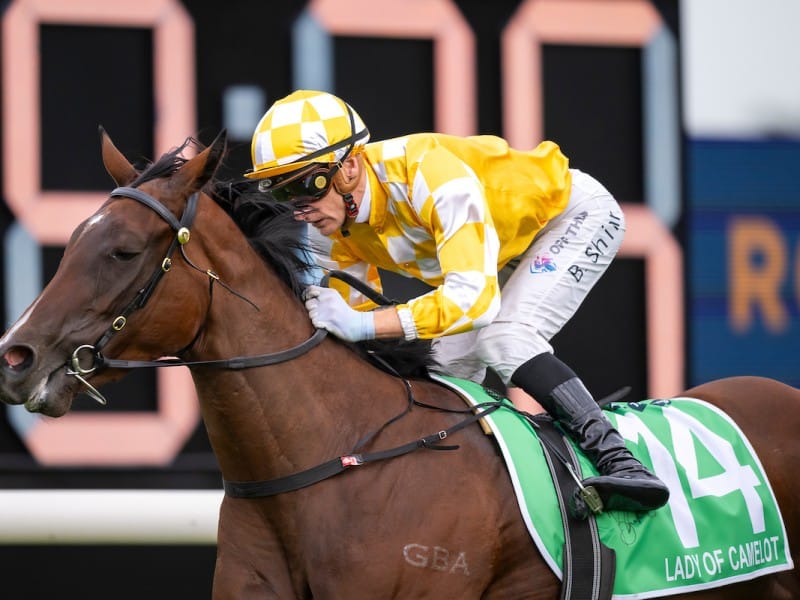
Sir Owen Glenn has received multiple offers for Group 1 winner Lady Of Camelot, potentially the most valuable mare to be ever sold in Australia, with the Go Bloodstock founder and his manager currently assessing the proposals.
A road well travelled – Toole hoping for home stakes success before Swiftie’s Five Diamonds trip
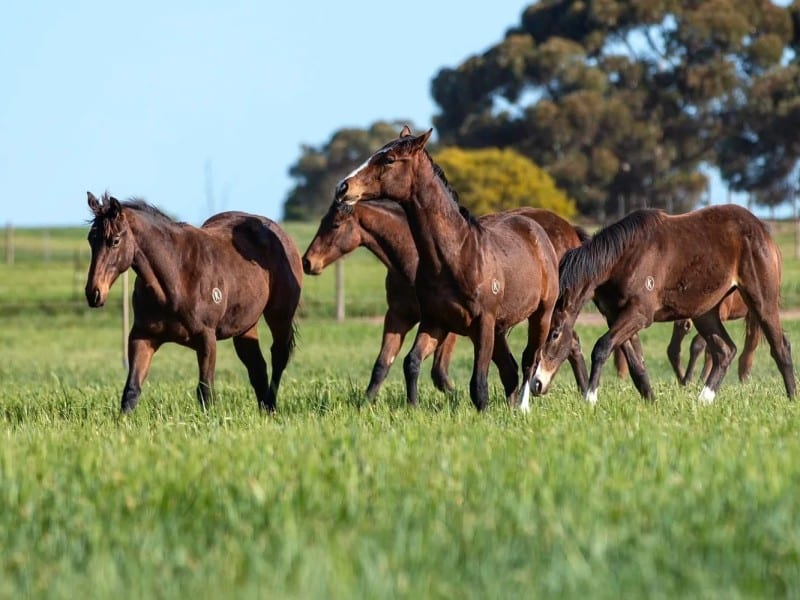
Long-time South Australian breeder David Toole is enjoying the journey of anguish and ecstasy that Behemoth Stakes contender Swiftie Harriet is taking he and her fellow owners on.
Run The Numbers – The sire categories we don’t talk about
Each season, the champion general, broodmare, first-season, second-season, two-year-old and three-year-olds sires are celebrated, but there are other ways to cut the cake when it comes to sire influence. This week’s Run The Numbers takes a final look back at the 2025/26 Australian racing season through that lens.
