
Rowe On Monday – NZ legend Joe Yorke remembered, Japanese syndicate success a pointer to expansion, sales recruitment hots up

In his latest Rowe On Monday column, Tim Rowe reports on the loss of a New Zealand industry legend, provides an insight into Japan-based Umanity Racing’s plans for Australia and details the competition between auction houses for 2026 yearlings.
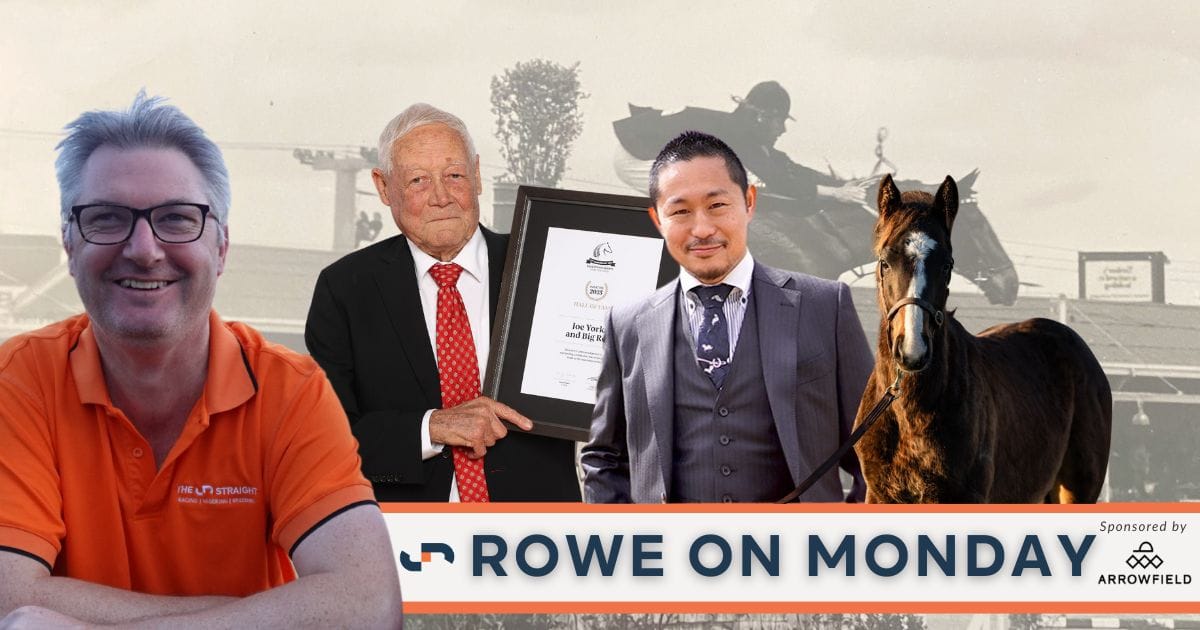
‘One of a kind’ Yorke remembered for lasting legacy on New Zealand’s equine industry
The New Zealand thoroughbred industry lost a legend on Sunday with the sudden death of Olympian and renowned horseman Joe Yorke.
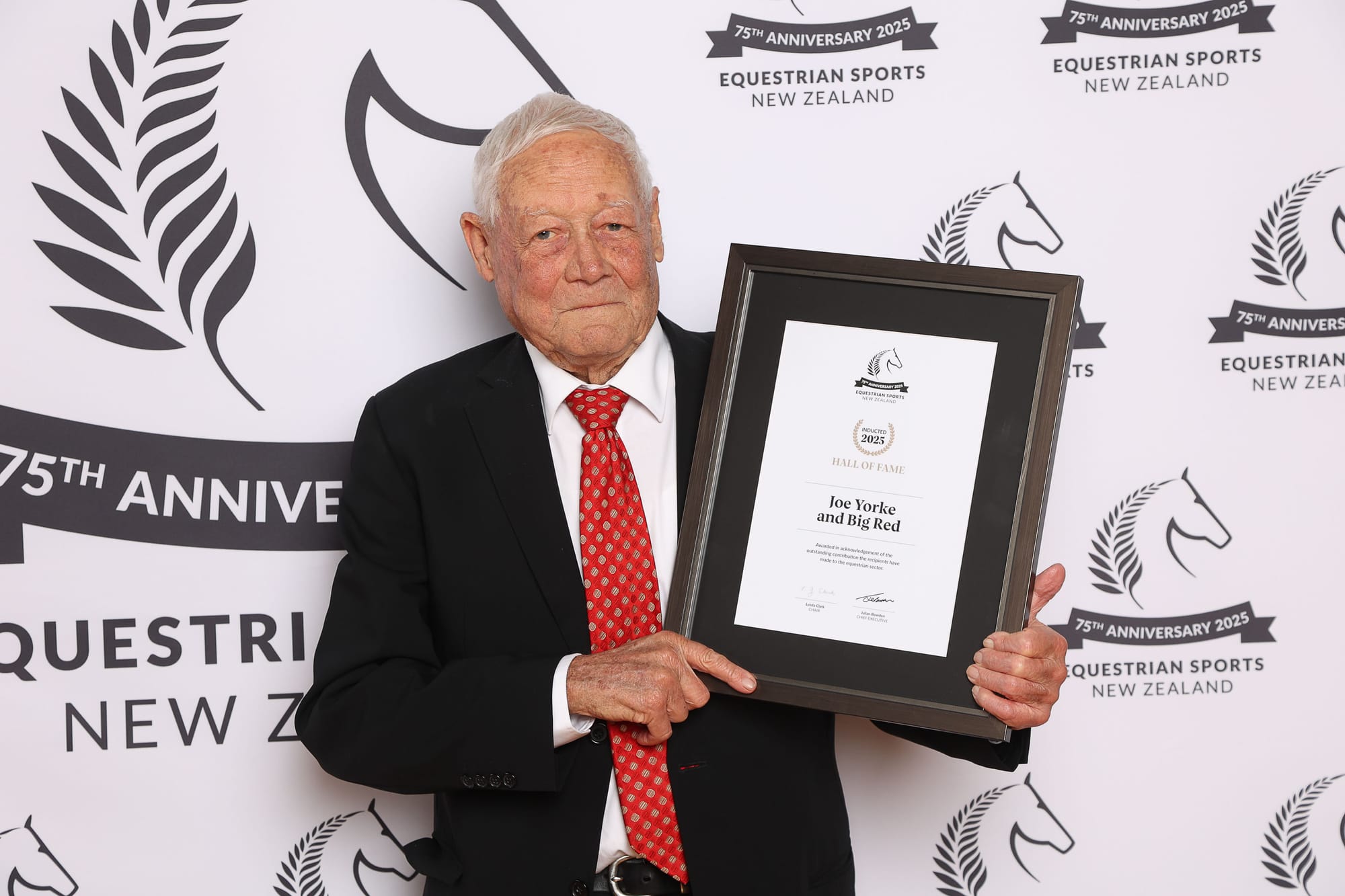
A Central Districts icon, Yorke is believed to have suffered an aneurysm and came just two days after he and his champion show jumping horse Big Red were inducted into Equestrian Sports New Zealand Hall of Fame. Yorke was 78.
Yorke represented New Zealand at the 1976 Olympic Games in Montreal, Canada, competing in the individual jumping equestrian event on his horse Big Red before becoming one of New Zealand’s pre-eminent horse breakers and pre-trainers.
He also sold yearlings and ready-to-run two-year-olds under his Sandhaven Stables banner based out of Manawatu.
Prominent New Zealand bloodstock agent Dean Hawthorne worked for Yorke during the mid-1980s and that two-year experience left a lasting impression on him.
“I learned a lot about managing big numbers on a daily basis, and process, just reading the horses, too,” Hawthorne said.
“(I learned about) when it was time to back off them, when it was time to probably turn the screws a bit.
“He was old school, but he was very efficient.”
When Hawthorne branched out on his own, launching his own breaking-in business at Cambridge, he enacted many of the things that Yorke had taught him.
“We’d track through the forest and we had a grass track and we also gave them plenty of variety when we were breaking them in,” Hawthorne said of Yorke’s methods.
“It was my way just to keep them a bit fresh, and I sort of brought that to my own breaking in system up in Cambridge, with a bit of variety instead of just going round and round in circles.
“He was one of a kind, old Yorkie.”
Yorke could be blunt and to the point, but people knew where they stood, say those who knew him best.
Fellow agent John White spent many horse sales with Yorke, who would often stay with him during his trips from Manawatu to Karaka.
“He was just a great horseman, a good judge of a horse, a rough diamond, a hard case,” White recalled.
“He was still swearing when they put him in the ambulance. That’s what his wife Karen told me.”
Christened Ashton Donald “Joe” Yorke, he was born in 1947. At 28 years of age, he would go to the Montreal Olympics with ex-racehorse Big Red.
Yorke and Big Red had numerous wins and placings, including Horse of the Year and the Pilmer Plate for puissance in 1974, and the Norwood Gold Cup in 1975.
The Big Red Cup, awarded to show jumping’s Young Rider of the Year, is named in honour of the big rangy chestnut who had the heart of a lion.
In announcing Yorke’s induction to the Hall of Fame on Friday, the Equestrian Sports’ body said the horseman did a lot to nurture young people entering the equine industry.
“Joe was known to call a spade a spade and over the years, and has been incredibly supportive of young people who give life a go, especially in the equine industry, regardless of the level they chose,” they said.
Yorke’s induction into the Hall of Fame last week puts him alongside fellow thoroughbred industry luminaries Sir Mark Todd and Little Avondale’s Catriona Williams.
In more recent years, Yorke has traded horses to Hong Kong, Macau, Singapore and Malaysia.
It’s Malaysia where he struck up a friendship with expatriate Kiwi Simon Dunderdale, helping the Kuala Lumpur-based trainer climb the Malaysian ranks to win the premiership in 2024.
He also advised the purchase of New Zealand-bred ready-to-run graduate Antipodean, arguably the best horse racing in Malaysia.
Yorke is survived by his wife Karen and daughters Brigitte and Rachel, herself an accomplished horsewoman based in the United States.
Australian first for Japan’s Umanity Racing
It may have been a maiden on the Ballarat synthetic track during winter, but the win by Japanese-bred and owned Kawa was a significant one.
A four-year-old mare by Real Steel, Kawa is trained at Ballarat by Matt Cumani for a syndicate headed by Umanity Racing, Japan’s largest horse racing tipping site.
It’s the first time Umanity Racing’s dark green and white horseshoe silks have been seen in Australia.
The Rising Sun Syndicate’s Kosi Kawakami, an expatriate Japanese industry participant, helped broker the deal to bring the mare to Australia and he believes that the success could be the start of a bigger investment here by the Japanese group.
“We met with the CEO of Umanity last year and they are really interested in expanding in Australia,” Kawakami told this column.
“They love horse racing, obviously, and they actually want to do something in Australia as a company, but we haven’t actually realised that yet.
“But it’s part of the project. We’re (possibly) going to buy a horse here, maybe breed with her (Kawa) in Australia, because she’s a well-bred mare.
“It’s going to be really exciting to have Umanity involved in Australian racing. They’re really loving it so far. It’s great.”
Kawa, who is out of US Grade 3-winning Havana Grey mare Treasuring, was trained by Koshiro Take in Japan, where she had four unplaced runs from 1200m to 1600m, before being imported to Australia.
No losers when it comes to sales company competition
Competition between the sales houses has arguably never been fiercer, and not just Australia’s two of Inglis and Magic Millions, but for New Zealand Bloodstock, too.
They are in a race to attract the best of the yearling crop each year. For NZB, having more of New Zealand’s best-bred yearlings sold at Karaka is imperative.
With New Zealand’s 100th national yearling sale to be held in January next year, Cambridge Stud has backed its home country sale to the hilt, promising its entire yearling crop for the NZB auction.
For Magic Millions and Inglis, they’re constantly in a battle to secure the best of the best for their respective flagship sales but they are also respectful of the decisions that vendors make.
The Snitzel-Winx colt, who will be the most talked-about yearling next year, has already been committed to the 2026 Inglis Easter sale, as announced on Sunday night by the auction house.
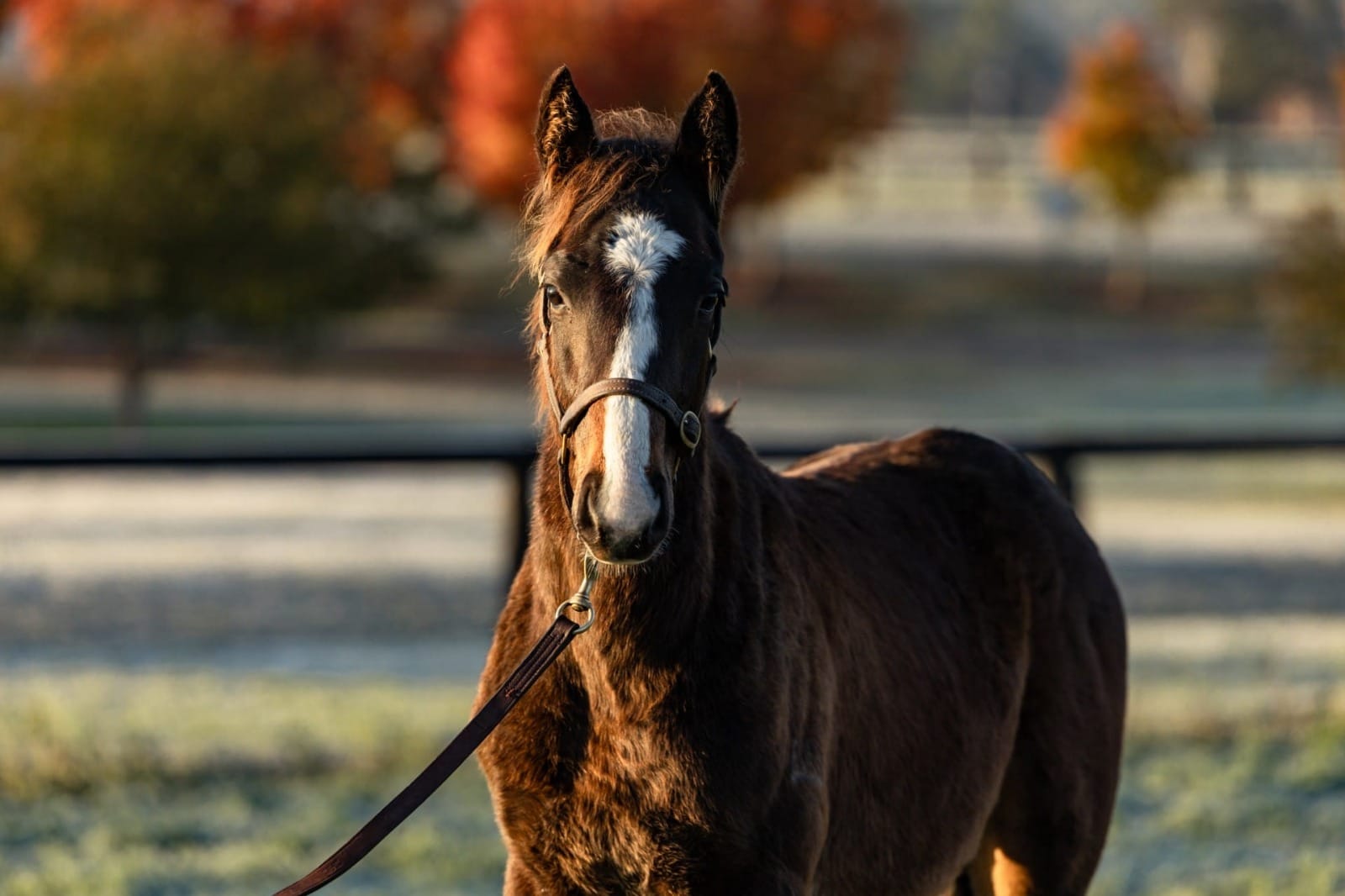
With the colt’s late November birth date, Easter was the logical option. Had he been born earlier, in August or September, you could be sure that Magic Millions would have gone all out on attempting to have the Snitzel colt on the Gold Coast next January.
Winx’s first live foal, an October-born filly by Pierro, was of course sold at last year’s Easter sale for a record $10 million, with Inglis’ sales pitch to her breeders winning out over Magic Millions.
This time, however, it is understood Magic Millions didn’t pitch to the Snitzel colt’s breeders Peter and Patty Tighe, Debbie Kepitis’ Woppitt Bloodstock and the Treweeke family in the knowledge that the colt would benefit from being offered at a later sale.
His older half-sister generated global headlines leading up to and post her eight-figure sale.
The announcement of her half-brother being catalogued for next April’s Easter sale has already garnered mainstream media attention on the Sunday night television news bulletins, even if some of the sale price suggestions and what the colt could earn at stud were over the top and a little premature, to say the least.
No doubt Magic Millions will have something up its sleeve for its season-launching January sale.
Author
Related Articles
Waikato Stud devastated by death of champion sire Savabeel
Waikato Stud has confirmed the sudden death of champion sire and Cox Plate winner Savabeel at age 24.
High interest but scant detail as stallion prospect Reserve Bank sells via Bull Ring
Group 1-winning stallion prospect Reserve Bank has been sold to stand at stud later this year for an undisclosed amount via an Inglis online sale.
‘A unique asset’ – Osborne Park still part of the plan as Godolphin looks to reinvest in breeding properties
The sale of Crown Lodge to Racing NSW has raised a host of questions, including the future plans for Bong Bong Farm and Leilani Lodge, but one which has been answered is whether Godolphin will retain its state-of-the-art Osborne Park training facility.
