
Rowe on Monday (on Tuesday) – Flight delays, sliding doors, Sandblom’s reflections and a stud sale
After being caught up in flight delays, Tim Rowe’s weekly column arrives slightly later than scheduled this week, as he chats to Joe O’Neill and Matthew Sandblom, and lifts the lid of the sale of a well-known stud.
A quick note to explain why this column is a day later this week. Sydney’s weather made the trip to Auckland for the Ready To Run Sale a bit longer (about 12 hours) than expected on Monday,
Talk about sliding door moments
When syndicator Joe O’Neill decided in 1997 to leave the army, he had a job lined up running Cricket Tasmania, but a visit to then-trainer Bill Mitchell’s stables on Easter Saturday that year changed his career trajectory.
A “what are you up to” question posed by Mitchell caused O’Neill to reconsider his administrative path running Tassie cricket and instead acting as a racing manager for the trainer.
Despite striking gold almost immediately with Dignity Dancer, it took almost three decades for O’Neill’s Prime Thoroughbreds’ blue and red silks to win a Group 1.
That came on Saturday at Sandown, with in-form mare Shadhavar taking out the CF Orr Stakes for O’Neill and trainer Tom Dabernig.
It was also Dabernig’s first Group 1 since branching out on his own five years ago.
“I remember when I set the business up with Bill, because I knocked back the CEO job of Tassie cricket to set up Prime back in 1997 and I remember I said, ‘well, when will I get my first win?’,” O’Neill told this column.
“Bill said, ‘it won’t take long, mate’. But I did buy Dignity Dancer at the breeze-up sale and then we sold it back to the breeder, Keith Biggs, because Bill said that we better offer him back to him.
“He was a champion.”
Dignity Dancer won the Spring Champion Stakes in 1998 and the Australian Guineas (as it’s called now) in 1999.
Prime Thoroughbreds was, well, off and racing and consistent success has followed under trainers such as Mitchell, Kris Lees, John Thompson, Patrick Payne and Dabernig.
“If you look at Tom at the moment, I’ve got eight horses with him for eight winners,” O’Neill said.
“They cost $860,000 and they’ve returned $2.69 million.”
Cavalry Girl, who was runner-up in the Moir Stakes earlier this spring, is one of them and there’s also Shadhavar who continued her purple patch of form in the CF Orr.
Shadhavar, who was bred by China Horse Club and sold through its stud operation The Chase at the Magic Millions Adelaide Yearling Sale for $85,000, suited O’Neill’s style of filly.
Her fourth dam is also Helen Street, an Irish Oaks winner in the mid-1980s who has had a profound influence on the thoroughbred globally through her daughter Street Cry.
“That’s what attracted me. We liked her as a yearling. She was a little bit backward, but she had a nice frame and she had the double cross of Street Cry.
Her sire Pride Of Dubai, a son of Street Cry, has also proven to be an elite sire of older mares, headed by Pride Of Jenni and Bella Nipotina.
“It’s not easy to find horses that can do what she did yesterday. The horses behind her had won $26 million,” he said.
O’Neill, who is spending this week in Far North Queensland on holiday, didn’t have a huge party on Saturday night despite the elusive result 29 years in the making being safely in his keeping.
Instead, he had a meal at home with family and friends toasting the significant victory. In a way, it justified O’Neill turning his back on cricket, and he’s had few regrets since in his pursuit of Group 1s.
“Denis Rogers was a chairman (of Cricket Tasmania at the time) and he’s a mate of mine, but he’s an autocrat,” O’Neill recalls.
“And I thought, ‘I’m not going to be able to do the things that I want to do. He was a very good administrator and he was chairman of the Australian Cricket Board as well. So, I decided, no, I don’t want to fight with him.
“Then Bill’s business was growing and that was when I came along and said I was leaving the army.”
And the rest is history.
Sandblom’s champagne two-year-old season
Major Australian owner and breeder Matthew Sandblom’s northern hemisphere experiment with Extreme Choice took him to last month’s Breeders’ Cup in Kentucky and Royal Ascot is next.
The Kingstar Farm principal sent two Extreme Choice fillies to France earlier this year to be trained by Francis Graffard and has struck immediate success.
Primetime Emmy won a Group 3 at Chantilly prior to her fifth in the Breeders’ Cup Juvenile Turf Sprint and Sandblom has lofty ambitions at the Royal meeting in June with the filly being aimed at the Group 1 Commonwealth Cup for three-year-olds.
Stablemate Extreme Dream won at Chantilly on October 15 before a wet track was blamed for her unplaced run in Listed company 11 days later at the same track.
“She didn’t handle the track, so she’s out spelling at the moment with Primetime Emmy,” Sandblom told us.
The two Extreme Choice homebreds have added to the depth of Sandblom’s racing team in France.
“I can see myself doing more French racing. I do have quite a few shares besides the ones I took over there,” he said.
“I also have the horses that Arthur Hoyeau buys each year. I’m involved in them and also a couple which Francis Graffard buys.
“I’ve had four two-year-old winners this year and there’s a fifth, an Intello, which I wasn’t really expecting to run as a two-year-old, who is having a start (this week).”
The Hoyeau syndicate, which includes Sandblom, also raced Group 1-winning filly Ramatuelle who sold for US$5.1 million at the Fasig-Tipton sale in 2024.
New owner for Riverdene
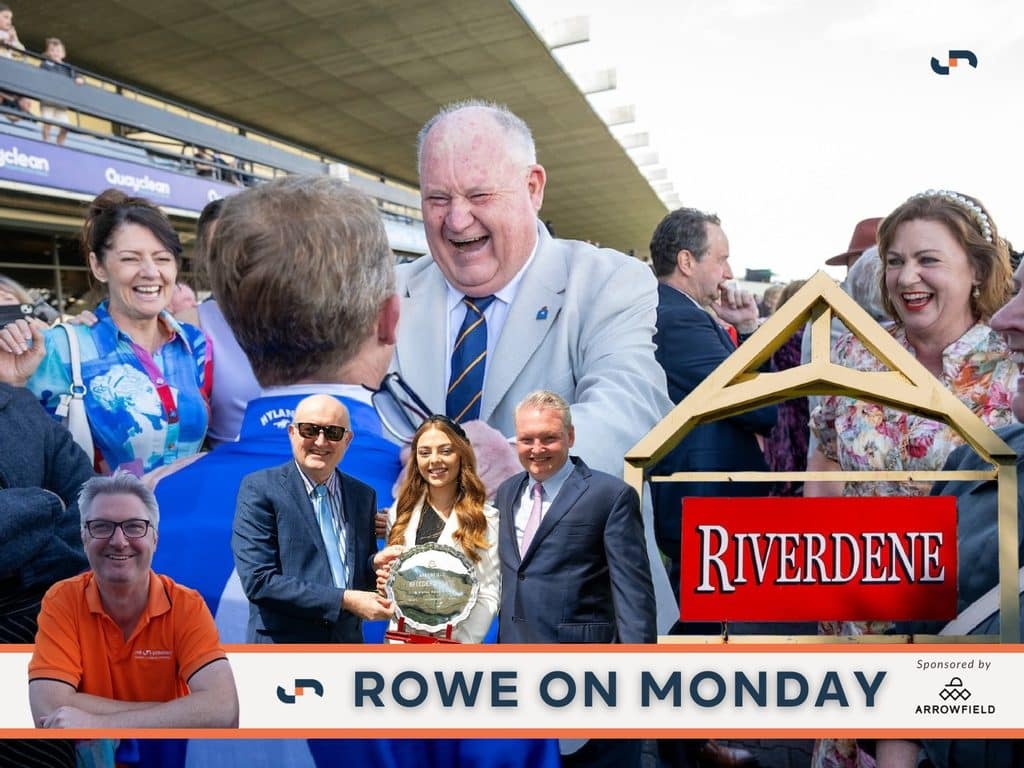
NSW Riverina thoroughbred stud Riverdene has been sold, with local cattle farmers purchasing the 200-hectare property.
The sale of Riverdene, which was owned by breeder and veterinarian Kevin Pendergast, is expected to settle later this month.
It is understood that the new owners intend to maintain the racehorse spelling component to the business while also running cattle on the property east of Wagga Wagga.
Amanda “Froggy” Elliott has been the long-term manager of Riverdene with Pendergast and his partner, fellow vet Raina Scott, basing themselves in the Hunter Valley since the late 2000s.
Author
Related Articles
Rowe On Monday – Doc’s Invisible journey, a big week for Three Bridges and Ivan Lister’s honour
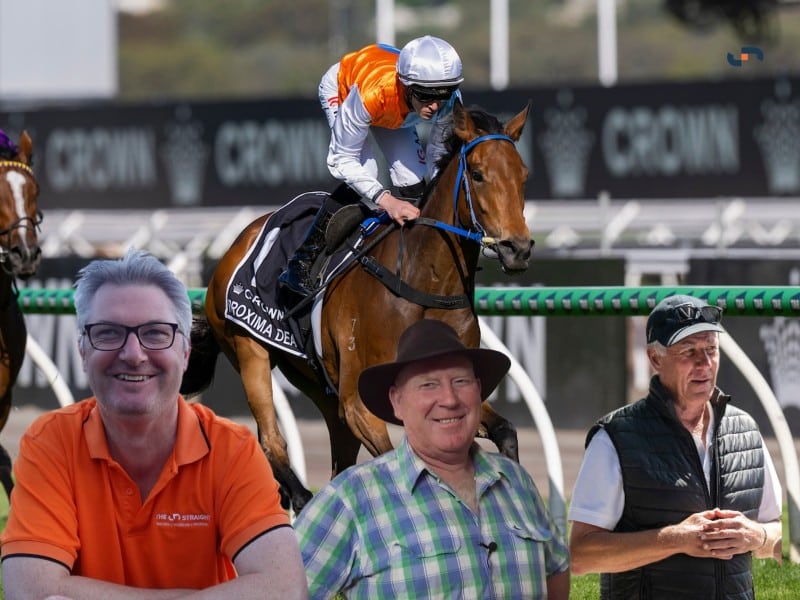
In this week’s Rowe On Monday, Tim Rowe chats to Chris “Doc” Lawler about the backstory of impressive VRC Oaks winner Proxima Dea and reveals a battling Victorian trainer is in line for national honours.
Rowe On Monday – Hatton savours Derby victory as Kieran and Tom Moore complete rare family double
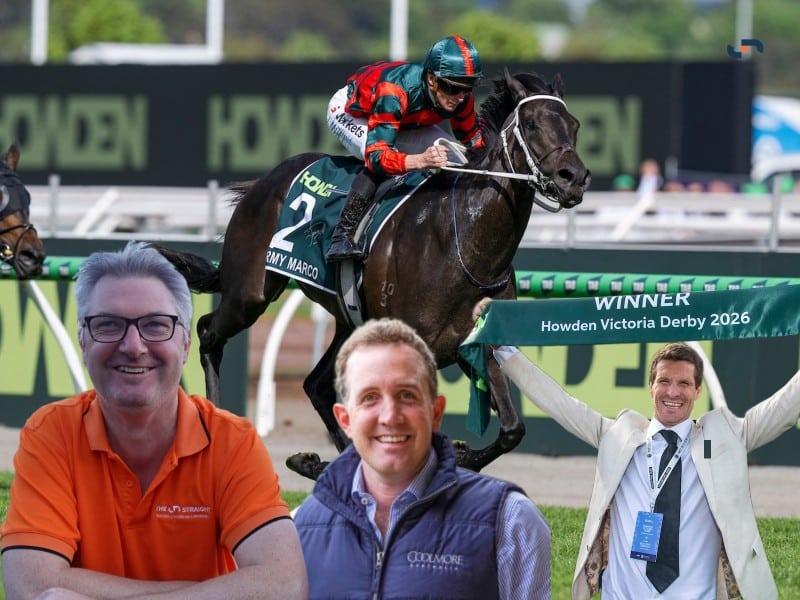
In this week’s Rowe On Monday, Ross Hatton’s reveals his broodmare band of 30 at his South Australian farm includes Rose Memory and Seracena, who are the dams of first and second in this year’s Victoria Derby, while Kieran and Tom Moore are enjoying their rare Derby connection and Louis Mihalyka says Militarize has proven to be a good moneyspinner despite his infertility.
Rowe on Monday – Farnan flying in Hong Kong, Rebel’s improving cause and Moroney seeks Defining moment
In this week’s Rowe On Monday, James Cummings gets things going for both himself and an Australian sire in Hong Kong, Rebel Dane on the up and Paul Moroney on the hunt for European talent.
