
Tabcorp, Racing NSW, a court case and a 99-year itch
The marriage between Racing NSW and Tabcorp, slated to last for 99 years, is officially on the rocks after confirmation that papers have been served and a directions hearing has been scheduled for the NSW Supreme Court next week.
The Sydney Morning Herald broke the news publicly, but rumours had swirled for weeks that the relationship between Racing NSW and its prime wagering partner, and sponsor of its biggest race, The Everest, had broken down and the pair were headed to court.
“Tabcorp is the biggest long-term partner and sponsor of racing in NSW, so we’re disappointed by the legal action,” Tabcorp chief executive officer Adam Rytenskild said in a statement.
“We would rather be putting our energy into the growth and integrity of NSW racing than being forced to court. We don’t agree with it and will be defending the action.”
Not the first time in the past few years, Racing NSW let its legal papers do the talking with the SMH reporting it had accused Tabcorp of breaching its contract with the racing body.
So how did we get here?
In modern financial terms, a 99-year marriage may as well be a millennium, but in the rapidly evolving wagering sector, it is an even more preposterous number to try to comprehend.
In 1998, after TAB Ltd’s corporatisation and before it went public, the new entity was given a 99-year totalisator licence by the NSW government, the first 15 of those years with a retail and tote monopoly.
Tabcorp, born from a similar privatisation process in Victoria in 1994, assumed that long-term license through a merger with TAB Ltd in 2004, coincidentally the same year Peter V’landys began his time as chief executive at Racing NSW.
Now, with 73 years of that licence still to run, another nine with retail and totalisator exclusivity which was extended in 2013, both Tabcorp and Racing NSW are desperate to renegotiate their terms. However, their preferred terms are extremely different.
The relationship between Tabcorp and the NSW racing industry has been fractious for some time. Just last year, now-departed Australian Turf Club chief executive Jamie Barkley accused Tabcorp of spending ‘record amounts in generosities and marketing support’ on a digital marketing strategy at the expense of ‘tangible benefits’ to the racing industry.
Indeed, Barkley is right in that despite a massive spike in wagering during the pandemic, the revenue flowing into the Australian Turf Club from TAB distributions has fallen since 2017 from $87.6 million to $85.1 million in 2023.
“Australian Turf Club’s operations and investment in racing are heavily dependent on a better financial performance from Tabcorp,” Barkley said.
The Australian Financial Review reported the story at the time, citing the growing tension between the NSW industry and Tabcorp. It also received an interesting comment from Rytenskild.
“We’re in agreement that the wagering funding model in NSW needs to be urgently reviewed to better reflect the modern industry and we will continue to push for this. The current system is outdated,” he said.
A little bit more recent history to add to the intrigue of the long-term marriage is that in 2022 Racing NSW had initially objected to the demerger of the Tabcorp business from its lottery operations, with V’landys describing the initial plans as a ‘financial disaster’ for NSW racing.
The demerger was only able to proceed once Racing NSW dropped its objection, which V’landys said was resolved through an agreement between the two parties, the terms of which were not revealed.
While a resolution was found, that moment pointed to a weakness within the Tabcorp/Racing NSW relationship, one which could easily be re-opened should they find themselves on the opposite sides of an argument, as they do now.
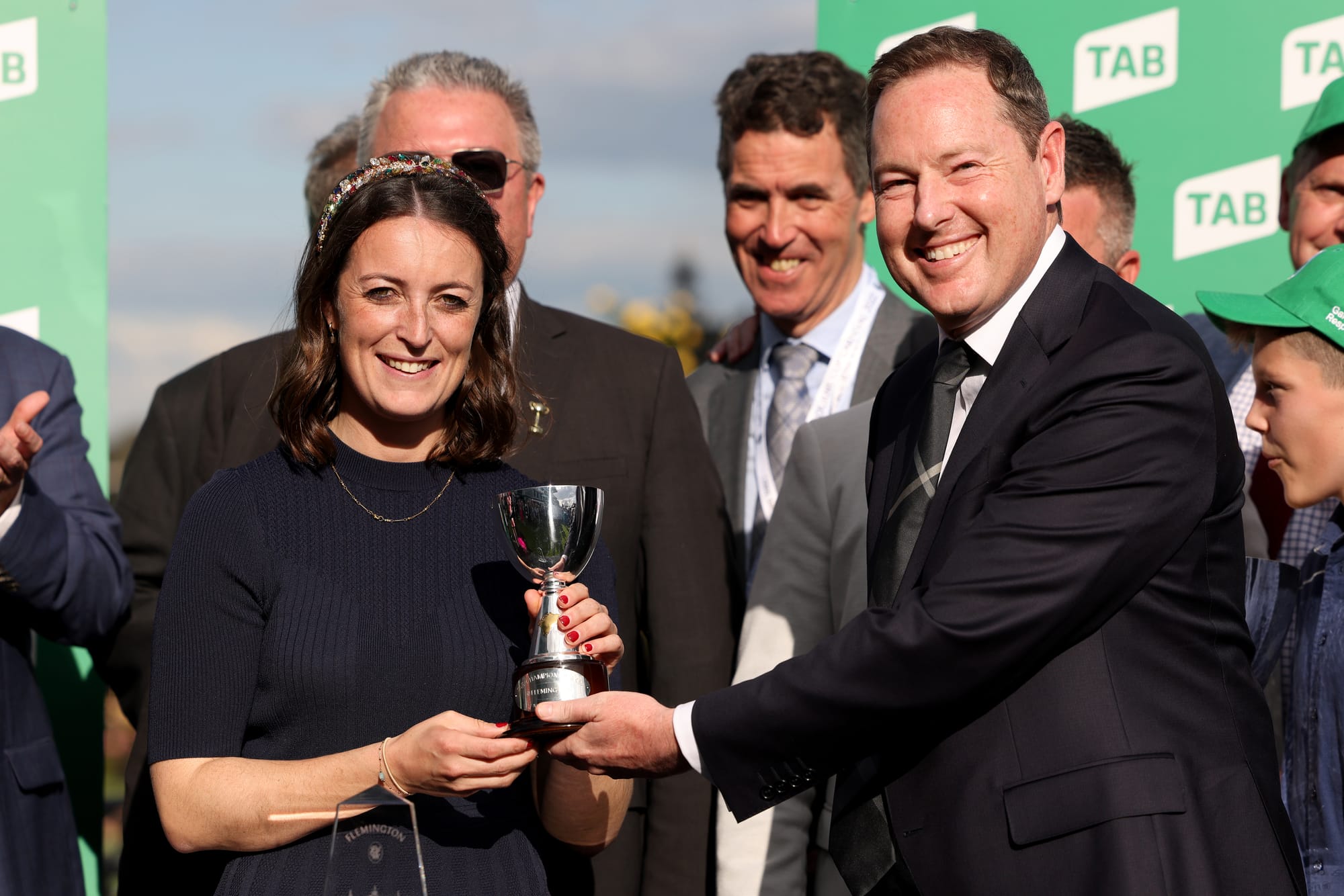
Elsewhere, Tabcorp has just negotiated a 20-year deal to extend its retail and tote monopoly in Victoria. Worth $864 million to the Victorian government, it ends the joint venture between the wagering giant and the Victorian government which had existed for the past 30 years.
The government was in a position to forego that ongoing JV funding as it had negotiated a new deal to split the revenue from its increased Point Of Consumption Tax 50-50 with the Victorian racing industry.
Racing was able to secure a commitment from the government that it would be no worse off, despite $130 million of revenue from the Tabcorp JV disappearing from Racing Victoria’s bottom line.
Racing Victoria CEO Andrew Jones recently told The Straight he believed the POC revenue, plus other funding, would see the Victorian thoroughbred industry better off than it was before.
 Bren O’Brien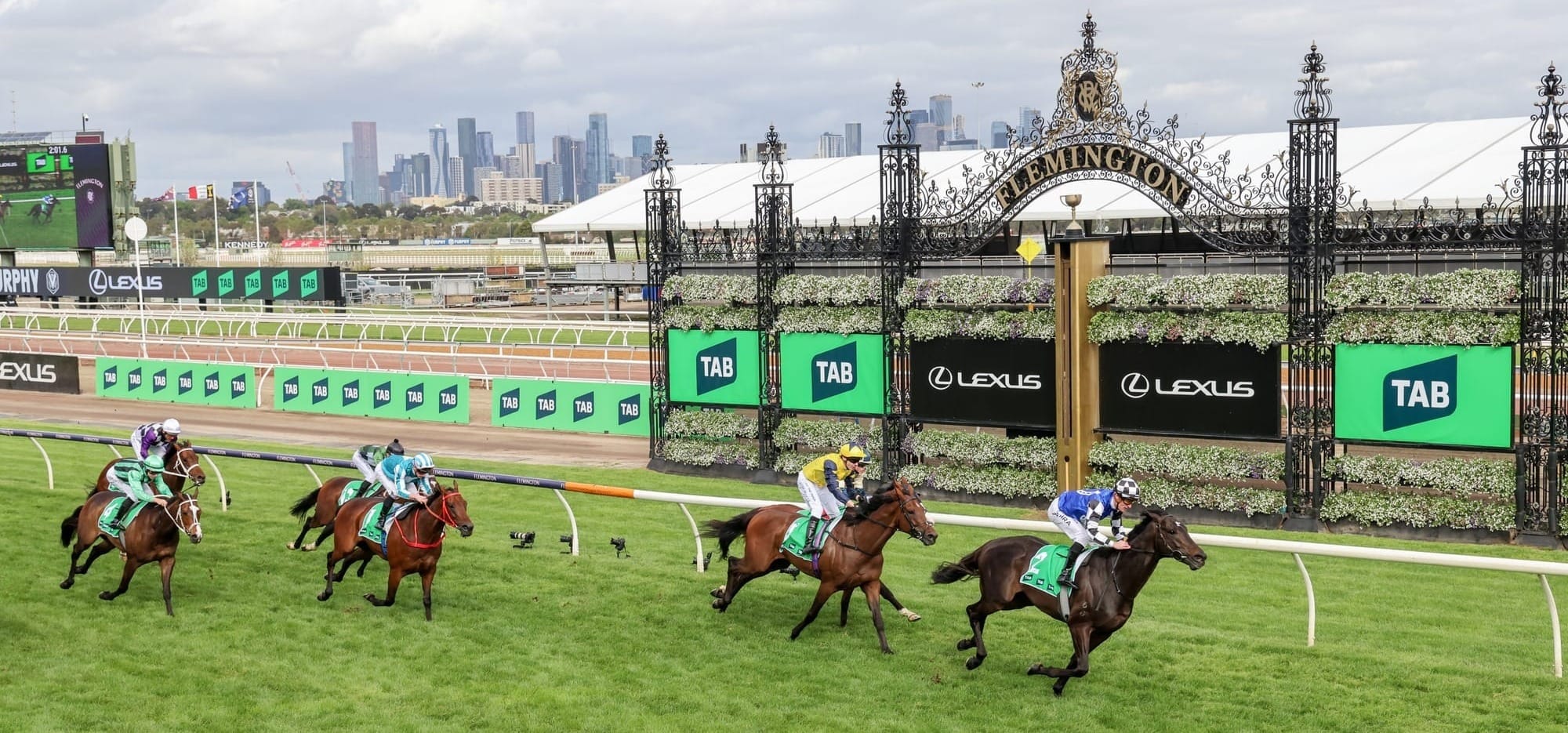
In NSW, Tabcorp, according to its annual report, is pursuing legislative change to create what it says is a level playing field with its other wagering competitors. It is something it has already achieved in Victoria, Queensland, ACT and Tasmania.
Put simply, it wants to renegotiate the deal it has in NSW to put it on the same terms as its competitors. That could also be easily read as it is pursuing similar terms to what it achieved in Victoria.
We would rather be putting our energy into the growth and integrity of NSW racing than being forced to court. We don’t agree with it and will be defending the action” – Tabcorp boss Adam Rytenskild
The difference is that while in Victoria, Tabcorp’s previous agreement was due to end in August this year, in NSW, its exclusivity doesn’t wind up until 2033 and its tote deal not until 2097!
The NSW industry wants a better deal as well. Racing NSW’s annual report indicates that TAB distribution through to clubs was $177 million last financial year, a significant but diminishing amount.
Point Of Consumption Tax in NSW increased to 15 per cent in 2022 and while Racing NSW’s share of that pie was not published in its 2023 annual report, in a budget estimates hearing last October, a report provided for Racing Minister David Harris put it at $70 million a year, up from just $13 million in 2018/19.
Bren O’Brien
It is a slice of the pie that could get bigger should the NSW government follow the lead of what happened in Victoria and give the racing industry a 50-50 split on POCT.
However, the split up of wagering revenue in NSW is more complex than it is in Victoria, and reform of that arrangement would be a delicate operation. Harris has already been burned quite badly by racing politics in his short spell in the racing minister’s chair.
So where does this end up? In the Supreme Court. It seems that while both the NSW racing industry and Tabcorp want change, they also want very different things.
Author

Related Articles

Racing NSW wins appeal in bid to put ATC into administration
The Court of Appeal has cleared the way for the Australian Turf Club to be put into administration after Racing NSW secured a major legal win which upheld its powers under the Thoroughbred Racing Act.
Ruddy in a hurry to make his mark – Melody Again heads north with WA on the horizon
A willingness to take risks has already delivered early success for rookie trainer Liam Ruddy, who is now hoping stakes-winning mare Melody Again can provide the fledgling Scone horseman with his first black-type breakthrough in Saturday’s Eye Liner Stakes at Ipswich.

Royal Ascot – Day 3 in Photos
All the action from the third day at Royal Ascot from the view our photographers Bronwen Healy and Darren Tindale from The Image Is Everything.
