
The boutique racehorse syndicator who believes less is more
As larger syndicators dominate the racing landscape, Vince Ferraro has built an ownership base on buying fewer horses, cultivating closer relationships and backing a disciplined selection process.
Vince Ferraro has never thought bigger is necessarily better.
While much of the syndication business is a numbers game, the founder of Capri Racing and Syndications has staked his claim on buying fewer horses, knowing every owner and letting results do the talking.
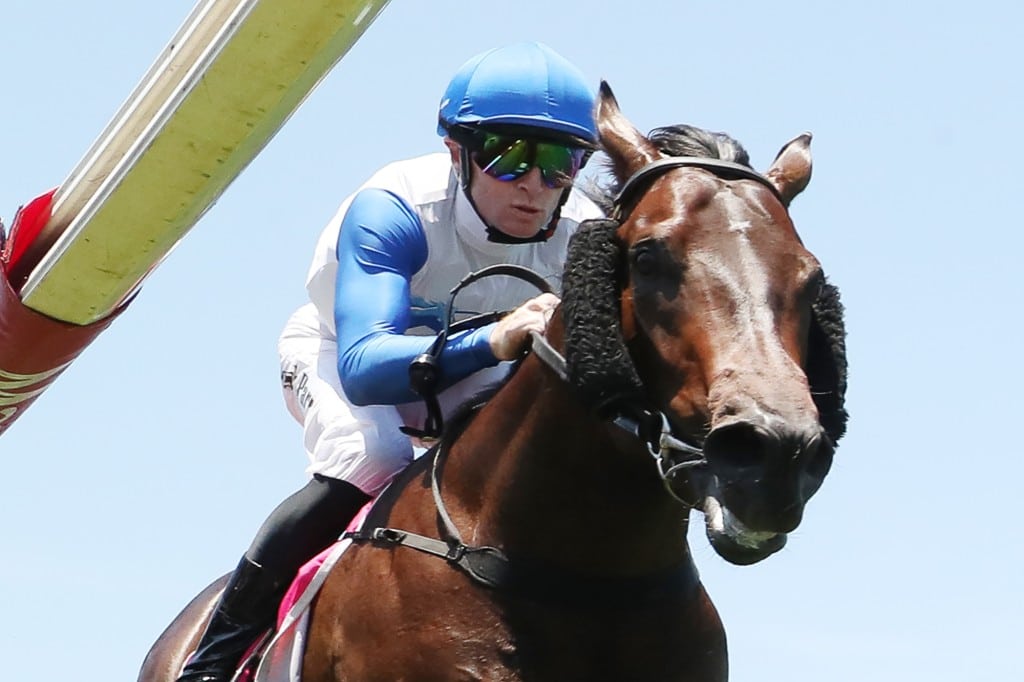
That philosophy will be tested again on Saturday when promising two-year-old Seeiaye from the Peter Snowden stable lines up at Rosehill as another carefully selected purchase from a syndicator who has resisted the temptation to compete at scale.
Ferraro’s journey into syndication began the same way it does for many owners.
He bought shares in horses with mates before an influential figure in the industry convinced him he had the attributes to build his own business.
“I was actually one of Scott Darby’s from Darby Racing’s first clients, would you believe?” Ferraro told The Straight.
Darby recognised Ferraro’s understanding of racing and urged him to make the leap from owner to syndicator, despite the risk of creating another player in an increasingly competitive market.
“He actually encouraged me to go into the game as a syndicator because he said, ‘you’re pretty knowledgeable, you’re pretty imaginative and willing to talk to people’.”
More than seven years on, Ferraro still counts Darby among his closest confidants.
“He actually made me his competitor, but in saying that, there’s no competition between both of us at all because we always bounce off each other and we always have a chat with each other,” Ferraro said.
That approach has shaped Capri into a boutique operation rather than a high-volume concern. It is a deliberate decision in an era when many syndicators are constantly looking to add more horses.
“Look, I’m only a small syndicator. I always have between eight to 12 (horses) under my banner and that’s as many as I want,” he said.
For Ferraro, staying small is central to the experience he wants owners to have.
“I don’t wish to be big because I like to make it very, very personal with people and I always encourage my clients or anyone of interest to pick up the phone and have a chat because I just like to talk to people about it,” he said.
His buying philosophy mirrors his business model. Rather than casting a wide net, Ferraro invests significant time researching pedigrees, videos and conformation before committing to a small batch of yearlings.
“The strike rate’s been very, very good for me as a syndicator, and only because I only buy one or two a year so I’m not buying 10, 15, 20 horses.
“I pick and choose very, very carefully.”
Those decisions are driven by hours of homework rather than a heavy reliance on outside opinions.
“I do all my own bloodstock work. I spend a lot of time on the catalogue, a lot of time researching online, a lot of time looking at videos and images.”
The formula has produced results such as Lavish Empire, bought for $80,000, who won more than $660,000 in prize money, highlighted by a Magic Millions carnival victory.
Seeiaye is shaping up to be another astute acquisition. Purchased for $65,000, the gelding quickly repaid his ownership group, including tennis star Nick Kyrgios, in winning the Max Lees Classic at Newcastle at his first start.
Gelded before making an end-of-season return, Seeiaye provided an insight into his potential when he ran into the highly regarded Omolong at Rosehill two weeks ago.
Ferraro says the economic climate has made it difficult to market horses and admits a Seeiaye victory would be good for business.
“It’s a tough time selling shares at the moment but it’s part of the game,” he said.
“There’s never a day that you don’t go home thinking, I haven’t learned something because you always learn something.”
Related Articles
🔒 🔒 The Phar Lap connection that gives Russian Rock’s Victoria Derby bid extra meaning
Mick Trotter’s Victoria Derby dream has an unlikely link to Phar Lap, through Tommy Woodcock, the legendary champion’s strapper who was a formative influence on the trainer’s childhood.

🔒 🔒 NSW racing minister David Harris to retire at March election
NSW Gaming and Racing Minister David Harris will not recontest Wyong at the March 2027 election but will keep the portfolio until polling day, leaving him responsible for the government’s handling of the withheld Hazzard review of the Thoroughbred Racing Act.
Newgate’s Henry Field reverses stance, backs 2500-metre Victoria Derby
Newgate Farm managing director Henry Field has dropped his support for a 2000-metre Victoria Derby, saying Victorian racing cannot afford to lose top three-year-olds from the Cox Plate, and he sees no case for extra prize money at the current Derby distance.
