
The illusion of speed and rethinking breeze-up sales
Astute Bloodstock’s Louis Le Metayer argues that modern breeze-up sales place too much emphasis on short-term speed, often at the expense of proper education and calls for a more holistic approach to preparing and evaluating young horses.
This is a republication of an article from Astute Bloodstock’s Industry Views. It has been republished with permission. Access more topical articles and discussions here.
Why the leading buyers often bypass the breeze-up sales
A few years ago I spent a morning on the gallops in Deauville with the trainer Jean-Claude Rouget. Over 3000 winners, two Arc de Triomphes, six French Derbies, four French Oaks, around 45 Group 1s across Europe. During our conversation, he made a remark that has stayed with me since:
“The problem with the current breeze-up system is that horses are trained to run times. What you see is a precipitated version of their action, not their natural one,” he said.
Coming from a trainer of his record, that observation carries weight.
A system built around the clock
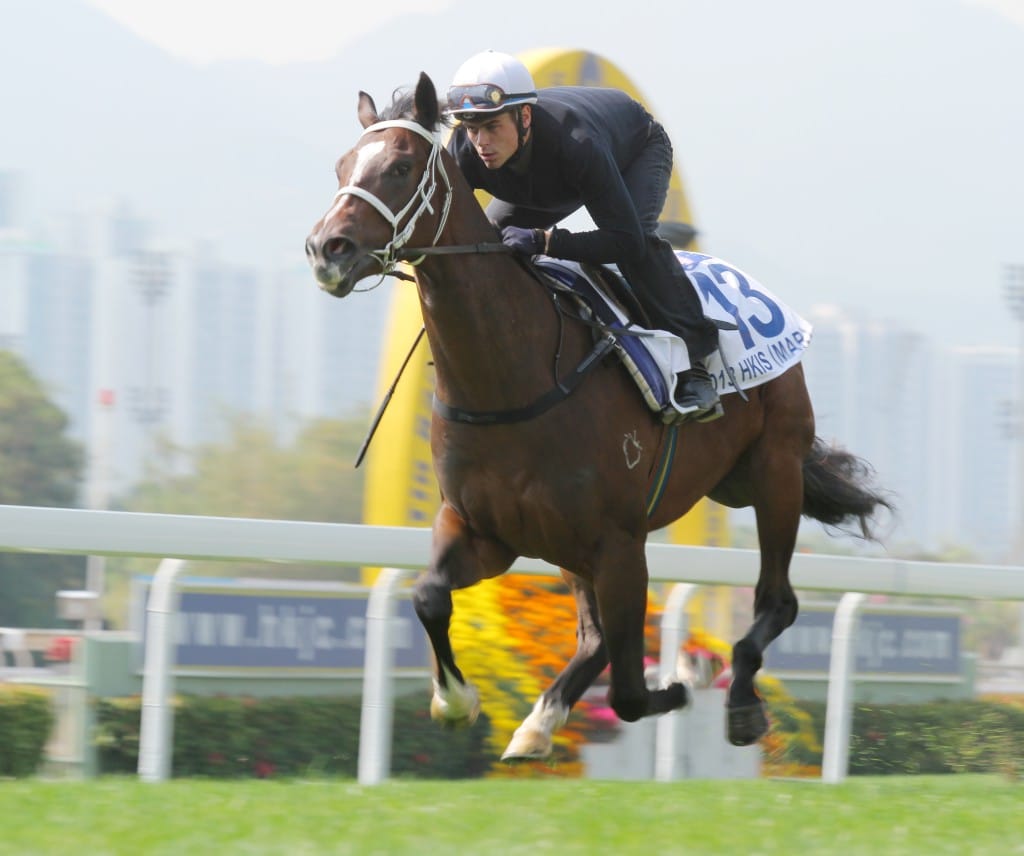
At the last breeze-up sale I attended, the problem was obvious within the first furlong. Many horses were throwing their heads at the start of the 200-metre breeze, a clear sign of anticipation and apprehension before a forced effort.
They weren’t composed and building into their stride; they were revved up for a sharp burst, something you simply don’t see in leading training establishments with two-year-olds at the same age and stage.
Then, just as they hit top gear, they were asked to enter a bend, forcing riders to steady immediately after asking for maximum effort.
That’s misleading for the buyer, who never gets a true look at whether the horse can sustain its gallop through the line, and confusing for the horse, which is asked to stop almost immediately after being pushed to its limit.
It goes against logic and good training, and no leading trainer would ever impose it on a young two-year-old.
There’s a fundamental disconnect between a horse prepared for a breeze-up and a horse prepared for a racing career in a leading stable, even though the end goal is supposedly the same.
I worked for trainers around the world for about eight years, and no matter where I went, there was always a clear difference between a horse coming off the yearling sales and one coming off the breeze-up sales.
The latter often jigs and jogs, pulls hard in track work, throws its head at the bottom of the gallop, and sweats more in anticipation of its daily workload.
What are we really measuring?
The system rewards speed on the clock and precocity, but at a cost. Push a horse beyond its natural rhythm and its action shortens, its knees lift, its movement becomes forced, and it becomes more vulnerable to injury.
At that point you’re no longer assessing the horse. You’re assessing the pressure applied to it.
These horses are revved up to race on fear, yet the best horses are usually the most composed, calm, and relaxed, saving their energy for when it actually matters.
Education over exhibition
As a buyer, I’m far less interested in a fast sectional than in:
Natural action at a controlled tempo; ability to do pace work in a bunched-up field; behaviour in the gates; the ability to jump cleanly and swiftly; exposure to stable life (treadmill, swimming, water walker, tie-up stalls)
How a horse jumps out of the gates matters more than most people credit; plenty of races have been won or lost at the barriers.
So why not film and showcase what actually predicts a race outcome: can it stand quietly in a tie-up stall for 20 minutes, the way it will need to at the races? Can it jump cleanly and travel straight with minimal rider interference at this early stage?
These stages should be filmed and promoted, giving buyers confidence that every horse has had the education needed to step up into a racing stable and handle an increased workload.
The current format favours early, precocious sprint profiles and penalises later-maturing horses and middle-distance prospects, just as prize money for older horses is making patience pay. What’s the rush?
‘Ready to run’ is a misleading label
In Australia, most breeze-up graduates are not ready to run. Most need a spell, often joint treatment too. In reality, they’re frequently further from racing than advertised, and very few, if any, can win straight off the back of their breeze-up prep.
What needs to change?
Rename the product. Call it what it is: a two-year-old sale, not “Ready to Run”.
Remove the emphasis on times. Every horse has a different action, stride, and distance profile; reducing them all to a fixed 200m and a clock number isn’t horsemanship; it’s oversimplification. Sales companies should offer three gallop formats: sprinters over 400m, milers over 600m, stayers over 800m.
Refocus on education. Present horses that are mentally composed, physically prepared, and professionally educated, capable of handling close contact in a bunched-up field, taught to stand in the barriers for up to five minutes, jump cleanly, handle pressure, swim, and work on a treadmill.
A breeze-up horse should be closer to entering full training than to breaking down.
Film the preparation. Show the many stages of education, not just the sectional, to increase buyer confidence.
Final thought
I’m not writing this because I dislike breeze-ups. I’d like to be more active in that market, but the current format gives me little confidence in how the product is being prepared.
With the prize money on offer in Australia, plenty of buyers have been sceptical of the breeze-up sales, but that mindset is shifting.
From Europe I can see the merit clearly: Onesto, Vandeek, Native Trail, Bradsell, Lezoo, all products of the NH breeze-up market. Their system isn’t faultless either, but it has produced champions and stallions.
Australia’s current system doesn’t have the support of the big buyers yet, and these are the reasons why.
We want to be buying at breeze-up sales in Australasia for the next 20 years, and I hope this offers some common sense and sparks improvement.
This is a republication of an article from Astute Bloodstock’s Industry Views. It has been republished with permission. Access more topical articles and discussions here.
Author

Related Articles
Rowe On Monday – Digging for diamonds, Pinatubo’s strong spring and session plans for Magic Millions
In this week’s Rowe On Monday, G1G’s Gary Diamond on buying, selling and trading future and current stars, some second-season spring joy for Pinatubo and some food for thought as Magic Millions prepares its January catalogue.
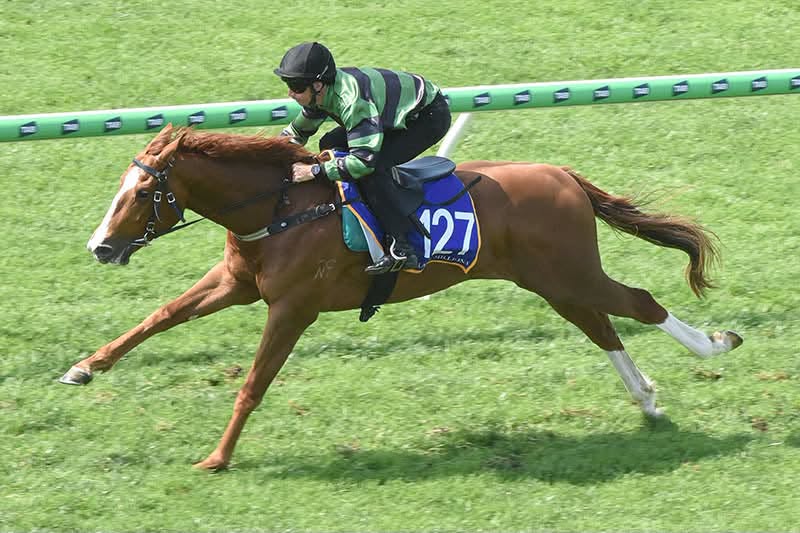
Bowditch backing Magic Millions in its quest for breeze-up sale market share
Magic Millions managing director Barry Bowditch is focused on ensuring a strong clearance rate at the company’s Horses in Training Sale on Monday.
🔒 🔒 Cunningham holds a hot colt hand, but he won’t be rushed into Warwoven stud deal
Golden Rose winner Warwoven was bred and is part-owned by Kia Ora Stud, but that doesn’t mean the colt is assured of a home at its stallion arm Vinery, with connections to place the son of Sword Of State on the open market.
