
Run The Numbers – The statistical case for the preservation of the Victoria Derby
The Group 1 status of the Victoria Derby could be the biggest casualty yet of a ratings-driven era, but Run The Numbers data questions whether the race’s true impact is being measured, or whether certain data is being used to reinforce pre-existing perceptions of the traditional Classic.
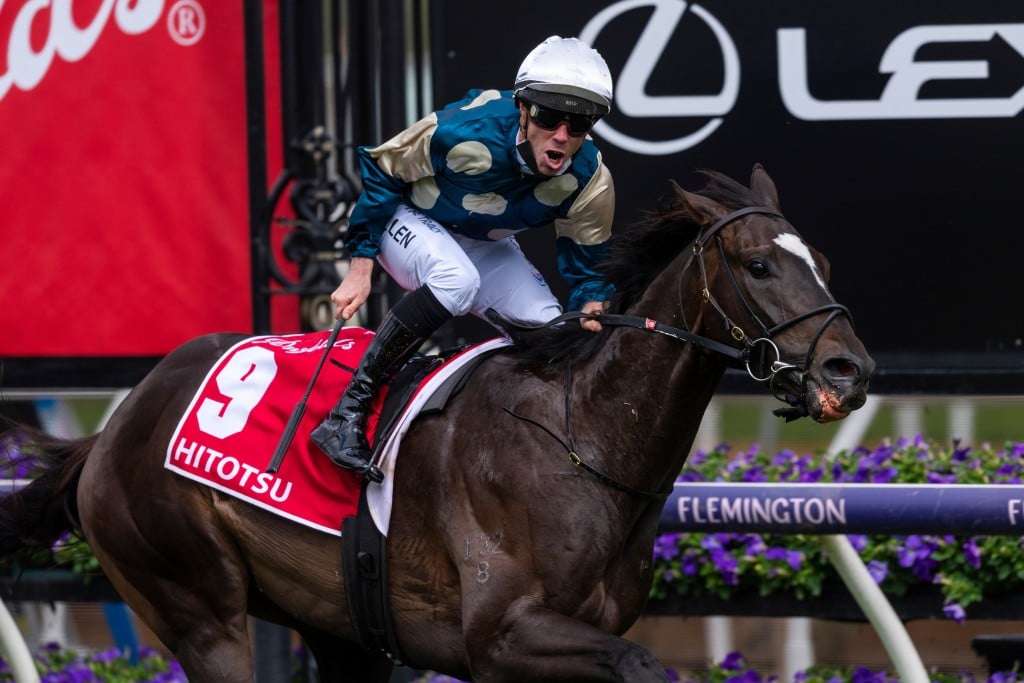
The debate over whether to shorten the Victoria Derby is white-hot at this time of year, with the prospect that sticking with the current 2500-metre format could cost the race its Group 1 status.
What has precipitated this threat is the ratings-led approach to assessing races, something which has become more acute since the Asian Pattern Committee took control of the Australian pattern.
It also distinctly disadvantages staying events, as shown by the number of races in that 2000-metre-plus range that are either under threat or have been demoted.
But beyond simple ratings, when you break down the history of the Victoria Derby, we see that many of the reasons put forward for a reduction in distance are either overstated or are far from a recent phenomenon.
One key reason is that it lacks relevance from a breeding or bloodstock perspective and no longer represents the best of the Australian breed.
Looking back through the history of the race, the so-called ‘Australian breed’ has never been a significant factor in the success of Derby winners.
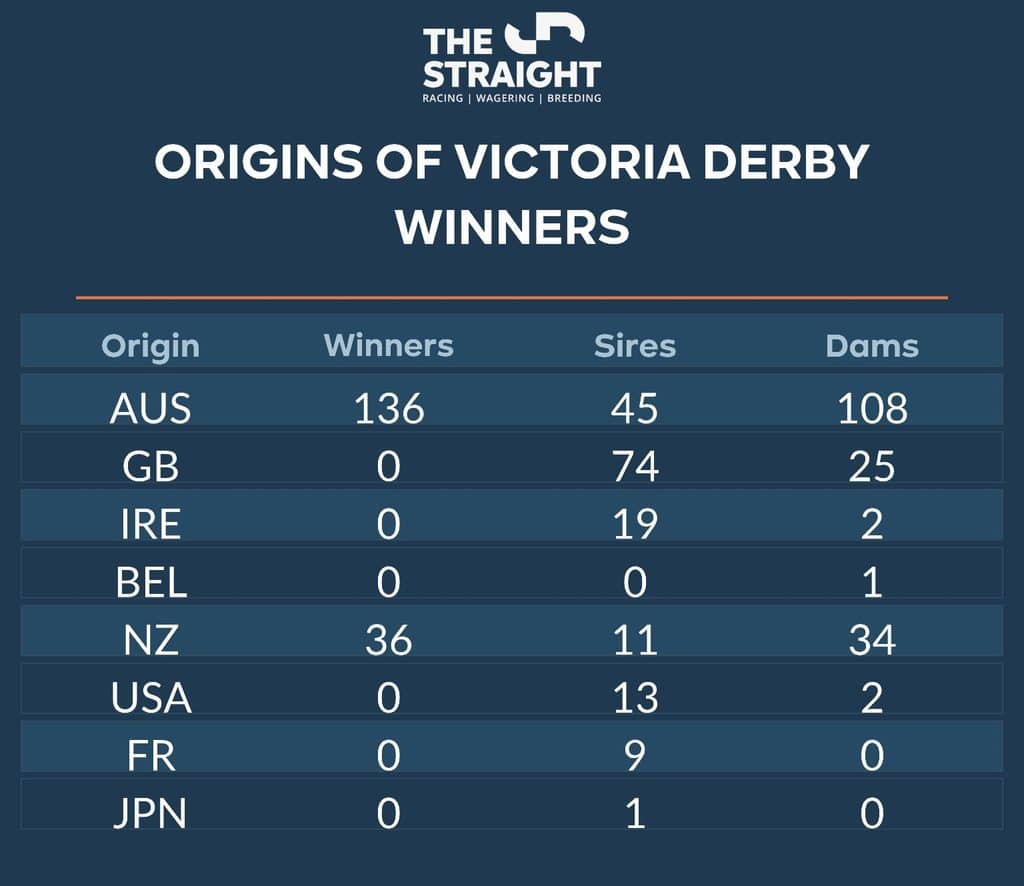
While Australian-bred horses have won 136 of the 172 editions of the Derby, only 45, or 26.2 per cent, have been won by the progeny of Australian-bred sires. The most successful origin for Derby-producing sires has been Great Britain with 74.
On the dam’s side, just 62.6 per cent of Derby winners have had Australian-bred dams, again pointing to an influence beyond this country. New Zealand has the second most on 14.6 per cent.
While 21st-century Australian breeding is more focused on sprinting than staying, and only one of the 13 Victoria Derby-winning sires has been Australian-bred, this reflects a long-term trend rather than a recent phenomenon.
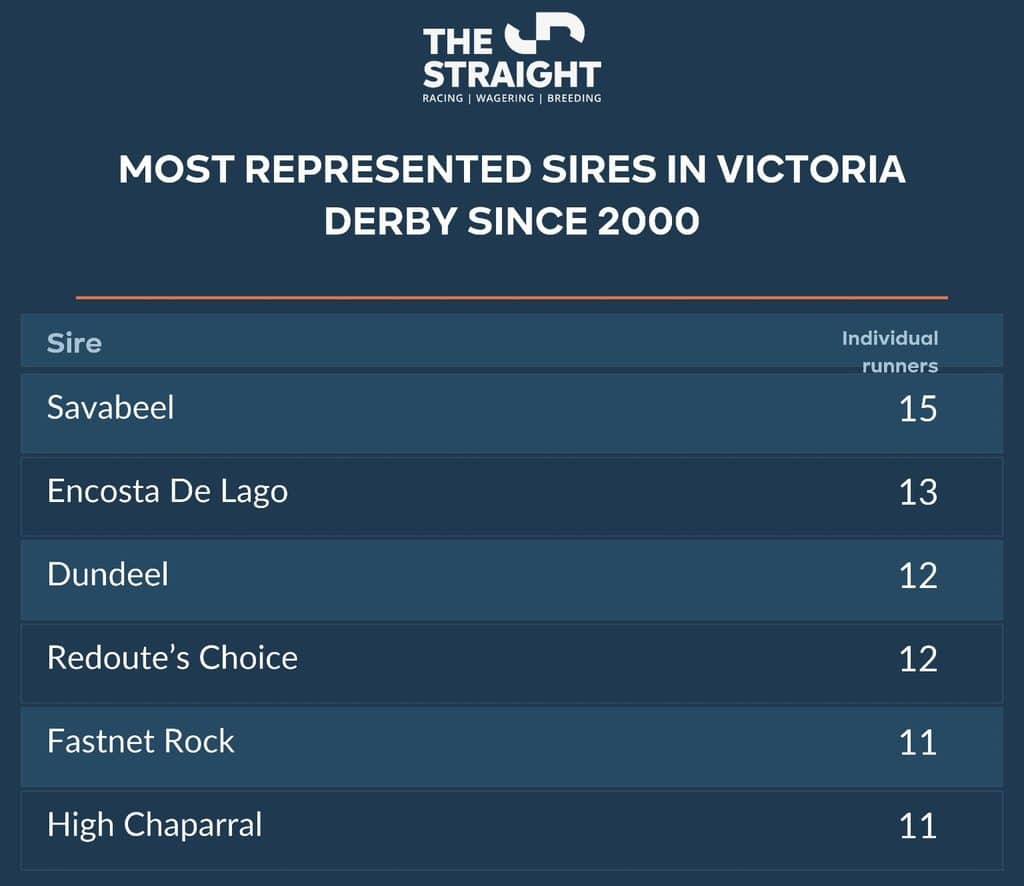
A look at the sires of Derby runners since 2000 shows that most of Australasia’s most significant commercial stallions are represented.
Australian-bred Savabeel, who stood in New Zealand, leads the way with 15 individual runners, followed by Encosta De Lago on 13. New Zealand-bred but Australian-based Dundeel is next on 12, the same as his former Arrowfield Stud barnmate Redoute’s Choice. Another champion Australian sire, Fastnet Rock, has had 11 starters, the same as High Chaparral.
The breeding discussion often pivots to the Victoria Derby’s low impact on producing future commercial stallions.
The Derby features five future champion Australian stallions on its honour roll, Chester, Grand Flaneur, Wallace, Maltster and Spearfelt, but none since 1924.
It certainly doesn’t match the recent record of the other opening-day feature, the Coolmore Stud Stakes, but 12 Victoria Derby winners since 2000 have graduated to the stallion barn.
Of those, 10 have runners older than two, all with stakes winners to their names, and five have Group 1 winners, including Tarzino, whose daughter Proxima Dea won the Spring Champion Stakes on Saturday.
As with all the major Group 1 races, the best graduates perform well as stallions, with more to come.
Hitotsu, who was the highest-priced Derby winner in terms of stallion fee since Elvstroem, has his first runners this season, while Observer has also begun his career at Darley.
Those two recent winners, plus the ill-fated Riff Rocket, are the three standout Victoria Derby winners since 2020 in terms of quality. Riff Rocket and Hitotsu won three Group 1s, while Observer won two.
All three had their careers cut short: injuries sent Hitotsu and Observer to stud at the end of their three-year-old campaigns, and the gelded Riff Rocket suffered a fatal bout of colic early in his four-year-old season.
That robbed those high-quality Derby winners of the chance to extend their records as four-year-olds and improve the graduate reputation of Derby-winning horses.
They are three of the nine winners since 2000 who won at least one more Group 1 after the Derby.
Elvstroem, Preferment, Efficient, Sangster, Helenus, Tarzino plus the trio above were all able to add another elite win to their status.
Among the beaten brigade in the Victoria Derby this century are champion Dundeel, plus future dual Group 1 winners Universal Prince and Sirmione as well as Whobegotyou.
The breeding returns run even deeper. Savabeel, second to Plastered in 2004, became an enormous Australasian influence.
In recent times, the contribution may have dropped off, but that also occurred amid several other factors.
One is the increase in prize money for shorter races, which has given the best three-year-olds more options. The $2 million Spring Champion Stakes is now held over 2000 metres seven days before the Victoria Derby. That positioning has arguably impacted the strength of both races.
Another is the influx of European imports, which has made it much harder for local stayers to win races after their three-year-old season. This is compounded by the fact that three-year-old features like the Victoria Derby have been highly rated, helping protect their Group 1 status but cruelling the future prospects of horses who perform well in them because of the weight imposts they must carry.
In an article Mick Sharkie wrote for The Straight earlier this year, he noted that since 2014/15, 172 horses have contested the Victoria Derby.
Of that cohort, 58 (33.7 per cent) have started at least once in a Group or Listed race over 2000 metres or further as a four-year-old or older, and only 17 (9.9 per cent) have won to that benchmark.
He also pointed out that Derby runners from that period produced just seven Melbourne Cup runners and eight Caulfield Cup runners.
Again, that European influx has played its part. The VRC has welcomed the international profile of the Melbourne Cup, but that has arguably also cut off future pathways for VRC Derby graduates.
Still, if the Derby were commercially irrelevant, we would likely see a decline in participation from major stables, but that hasn’t been the case.
Since 2000, Lindsay Park, under its various guises, has had 23 runners: Ciaron Maher 11, Chris Waller 9, and Gai Waterhouse 6.
The Cummings family, across Bart, Anthony and James, have had 20 representatives, while stamina-oriented trainers Danny O’Brien, Trent Busuttin and Natalie Young have had 11.
The Derby itself may have become less relevant, but it is far from irrelevant, and in the context of history, it has also sat, much like the Melbourne Cup, at the far end of the profile when it comes to testing the athletic endurance of horses.
But another question is whether the ratings system, which essentially determines race status, measures the right things.
That’s not just a concern for Australia. New Zealand has raised similar concerns, with seven of its 18 Group 1s under threat, including both its Derby and its Oaks.
Author

Related Articles
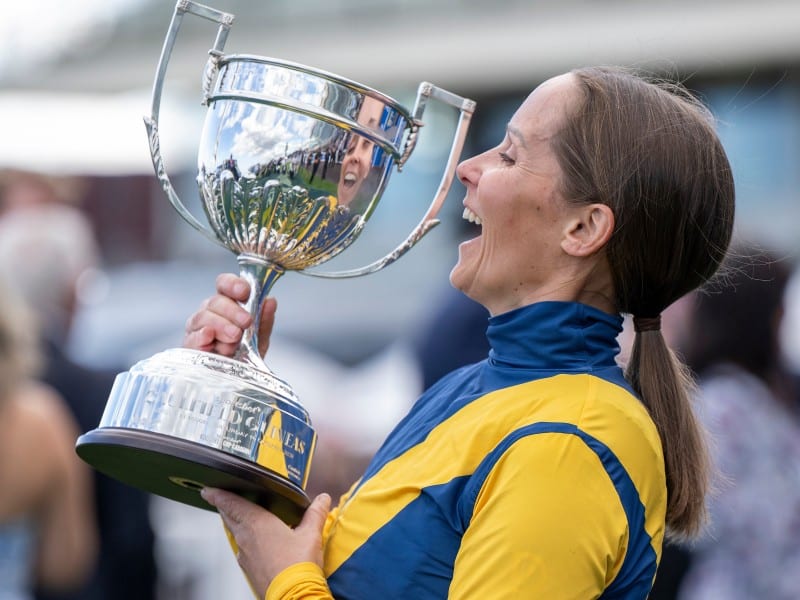
Run The Numbers – King’s latest successes put female jockeys on brink of 50 Australian Group 1 wins
As Rachel King builds her own formidable Group 1 record, she is also helping female jockeys power towards a significant milestone: 50 Group 1 wins in Australia. Run The Numbers dives into the major contributors from Diane Moseley to Siena Grima.
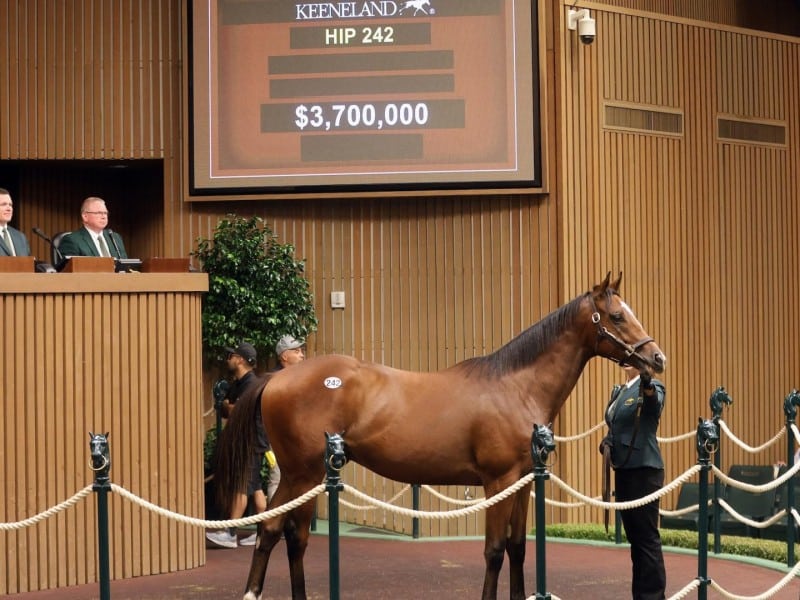
Run The Numbers – The elevated state of the global yearling market
With US$536 million spent across 12 sessions, the recently completed Keeneland September Sale was the highest-grossing yearling sale in history. Run The Numbers looks at whether it speaks only to the American market or reflects a broader global demand for elite bloodstock.
Run The Numbers – An influence runs Deep into the next generation
Legendary Japanese sire Deep Impact made a major mark on Australian racing from less than 50 runners. Does the emergence of Sheza Alibi point to that influence continuing to his sire sons as well? Run The Numbers takes a look.
