
Three to a good home – When is the best time to retire a stallion?
The decision by Godolphin to retire Tentyris and Observer to stud has caused a stir among those who understandably want to see Australia’s best continue to race. But the risk of racing a Group 1-winning colt at four against the rewards of a career at stud tips the commercial reality firmly in favour of earlier retirement.
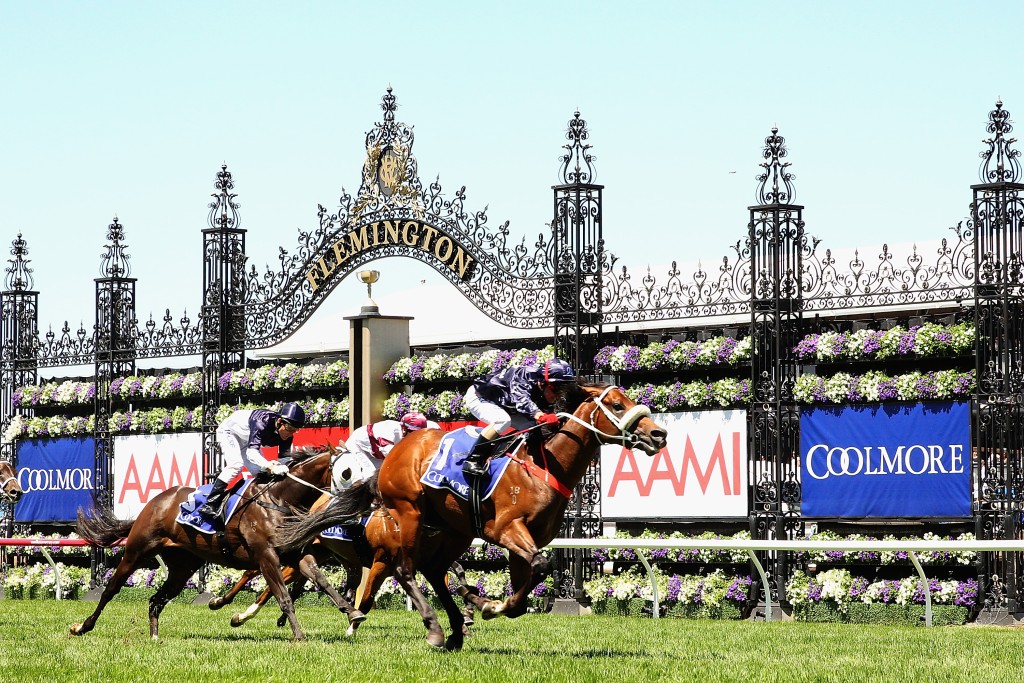
ANALYSIS: In the space of 40 minutes at Flemington last November, Tentyris and Observer delivered defining moments for a new public training era at Godolphin.
In the aftermath, there were discussions of Royal Ascot for the Coolmore Stud Stakes winner Tentyris and Cups and Cox Plates for Victoria Derby victor Observer. Less. Less than six months later, both have been retired, set not for ambitious racing goals, but careers at stud.
In the Flemington mounting yard on that Derby day, Godolphin Australia’s managing director Andy Makiv was clear not only about the significance of on-track success, but the priority of building a legacy from the stallion barn.
“Our business is a stallion business,” he said emphatically.
And it was a business decision which saw both colts retired, Tentyris having had just 10 starts, Observer 11.
The reaction to the decision was predictable, and from a racing perspective, understandable. The racing public wants to see the best horses race on, but in a world where Tentyris could bank over $12 million a season in breeding value at stud, the commercial reality said otherwise.
The decision may have been different if Godolphin didn’t have two other star sprinting three-year-olds, Beiwacht and Tempted, ready to tackle the spring. But even so, there were questions as to whether Tentyris could add value to his record of two Group 1 wins, which was enough to value him at $88,000 per service.
It is not given that a sprinting colt at three will develop into a better horse at four, particularly as they grow and become more difficult to train. Godolphin rolled the dice on Bivouac and Anamoe, but four of the other six Australasian-bred stallions on their roster were retired at three.
Observer is a slightly different case as he had an issue which would have likely sidelined him for at least the spring, if not longer. It makes more sense to have him operating from the breeding barn at $33,000 a service than sitting in a spelling paddock, in the hope he may return to his best.
The commercial forces – a potential stallion’s value is at its highest immediately after his peak performance – plus those factors above are why so many colts retire after their three-year-old season.
It is far from a recent phenomenon. The top three stallions on the current Australian sires table, Snitzel, Zoustar and The Autumn Sun, all retired at three and of the top 50, 25 went to stud after their “Classic” year.
Looking back at the 2014 table, we see that it was 31 of the top 50. Of the past eight individual stallions to have won the Australian sires’ title, five retired at the end of their three-year-old campaign.
Globally, it is no different, except for Japan, which has unique circumstances, including the concentrated ownership of the country’s studs.
Of the top 50 sires in Great Britain in 2025, 26 were retired at three or younger, while the figure in the United States was 22 of the top 50. France’s figure is 24 of 50, including six of the top seven.
Globally influential 21st-century sires Danehill, Galileo, and Into Mischief all retired from the track at three.
That’s not to say that it is the guaranteed formula to stallion success, it is just confirming that retiring to stud at the end of your three-year-old career hasn’t been a barrier and many of the best started their breeding careers earlier.
Could those horses have performed just as well at stud had they retired later? There is no proof that they couldn’t, but the considerable risk remains that a stallion’s value will decline with additional racing.
A $30 million stallion could quickly deteriorate in value with sub-par racetrack performances. The seasonal nature of breeding means you only get one exit point per season. The time for decision making is now, giving them four months of marketing and plenty of time to “let down”.
Is it good for racing? No. You want the best horses to continue on, but there is more value and less risk commercially in sending them to stud.
Some may say this is another example of breeders getting the better end of the stick. But the reality is, they have either put up the cash to buy the colt’s breeding rights or have taken the risk and expense of breeding him in the first place.
In that regard, the decision is theirs alone.
There have been suggestions that there should be a levy system that incentivises studs to retain colts for racing by taxing stallions who retire early. That would likely destroy the value of feature two-year-old races and decimate two-year-old fields, which are on a decline regardless.
It would also put Australia at a distinct disadvantage relative to the rest of the world in a globally competitive market. The Yulongs, Coolmores and Darleys of the future would likely find other places to invest.
The disconnect between the breeding and racing industries in Australia is a concern and needs to be addressed, but it certainly isn’t unique.
What makes Australia advantageous is the accessibility to buy these colts. The top nine Australasian-bred stallions on the sires’ table could have all been purchased as yearlings. You do not get that opportunity in other overseas jurisdictions.
In an industry where the vast majority of owners lose money, suppressing the residual value of colts won’t help the balance sheet.
If the stick won’t work, then what about the carrot?
One of the appeals of The Everest was supposed to be that four-year-old entires would race on. There has been an average of one runner per year across the nine editions of The Everest, with Trapeze Artist and Bivouac the only placegetters.
While there are plenty of other sprinting riches available, they simply don’t match the value of having a stallion at stud, serving 150-200 mares at a high five-figure service fee.
As with a lot of things in the racing game, money talks – and the market decides.
Author

Related Articles
Godolphin sets European yearling colt record with 4.6m-guinea Tattersalls purchase
A 4.6 million-guinea (AU$9.18 million) Night Of Thunder colt purchased by Godolphin at the Tattersalls October Yearling Sale set a new European yearling colt record.

Princess Zahra urges global breeders to preserve genetic diversity
Speaking a day after Daryz’s repeat Arc win, Princess Zahra delivered the keynote address at International Federation of Horseracing Authorities’ (IFHA) 60th conference and called on a comittment to breeding diversity and for racing leaders to show new fans the equine care that sits behind the sport.
Rowe On Monday – Next stop Flemington for Cunningham, the dash to Dubai and Marine One anticipation for Brown
In this week’s Rowe On Monday, Tim is back in the hotseat and chats to Phil Cunningham about star colt The Next Episode, looks ahead to the Dubai season and profiles a Western Australian stallion poised to make an immediate mark.
