
🔒 🔒 A Crown divided – The existential threat to America’s storied racing institution
A split nomination system, a revamped calendar and a new championship series have exposed competing visions for the future of American racing, leaving the US Triple Crown at a crossroads in the latest example of the tension between tradition and innovation in racing.
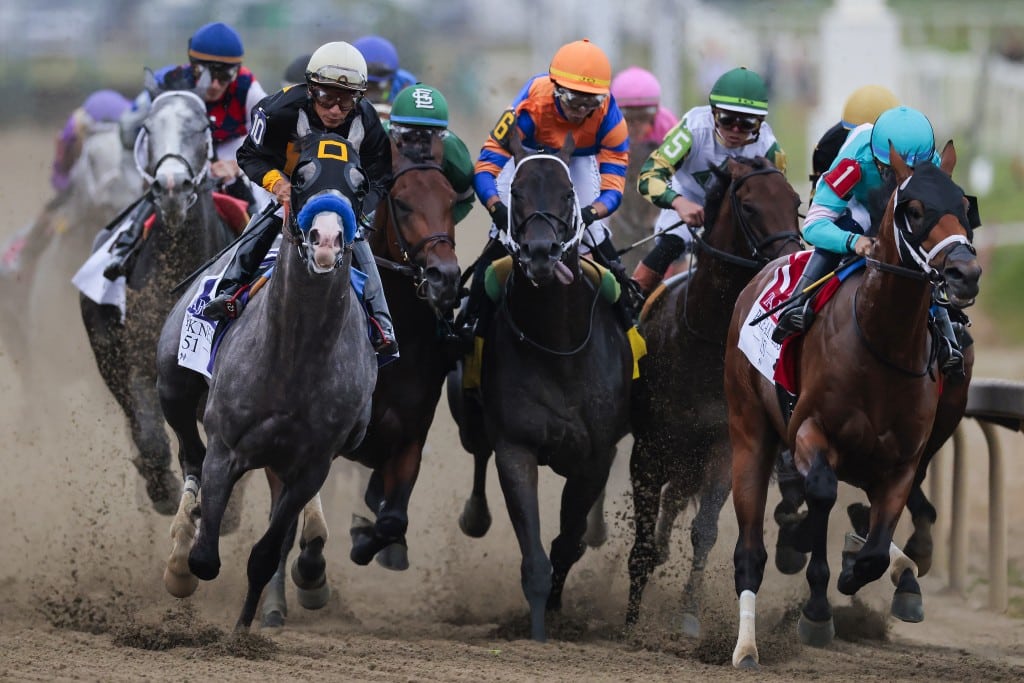
When American Pharoah won the Belmont Stakes in 2015, an average of 22 million people watched the 15-minute window on NBC in which he ended a 37-year wait for a Triple Crown winner.
For the broader public, the appeal was easy to grasp: one horse, three races and a feat that had lived long in the cultural mindset of American sports fans. It was a generational moment and, even in an era when thoroughbred racing was struggling for national profile, it achieved mainstream cut-through.
Three years later, it was Justify’s turn to create history, becoming just the 13th horse to win the Kentucky Derby, the Preakness and the Belmont.
His Belmont Stakes victory drew an average of 15.3 million viewers in the same 15-minute window. Over the full race segment, it drew 12.7 million, the smallest Belmont audience for a Triple Crown bid since 2002.
That smaller audience, combined with subdued ratings for both the Kentucky Derby and Preakness, suggested that while the Triple Crown retained its historical significance, its mainstream pull was beginning to weaken. The opening leg can still draw a crowd of its own: Kentucky Derby viewership in 2025 was the highest since 1989.
The Triple Crown carried enormous historical cachet, but its relevance to both mainstream audiences and the horsemen who shape modern three-year-old campaigns is increasingly under threat.
The question now is whether that significance is enough to sustain the series in its traditional form.
The commercial and political shifts in American racing have put the spotlight firmly on the middle leg, the Preakness, as the weak point. The Maryland Jockey Club responded by moving the race eight days later in 2027, leaving 22 days between the Kentucky Derby and the second leg.
More significantly, the three races will no longer operate under a single nomination structure. The change follows the decision by Churchill Downs and the New York Racing Association (NYRA) to launch the Thoroughbred Championship Series (TCS), which excludes the Preakness. While officials insist the Triple Crown remains intact, the split highlights growing tensions over how elite three-year-olds should be campaigned.
Maryland Jockey Club president Bill Knauf drew a distinction between the end of joint nominations and the end of the Triple Crown itself. He said last week that the club would open its own Preakness nominations in the coming weeks and that conversations with horsemen at the Breeders’ Cup had left him encouraged by the level of support for the race.
“But if there is a Derby, Preakness and Belmont, there is a Triple Crown,” Knauf said.
Yet the revised schedule has created fresh complications.
Leading owner Tom Ryan has described the Triple Crown as “untenable” with just 13 days between the nine-and-a-half-furlong Preakness and the mile-and-a-half Belmont.
Despite Knauf’s optimism, Churchill Downs and NYRA are focused on extending the interest generated by the Kentucky Derby through to September. The championship’s points-based Derby Division links six major races and offers $US5 million in bonuses, creating a financial incentive for horses to continue racing beyond the Triple Crown series.
NYRA chief executive David O’Rourke said at the launch that the series would sit alongside the old one. “We wanted to set the foundation, but in no way does this touch the Triple Crown.”
Churchill Downs Incorporated (CDI) chief executive Bill Carstanjen has pitched the TCS’s original six-race format as a different test altogether. “You do not have to win every race or even any particular race to become the champion,” he said at the launch. “The winner will be the horse who demonstrates consistent excellence and stamina in the face of the world’s toughest competition across the six races.”
The calendar fight follows a change in how horses are campaigned. Every Derby winner from 1997 to 2018 ran in the Preakness, but Sovereignty in 2025 and Golden Tempo this year both skipped it and won the Belmont.
Across the five Derbies from 2022 to 2026, just 13 of 95 starters went on to the Preakness.
Knauf said the extra week “opens the Preakness to potential participants who use modern training methods”.
The historical data tells a story of a much more cloistered campaign style for horses in their Classic year.
The Jockey Club’s figures show average annual starts per runner falling from 10.91 in 1950 to 6.18 in 2015. Citation had 20 starts as a three-year-old in 1948, while Justify’s entire career comprised six.
“If there is a Derby, Preakness and Belmont, there is a Triple Crown.” – Bill Knauf, Maryland Jockey Club president
Maryland has spent heavily on keeping the Preakness. In June it moved to match CDI’s $US85 million offer for the intellectual property rights to the Preakness and Black-Eyed Susan Stakes, and the legislature authorised $US400 million in bonds to rebuild Pimlico, where the race will return in 2027 using temporary facilities.
The Maryland Racing Commission has approved 114 race dates across Laurel Park and Pimlico for 2027, six fewer than in each of the previous two years. Pimlico is not expected to take on the bulk of Maryland racing until 2028 or 2029.
The tension between preserving tradition and adapting to modern campaigning patterns is not unique to the United States.
Australian racing has been engaged in a months-long debate about whether the Victoria Derby should evolve to meet changes in how horses are campaigned and be shortened to 2000 metres.
That debate has been sharpened by pressure the Asian Pattern Committee has placed on the Derby’s Group 1 status, which the Victoria Racing Club says the race must retain. The club and Racing Victoria bolstered the prize money to $3 million this year to try to attract a higher-quality field.
While the Flemington classic is not directly linked to other races, a change in its format would reshape the spring and may divert Cox Plate-bound three-year-olds away from that race.
There is also the complication of the 2000-metre Spring Champion Stakes, which is run seven days before the Derby after being moved later into October in recent years.
As with the Triple Crown in the United States, interjurisdictional rivalries are at play, although new Racing NSW chief executive Graeme Hinton has suggested there is flexibility to ensure both the Victoria Derby and the Spring Champion stay at Group 1 level.
As the proponents have repeatedly said, the establishment of the Thoroughbred Championship Series is not about supplanting the Triple Crown.
“The Kentucky Derby introduces millions of fans to a new generation of Thoroughbred stars each year, and this series gives those fans a reason to stay engaged with the sport’s biggest stars throughout the season,” Carstanjen said.
“By connecting these premier events through one championship, we’re creating a season-long storyline that benefits the future of thoroughbred racing.”
The Triple Crown does not need a winner every year; the 37-year wait showed what rarity can do for the occasion. It does need Derby winners to keep trying.
The first test in 2027 is whether the Kentucky Derby winner even goes to Pimlico.
The longer test is whether racing can give its best three-year-olds a reason to contest all three legs while building a championship that gives them a reason to keep racing after June.
Author

Related Articles

Integrity chief Jamie Stier resigns from Racing Victoria
Jamie Stier, the Racing Victoria integrity chief who has overseen the regulator’s response to a host of major integrity challenges, from the disqualification of Darren Weir to changing Melbourne Cup protocols, is set to depart his role early in 2027.
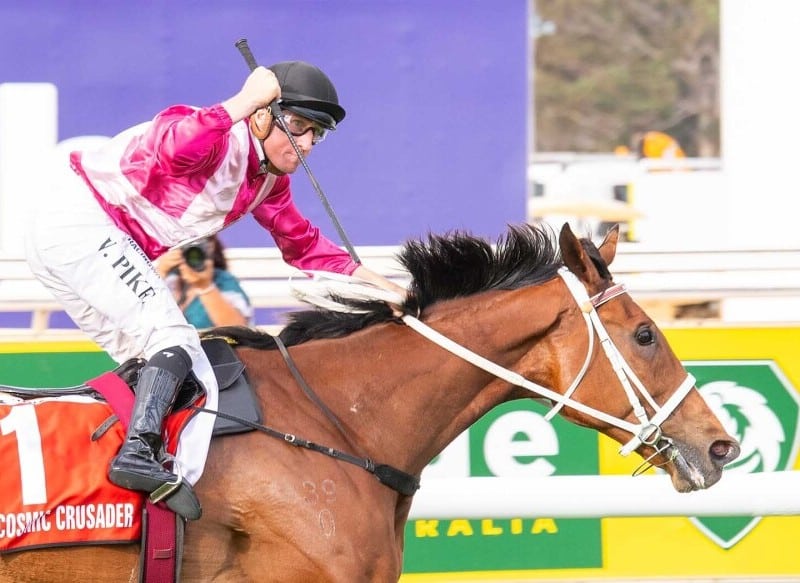
A dream homecoming as Cosmic Crusader makes Railway history
Cosmic Crusader, William Pike and Bob Peters took their Group 1-winning showcase to home soil and emerged with a history-making victory in the Railway Stakes at Ascot.
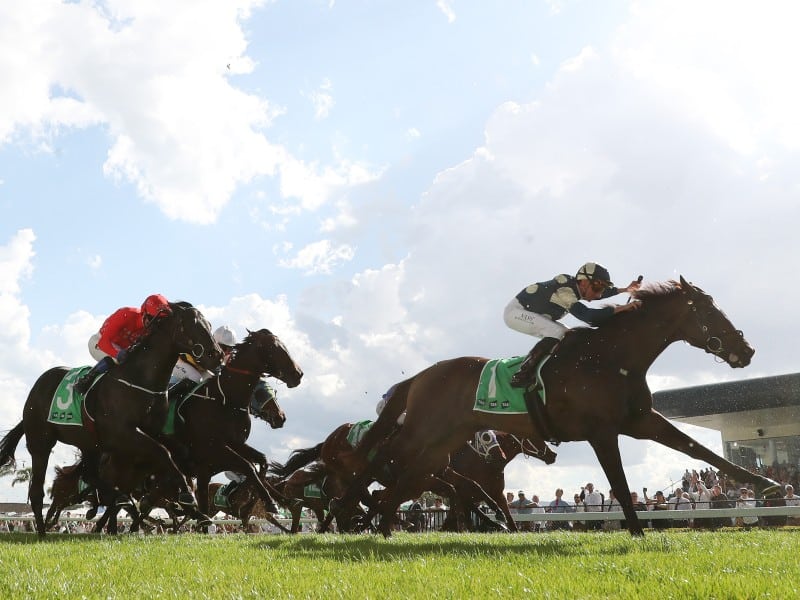
Gringotts completes Gong hat-trick and passes $7.5 million in earnings
Ciaron Maher’s seven-year-old Gringotts won the $1 million Group 3 Gong at Kembla Grange for a third straight year, beating his Big Dance nemesis Formal Display, while $7000 yearling Earn To Burn took The Warra on Kembla Grange’s feature day.
