
What would be the impact if Yulong establishes a Hunter Valley base?
With a stated ambition to gain a foothold in the Hunter Valley, it seems inevitable that at some point Australia’s biggest breeding operation will have a presence in the nation’s thoroughbred industry’s heartland. Bren O’Brien looks at the likely impacts of a Yulong arrival in NSW.
Analysis: Yulong’s decision to base itself in Victoria, as it has built out the biggest breeding operation in the country, has proven an enormous fillip for the industry in the state.
You only have to look at its massive influence at the just-completed Inglis Premier Yearling Sale to see what that looks like, with Yulong having over 10 per cent of horses catalogued at the Victorian sale.
Yulong stallions covered 944 mares in Victoria last season, 23 per cent of the state’s total, with resident Alabama Express the equal busiest stallion in the land.
With a broodmare band of around 700, it has around 15 per cent of mares in the state.
That has allowed Yulong to grow and develop outside of the competitive hub of the Hunter Valley, where the majority of thoroughbreds are bred in Australia, but as its operation becomes more commercial, there is a compelling force drawing Zhang Yuesheng’s operation northwards.
Jun Zhang, now the general manager of Yulong, told The Straight’s Tim Rowe last year that the Hunter Valley is “a very good option for us” and that Yulong had looked at a couple of “very good properties” in recent years.
For the avoidance of doubt, Yulong has not announced any plans to establish a Hunter Valley base.
But the rumour mill turns quickly when it comes to Yulong, and if it is to be believed – that’s a big if – then it will be relocating at least some of its stallions north sooner rather than later.
There are a couple of obvious candidates when it comes to location – Segenhoe has long been linked, while Ridgmont is another farm on the market, or it could be that Yulong finds and develops its own base.
Zhang is one of the few investors in Australia with the means to build quickly from scratch or acquire any farm he wishes with a massive, too-good-to-refuse offer.
Why would Yulong move to the Hunter Valley?
Commercially, it makes greater sense to have its best stallions where the best non-Yulong broodmares are based. While the Yulong broodmare band is the envy of all, getting full value out of a stallion requires a greater portion of outside breeders.
“You can see the difference between the Hunter Valley and the Victoria currently, especially breeding farms and the stallion business … with the quantity of broodmares, the (majority are) in the Hunter,” Jun said when speaking to The Straight last April.
Getting strong commercial results for clients is usually key to releasing the full value of a stallion. It also shifts the risk away from relying solely on the Yulong broodmare band.
It also has several colts and entires ready to progress to the breeding barn in Vinrock, Devil Night, Private Harry and Angel Capital. They would benefit from being launched straight into a new market rather than switching states.
Conversely, should Yulong opt to also move some of its best mares north, it would give it a better base to access the best quality outside stallions. More diversity in its sales catalogue offerings would likely be commercially beneficial.
Having bases in two states would also make Yulong less vulnerable to external factors such as droughts and floods, as it can move stock as needed.
What are the risks for Yulong? Obviously, there is the capital of buying a farm (although when a stallion can fetch $70 million, what is $40 million for a farm?). Then there are the set-up costs, getting the farm “Yulong-ready”, plus recruiting staff, etc.
Splitting the quality of bloodstock would have a deleterious effect on the established Victorian operation. Running a two-state breeding operation is complex and can often lead to double the costs without doubling the return.
Competing for staff in the Hunter Valley will be harder than in Victoria, while operating in what some have described as the breeding industry’s fishbowl may take some adjusting for a notoriously shy operation.
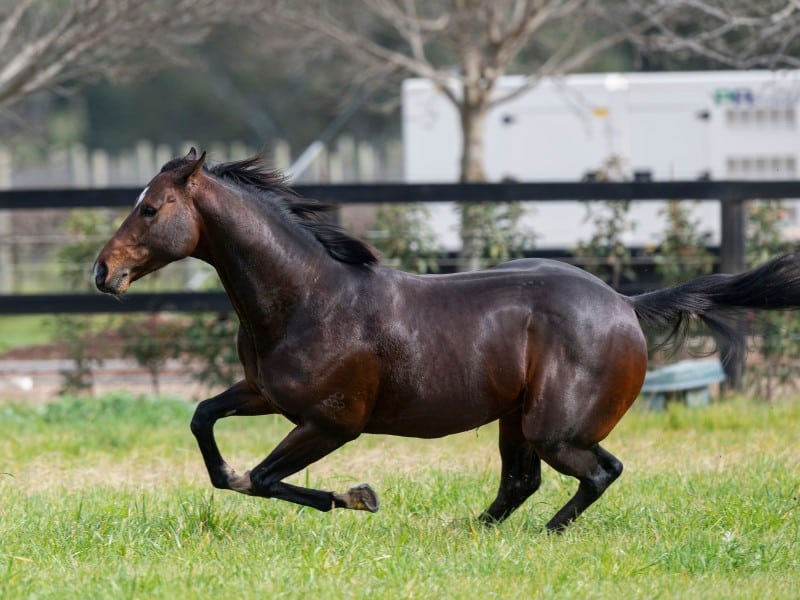
What is the upside for the Hunter Valley?
Easier access to Yulong stallions is the first clear positive, plus the likelihood of better support for Hunter Valley sires by Yulong’s high-quality mares.
Yulong’s investment in the Hunter would also lead to greater activity across the market. It could also lead to stronger Yulong drafts in both quality and numbers at the Sydney sales, boosting investment and interest there.
The Hunter also prides itself on having Australia’s best stallions. The likelihood is that, given the breeding operation’s size and scope, a Yulong stallion will be Australia’s champion sire in the next five to 10 years.
The downside for Yulong’s potential neighbours is having an extra competitor, not only for the best mares and best sires, but also for the best staff. The breeding industry has contracted over recent years, but another player at the “big table” may mean less to go around.

If and when Yulong does enter the Hunter, it will do so as the best-resourced and prepared breeding operation to ever do so. Even Coolmore, when it came into Australia in the 1990s, didn’t have the clout that Yulong has. That would take some adjustment from the rest of the industry.
The Hunter is not the only region linked with Yulong establishing a presence. A New Zealand play has long been mooted, and speculation has only intensified with a buying spree of star Kiwi mares in the past 12 months.
“Whether it’s into the Hunter Valley or New Zealand, around Australia, or even Japan, America, Europe, we’re always open to considering new developments to support Yulong’s future,” Jun said last year.
Author

Related Articles
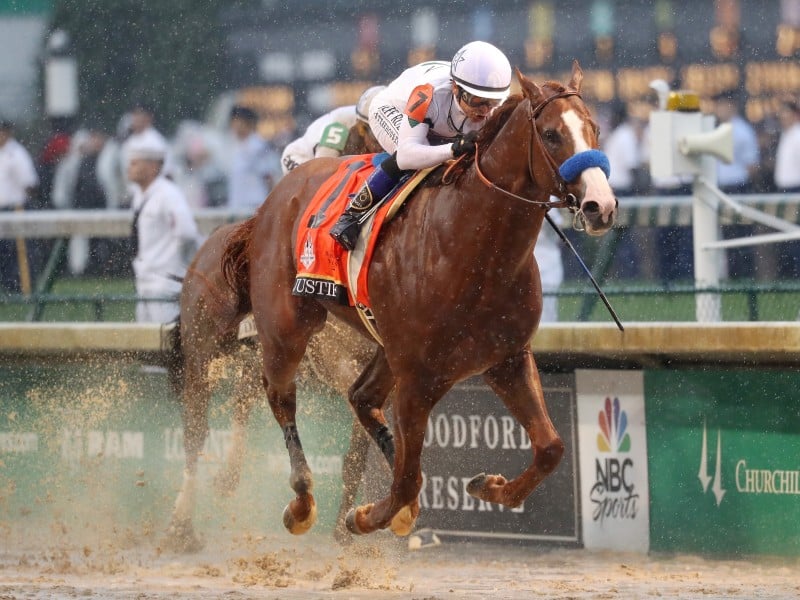
A pause in a Kentucky Derby connection to Australia’s stallion rosters
For the past 30 years it has been common for at least one Kentucky Derby winner to be standing as a sire in Australia, but as we look forward to the 2026 edition, the upcoming breeding season will mark a third straight year without a winner of the famous race on an Australian roster.
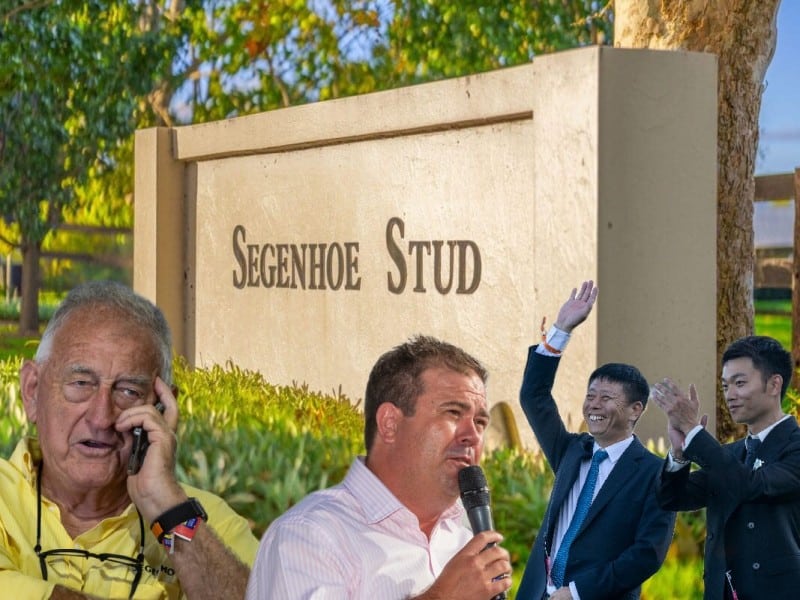
Two mining magnates and a meeting of minds – How Yulong’s Hunter Valley plans became a reality
When Yulong’s mooted interest in Segenhoe Stud failed to result in a sale in 2024, the famous farm was put on the market. Real estate agent Clint Donovan canvassed the world for interested parties and ended up brokering a $30-million plus deal with the original suitor which has set tongues wagging across the thoroughbred industry.
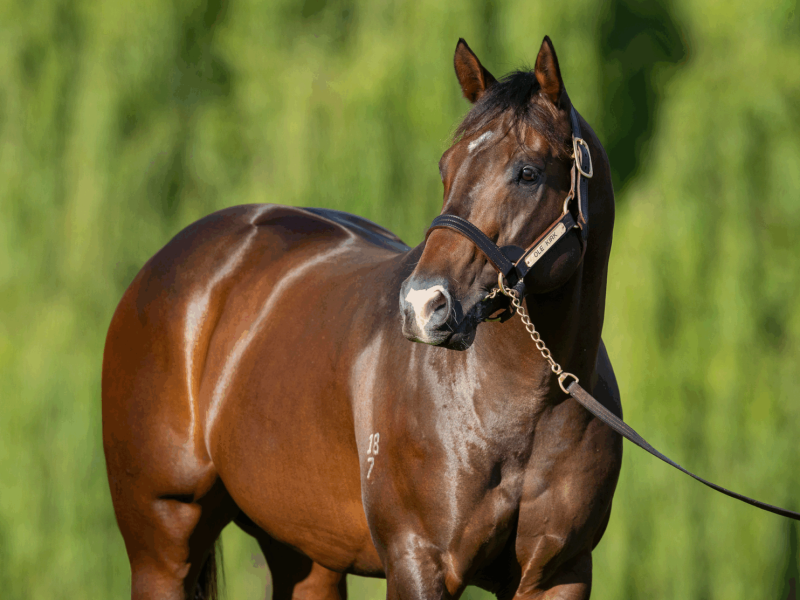
Ole Kirk tops bolstered Vinery roster
Vinery will boast two star emerging stallions on its roster in 2026, with Ole Kirk, who will stand at $110,000, to be joined by Farnan, who will kickstart his stint at his new farm at $77,000.