
Victorian budget trims POCT forecasts, slightly reducing racing’s funding outlook
Victoria has lowered gambling tax revenue forecasts across the forward estimates, trimming prospective racing funding despite strong current receipts and steady overall wagering tax growth in the latest budget.
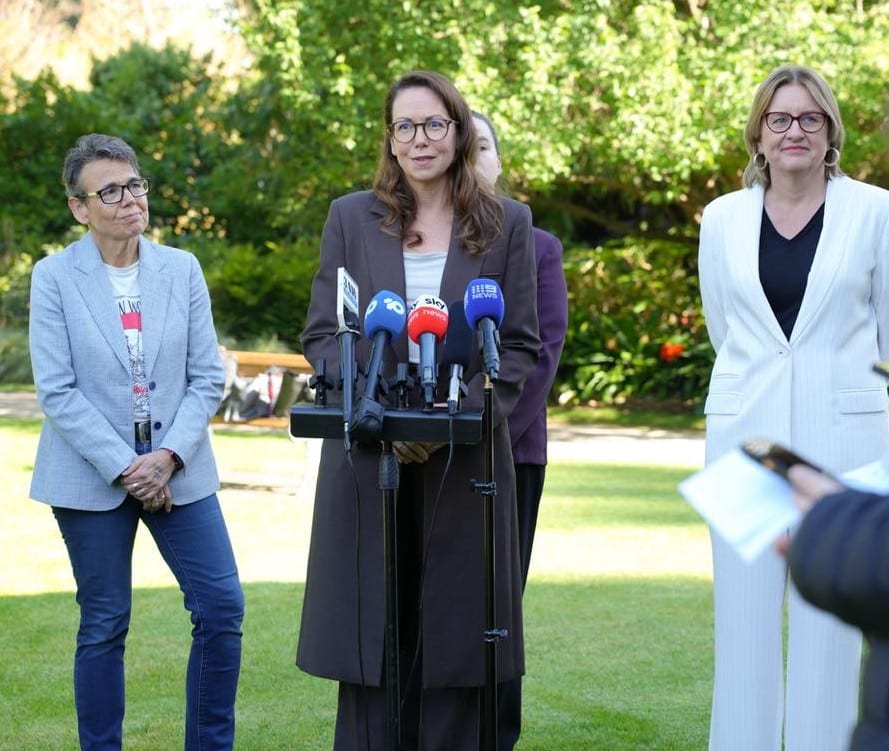
The Victorian government has downgraded its forward estimates for gambling-related taxation revenue, including point of consumption tax receipts that underpin funding for the state’s racing industry.
In the latest state budget handed down last week, the total taxation revenue from racing and sports betting across the 2025/26, 2026/27, 2027/28 and 2028/29 financial years is projected to be $1.702 billion.
That is $18 million less than what it was predicted to be across those four years in the 2025 budget released last May.
If those projections are realised, and given that the government splits the point-of-consumption tax (POCT) revenue 50-50 with the racing industry, the sector would be as much as $9 million worse off over the four-year period.
Revised forecasts sit alongside continued strong near-term collections from wagering and gaming tax receipts.
The government is still projecting it will meet its racing and sports tax budget of $416 million in the current financial year.
It notes that revenue from racing and sports taxes through the first three financial quarters 0f 2025/26 was ahead of previous years.
By March 31, the state had collected $332 million in gambling tax streams from racing and sports, up from $303 million at the same point last year.
The budget papers also outlined the broader gambling revenue outlook for the state over the forward estimates.
Overall gambling revenue is expected to reach $2.9 billion in 2026/27, then increase at an average of 0.4 per cent per year over the forward estimates period.
“Gambling tax revenue is expected to grow modestly over 2026-27, with growth strongest in public lotteries revenue,” the budget said.
“Over the forward estimates, sustained growth in lotteries revenue is expected be largely offset by a decline in EGM revenue as gambling harm minimisation measures take effect in hotels and clubs.”
Budgetary estimates do not incorporate any quantified impact from federal gambling advertising restrictions on sports wagering revenue.
Racing Victoria’s most recent annual report, published following the commencement of its new agreement with Tabcorp, outlined the scale of government-linked revenue within the industry’s financial structure.
It showed government funding and distributions represented $187 million of $527 million in total revenue, equal to 35.4 per cent.
That funding component includes distributions derived from wagering-related taxation arrangements, including POCT flows.
The budget revisions take place in a far-reaching environment in which gambling taxation remains a significant component of state revenue, alongside other sources such as lotteries and poker machines.
The composition of gambling revenue is expected to shift over the forward estimates period.
Racing and sports wagering taxation remains tied to consumption patterns in betting markets as opposed to population growth, with revenue performance influenced by turnover levels and tax base stability.
At the start of the 2024/2025 financial year, Victoria increased its POCT rate from 10 per cent to 15 per cent in a move that coincided with the end of its long-term joint venture with Tabcorp.
It had been predicted in the 2024 state budget that it would generate an additional $158 million in tax revenue from racing and sports betting taxes in 2024/25 compared to 2023/24.
Related Articles
SA racing industry report details $729 million boost to state economy
South Australia’s racing industry contributed $729.3 million to the state economy and supported more than 5000 jobs in 2024/25, with new figures underlining racing’s growing regional and community importance.
A Federal Budget for the ages – as it relates to the thoroughbred industry
With blinkers on and trying to cut through the Federal Budget noise, here is a snapshot from Stable Financial’s Adam Tims on the Budget impact on the horse industry in Australia.
Failing the vet check: RV can’t mark its homework on Robertson-Smith own goal
Racing Victoria chief executive Aaron Morrison can claim he was blindsided by revelations of historic charges against intended chief veterinary officer Dr Glenn Robertson-Smith, but for integrity’s sake, he must step back from involvement in an investigation into the embarrassing situation, writes Bren O’Brien.