
A Federal Budget for the ages – as it relates to the thoroughbred industry
With blinkers on and trying to cut through the Federal Budget noise, here is a snapshot from Stable Financial’s Adam Tims on the Budget impact on the horse industry in Australia.
Adam Tims is a director of Stable Financial. This content has been provided to The Straight for editorial use.
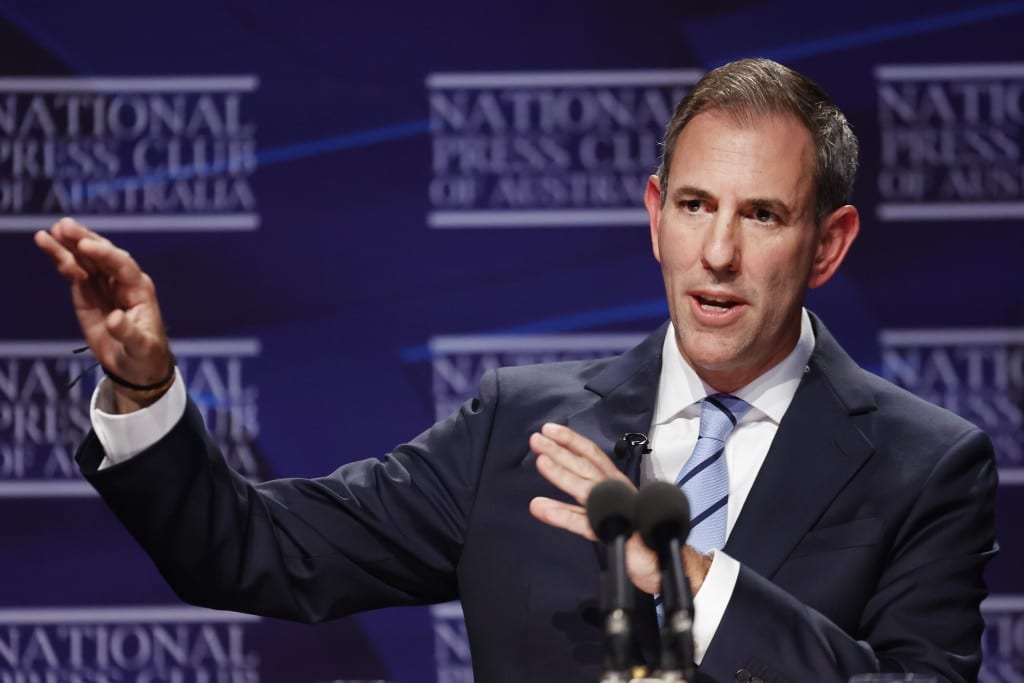
The tax reform seems heavy and the impact on the Government debt seems light, but what does the Federal Budget announced by the Treasurer on Tuesday 12th May 2026 mean for horse industry participants?
The scale and complexity of Australia’s tax system overhaul presents business owners, investors and their advisors much to contemplate. The Federal Budget 2026-27 has rewritten the rules on capital gains tax, negative gearing and discretionary trusts. Although the tax changes have staggered implementation dates, early assessment and possible action will be critical.
With blinkers on and trying to cut through the Federal Budget noise, here is a snapshot of the Federal Budget impact on the horse industry in Australia.
Horse breeders have a significant tax structure win
A major announcement in the budget was the proposed introduction of a 30% minimum tax on discretionary trust income from 1 July 2028. In effect, a distribution of taxable income from a discretionary trust to a beneficiary of the trust will be taxed at 30% in the hands of the trustee. An individual beneficiary will receive a non-refundable credit for the tax paid but not so for corporate beneficiaries, aka, Bucket companies. Clearly this new tax policy disrupts decades of efficient tax structures.
Despite the trust tax set at 30%, importantly farmers including primary producers (horses), are exempt. This exemption will be highly relevant for farming family groups and rural business structures and is a big win for horse breeding structures that often involve the use of a bucket company.
Certainty around the instant asset write-off
The $20,000 instant asset write-off for businesses with turnover under $10 million will become permanent. This may provide planning opportunities for machinery, equipment, vehicles and technology purchases on an asset-by-asset basis.
So do horses fit the definition of being a “depreciable asset”? For Thoroughbred breeders the answer is sadly “no” as horse interests are treated as trading stock (Primary production, Livestock – horses) in line with section 70 of the Income Tax Assessment Act 1997.
However, for horse Trainers and Syndicators (the buying bench for the Breeders), we believe that horse interests are treated as “depreciable plant”. For instance, a horse syndicator may retain a fractional interest in a horse they have syndicated. Provided their share of the horse is $20,000 or less, the syndicator would be entitled to a 100% tax deduction, write off.
When coupled with the loss carry back rule (discussed below), this measure may result in refunds of prior year tax paid to the extent that losses are incurred due to the investment in depreciable assets, although limited to a maximum of $20,000 per asset.
Welcome back, loss carry back
For income years commencing on or after 1 July 2026, the Government will allow companies with aggregated annual global turnover of less than $1 billion to carry back a tax loss and offset it against tax paid up to two years earlier.
The measure allows tax refunds (cash) to be accessed when lodging income tax returns from 30 June 2027 onwards. Whilst there is no maximum loss that can be carried back, the offset will be limited to the lower of tax paid in the respective years and the extent of franking credits available.
This is a tax policy revisited – it existed during the Covid period 2020-2022 and we welcome it back.
Loss Refunds for small Start-Up companies
Commencing 1 July 2028, Start-up companies with aggregated annual turnover of less than $10 million that generate a tax loss in their first two years of operation will be able to utilise the loss to generate a refundable tax offset. The offset will be limited to the value of fringe benefits tax and withholding tax on wages paid in respect of Australian employees in the loss year.
This measure could be of assistance to hobby breeders or new horse industry entrants that decide to increase their horse interests to a point that they commercialise the operations, including employing staff and starting a bona fide horse breeding and trading business after 1 July 2028.
Capital gains tax (CGT)
From 1 July 2027, the Government proposes to replace the existing 50% CGT discount for all assets held longer than 12 months with inflation-adjusted indexation, coupled with a minimum 30% tax on capital gains.
Proposed capital gains tax reforms will fundamentally change how gains are taxed from 1 July 2027. This includes pre-CGT assets acquired on or before 19 September 1985, although grandfathering provisions do apply. In effect, capital gains arising after 1 July 2027 will become taxable with a minimum tax rate of 30%.
Valuers will become exponentially busy around 1 July 2027 as investors scramble to try to substantiate a market value at that date that establishes a cost base for any gains subsequently. There are significant horse properties that would be affected bearing in mind the Principle place of residence (PPR) exemption only applies to the homestead and surrounding 2 hectares of a larger rural property.
It will be essential for property owners and indeed owners of other asset classes to assess the new CGT tax landscape. Importantly, superannuation Funds appear to be exempt for the CGT changes and small business CGT concessions will still apply that could be relevant for the horse property that is used as an active asset.
For the hobbyist, a horse interest is treated as a “personal-use asset” and is subject to the CGT regime. Abolishing the CGT discount results in much higher CGT to pay for the hobbyist that has found a good horse and sold at a gain, but some would say, “a good problem to have”.
Summary and call to action
No doubt the devil will be in the detail – until the tax changes are made law, Stable Financial will continue to review announcements and planning opportunities as the dust settles.
Businesses and investors should review existing structures, particularly the use of discretionary trusts. This would include modelling the impact of proposed tax changes on future outcomes.
The next 18-24 months will be a critical period to work through the practical implications on the changes and position you and your business, one and one back with cover, for the new tax environment.
Adam Tims is a director of Stable Financial. This content has been provided to The Straight for editorial use.
Related Articles
🔒 🔒 Perth Racing flags profitability challenge despite gains
Perth Racing has reduced its annual loss but remains under pressure to turn stronger revenue, increased activity and major investment into sustainable returns as the WA racing industry awaits the findings of an independent funding and sustainability review.
New Zealand equine safety initiative targets earlier injury-risk detection
The New Zealand Equine Safety Initiative will combine development, training and veterinary records with movement data and blood research, aiming to give breeders, trainers and veterinarians earlier warnings of injury risk.
‘He had a good blow’ – Ka Ying Rising on song for second Everest
There were fewer dramas with Ka Ying Rising after a Randwick barrier trial on Tuesday than there was a year ago, leaving trainer David Hayes and jockey Zac Purton happy their star sprinter is on track for his second shot at The Everest.
