
Letter To The Editor – Matt Cumani – Don’t turn the Derby into a Dodo
Trainer Matt Cumani mounts a vigorous defense of the Victoria Derby in its current form, arguing, among other things, that thoroughbred racing can not just be made to be a measure of speed.
This editorial has been republished from Matt Cumani Racing with permission from the author.
The Dodo thought it was pretty smart.
Through the efficiencies of natural selection it reasoned that wings were an unnecessary luxury and while, presumably, a lot of fun, the new generations (Gen Ds?) ‘decided’ it would be better off not putting so many resources into growing them and flapping about. They all got fat and boring and eventually, became someone else’s dinner.
I thought of the Dodo when I read Mick Sharkie’s comments about the need for our sport to ‘evolve’. I agree with him that the sport should advance and yes, perhaps, evolve. But we should be careful because, as the Dodo found out, it is possible to evolve in a way that makes you uninteresting, one dimensional, and ultimately vulnerable to existential threats.
If you haven’t been reading The Straight – you should, it’s a great publication – you might have missed The Derby Dilemma – Why Australia’s young stayers are paying the price and Mick Sharkie’s reply to that article via his letter to the Editor: Reimagining the Derby.
Mick, a well respected racing analyst and commentator, tells us he has looked into the numbers and he implores us to consider the data rather than rely on emotion when assessing the value of the Victoria Derby.
It makes for interesting reading and likely confirms the view that many have of the race.
A view that is not incorrect; the Victoria Derby is not the race it once was and it is no longer producing the champion open-age stayers it once did. On top of this, as Warwick Barr delicately put it, “trainers privately question whether the ratings spikes [imposed on the top three finishers] always reflect the true depth of the form”.
This news, while sometimes wilfully ignored, is not revelatory and in fact is one of the main reasons (putting emotion aside) that I target the race so aggressively.
There is no doubt the race needs some help and I hope that Australia’s newly formed Black Type Advisory Group has something up their sleeve for their meeting with our pattern committee overlords, the APC, in July. This subject will no doubt come up.
Mick Sharkie makes the argument that because the Victoria Derby is not producing “quality open age middle distance and staying horses” it should be reduced in distance because “2500m for three-year-olds in Spring is detrimental to the development and elite performance as an older horse”.
He comes to this conclusion because when the subsequent form of the 173 horses that have raced in the 2500m Victoria Derby every Spring since 2014 is compared with the record of the 164 of the Australian Derby run in the Autumn, the latter clearly comes out on top. Never mind the fact that presumably many of the latter also form part of the former.
Mick assumes that this is because the Victoria Derby is too much too soon and to run in it is to risk ruining the potential of your horse to go on and be successful as a four year old and beyond. But this assumption is incorrect.
And yet it is gaining traction and support from trainers, breeders and owners. Increasingly commercial big breeders and stallion masters, with some notable exceptions, feed this narrative by aggressively advertising speed and precocity creating less demand again for anything else.
This gravitational pull funnels racing inexorably along a path towards a slimmer, more economically productive, more boring, spectre of its former self, with the overarching aim of boiling it down to one singular measure of ability: Speed.
Racing is not about simple speed just as football isn’t 90 minutes of penalty shoot outs and Formula One isn’t drag racing. Speed is just one skill in a sport that commands so much more. Let’s not reduce it to one element simply because it makes commercial sense.
The reason the Victoria Derby is not producing top quality open-age stayers is because it’s not attracting top quality three-year olds. It’s not attracting top quality three-year-olds because it’s no longer the most attractive three-year-old target in the spring.
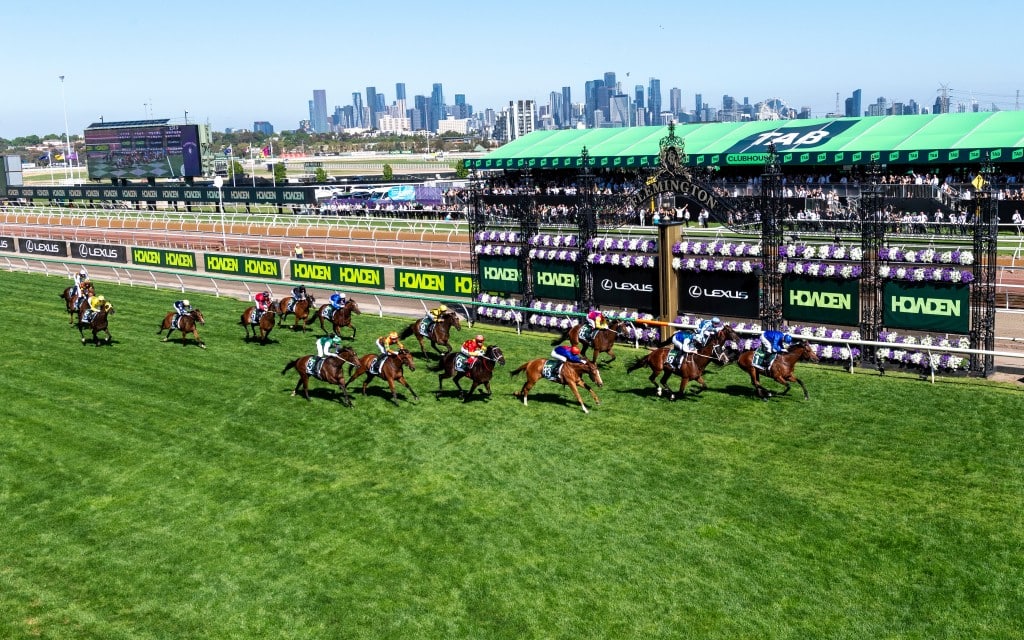
Up until 2017 the Victoria Derby was always worth more than the Caulfield Guineas and that fact provided a narrative arc to the spring.
Only the very best could do the double and they are still talked about today, revered for their class and versatility. Tulloch, Grosvenor, Red Anchor, Mahogany; these names raise the heart rate and stir in us a sense of awe.
Despite this the Victoria Derby started to lose it’s shine, albeit slowly at first, after Tulloch won the famous double because 1957 was also the year that saw the inaugural running of the Golden Slipper.
The success of George Ryder’s brainchild has since shaped Australian racing and made it an internationally respected producer of globally competitive sprinters. But this achievement has come at a cost and the weight of its success has sucked the whole industry into its orbit.
Reducing the last 65 years of Australian racing history into a fight between the Golden Slipper, and the races that feed off it, versus the Melbourne Cup and the races that feed into it; it’s clear that the Golden Slipper is winning.
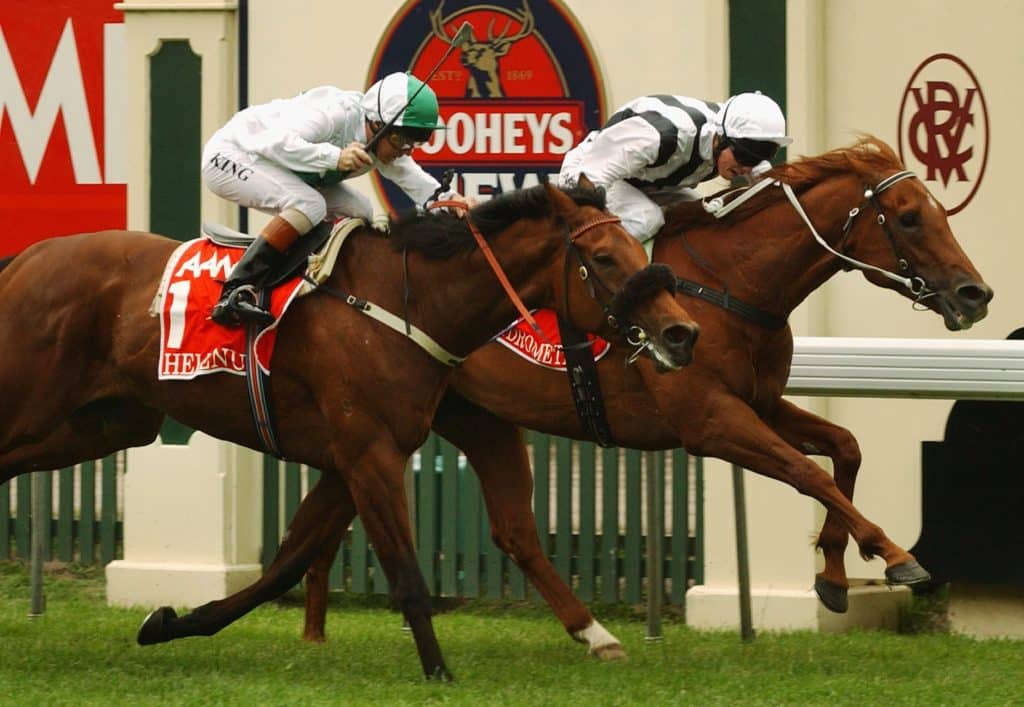
This shift was imperceptible at first but slowly gained momentum until at some point between 2002, when Leon Corstens’ champion Helenus did the Caulfield Guineas-Victoria Derby double, and 2017 when the Derby went from being the ultimate target to the less valuable afterthought, there came a tipping point and the slide accelerated.
In response, Australia has, over the period, been breeding less and less stayers and targeting less and less staying races and so we find ourselves in a position that, come November, the horses running in the Victoria Derby are not “the best of the horses that have made it to that distance at that time” as The Straight incorrectly quoted me as saying but are in fact the only horses from an increasingly small population of staying bred three-year olds to have made it to that distance at that time. That is never going to produce a good form race.
However, to use the better subsequent form of the Australian Derby to argue for a reduction in distance of the Victoria Derby is opportunistic and misleading.
The Australian Derby is bound to produce more consequential form lines because it is later in the year and the extra time allows for more horses to get to that distance. It therefore becomes a truer selection of the best stayers of that generation. But this is true of all races; as the season unfolds more of each generation is tested on the track and the races become more competitive until they all arrive at the ultimate test: open age.
This is our sport in a nutshell. This path provides a spectacle for punters and other racegoers alike but it’s also the proving ground from which breeders select their stock.
It advertises precocity to one breeder and soundness thru longevity to another. Importantly it also advertises a spectrum of skills: speed, stamina, versatility, turn of foot, cruising speed etc; a veritable menu of traits from which a breeder can select to improve his or her stock.
Paradoxically the Slipper has always had the advantage, despite its specialisation, because it comes first. Stallions and broodmares turnover quicker as their progeny prove (or otherwise) themselves earlier and the costs for all parties are less.
Had the Golden Slipper been the force it is today there is every chance Tulloch would not have raced at three. Even if he had he probably would not have been tried over any further than the Guineas distance given that he won 6 races as a two-year-old between five and seven furlongs.
These days horses that might excel in the Derby, but show dominant ability at two, no longer get the chance to advertise their superior ability across distance ranges.
The Victoria Derby is in an almost irretrievable decline and if we continue to let it, and other staying races, slide ignominiously into irrelevance the Melbourne Cup will also wither and die but not before it has become a pantomime of itself.
Indulge me in a reductio ad absurdum: if we change the Derby distance racing will ultimately become something more akin to Quarter Horse racing, the drag racing of the horse racing world.
Mick and others will, no doubt, tell me to relax. They are not proposing the wholesale truncation of the staying ranks, just a simple reduction of four or five hundred meters. Mick refers us to the Prix Du Jockey Club – aka the French Derby – which was reduced from 2400m to 2100m in 2005 and has seen its fortunes revived: “If change is good enough for France, why not Australia”.
But, in that instance, the change was necessary as it was clashing with the Epsom Derby – particularly after travel was made easier with the completion of the Channel Tunnel – both run in early June. There is no such clash in the Australian spring.
A change in distance is not going be our race’s saviour. Creating a race over 2000m “where the blue-ribbon best colts go to” as Newgate’s Henry Field suggested was required has already been tried.
If the $2 million, Group 1 Spring Champion run over 2000m the week before the Victoria Derby in Sydney has not been the main target for the country’s best three-year-old colts then neither will a 2000m Victoria Derby. The only thing that will save it is a national, arms-length, strategy – perhaps something the Black Type Advisory Group can provide.
In the end, getting the Derby back to its former glory will require, much like what the competition itself demands, investment, patience, and endurance, in that order. And perhaps, a little dash of speed.
This editorial has been republished from Matt Cumani Racing with permission from the author.
Related Articles
Is racing getting the political leadership it needs?
By legislative necessity, racing bodies and state governments are tied at the hip. So what does the likelihood of a more turbulent political environment mean for the thoroughbred industry? Events in Queensland and Tasmania give us a clue, says Bren O’Brien.
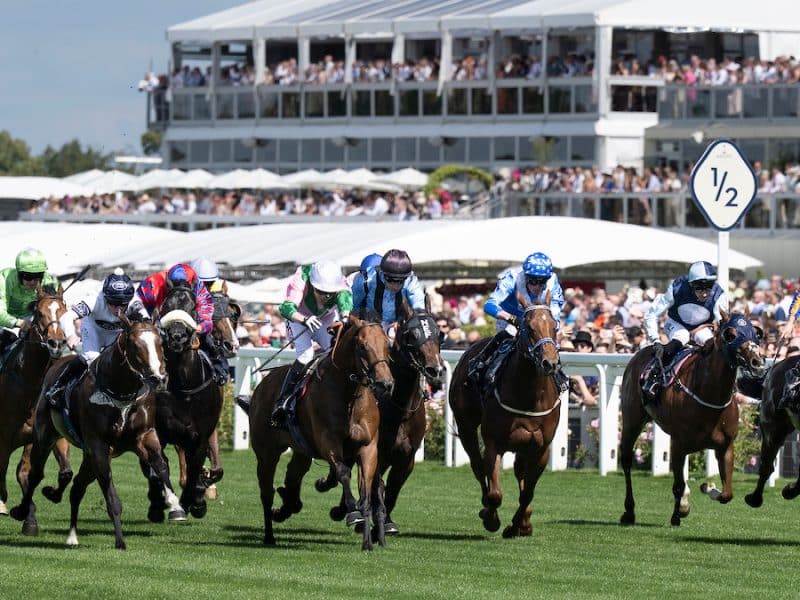
Royal Ascot – Day 1 in Photos
All the pictorial action from a memorable first day at Royal Ascot for our photographers Bronwen Healy and Darren Tindale from The Image Is Everything.
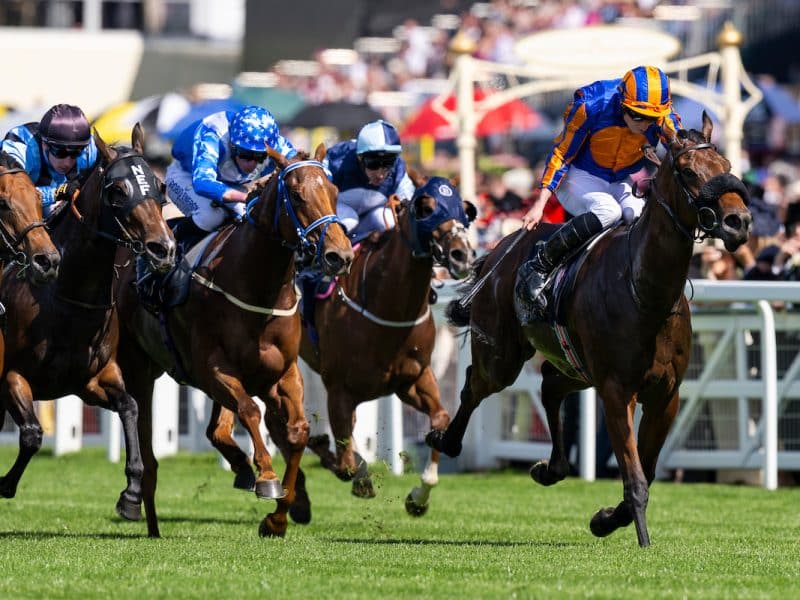
Everest Mission on agenda after O’Brien and Moore upset Aussies at Ascot
Fresh from seeing off two Australian sprinters in the King Charles III Stakes at Royal Ascot, Mission Central could be set to tackle Australia’s richest race in October.
