
Member Exclusive Member Exclusive When AI comes calling – Could Australia’s racecourses become data centre targets?
As artificial intelligence drives an unprecedented data centre boom, Australia’s racecourses may find themselves competing in a new property market where power, connectivity and land are prized commodities.
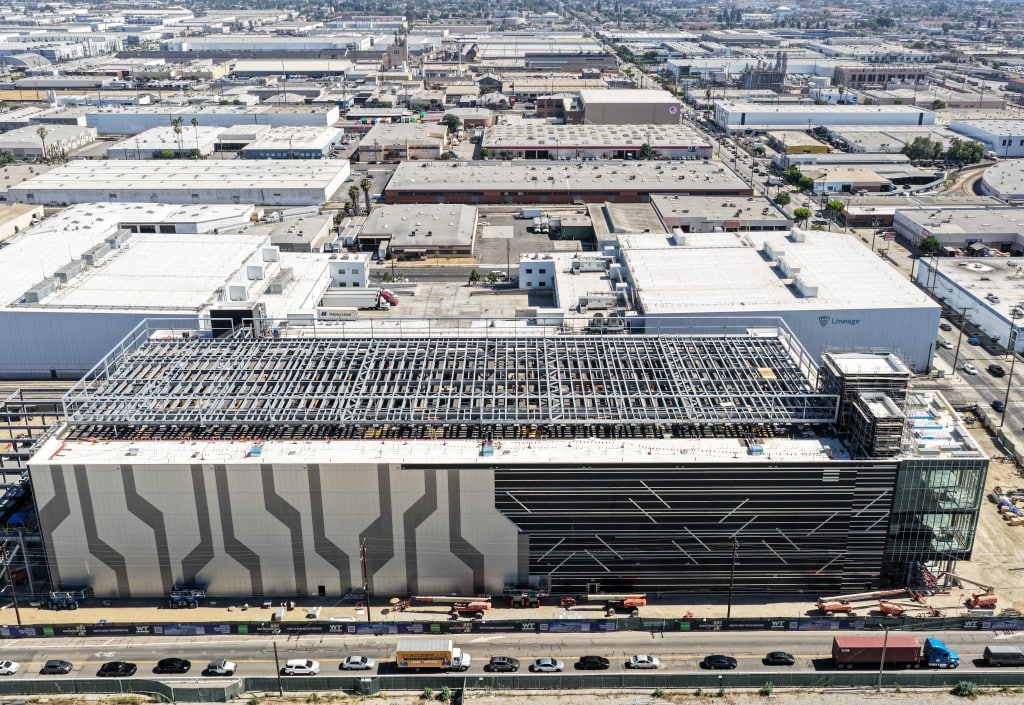
When reports emerged that Chicago’s historic Hawthorne Racecourse was being considered as a potential site for a data centre, it appeared an unlikely convergence between one of America’s oldest racing venues and one of the world’s newest industries.
Yet as Australia embarks on an unprecedented expansion of artificial intelligence infrastructure, the question is no longer as far-fetched as it first appears.
The Straight understands at least one Australian race club has discussed the prospect of accommodating a data centre on surplus land, although those talks have not progressed beyond an exploratory or boardroom stage.
Whether any Australian racecourse ultimately hosts a data centre is another matter entirely, but the Hawthorne proposal illustrates how rapidly the value equation for large landholdings is changing during this boom.
As the push to sell Rosehill underlined, for decades racing’s greatest external pressure on metropolitan land came from residential developers and governments seeking to build new suburbs and high-density housing precincts.
Artificial intelligence has created another class of buyer.
Data centres, once little more than secure warehouses housing computer servers, have become critical infrastructure as cloud computing and AI applications reshape economies around the world.
Australia’s first commercial data centres emerged during the internet expansion of the 1990s, but the industry has entered a markedly different phase, estimated to be worth $800 billion globally as technology companies race to build the computing capacity required to support artificial intelligence.
According to the inaugural Australian Data Centre Forecast Report by Data Centres Australia and DC Byte, Australia has 162 operational data centres and another 90 projects at various stages of development, with the industry’s operational computing capacity forecast to more than double by 2030.
Much of that investment is centred around Sydney and Melbourne, where proximity to major population centres provides access to skilled labour, telecommunications infrastructure and electricity networks while reducing latency for the digital services used by businesses and consumers every day.
That concentration also helps explain why racecourses have entered broader discussions around future land use.
Yan Zhaojie, a development manager with Onyx Corporations, which creates data-centre projects, said selecting a suitable site involved far more than identifying a large parcel of land.
“Power is probably the biggest constraint at the moment,” Zhaojie told The Straight.
“Do they have access to the grid and how much power can they draw? It’s not everywhere you can build a data centre because there are a lot of criteria, including communications infrastructure and access to optical fibre.”
Large racecourses often possess many of those characteristics, with sizeable contiguous landholdings, established transport links and proximity to existing utility infrastructure.
“The potential is there, because some racecourses already have good infrastructure,” Zhaojie said.
“But it depends where they are.”
He cautioned, however, that planning controls were often the biggest obstacle rather than engineering.
“The racecourse zoning can be a restriction,” he said.
“If those restrictions are there, it’s pretty hard to get planning approval for a data centre.”
Ironically, Rosehill’s commercial neighbours in western Sydney are already providing a snapshot of how Australia’s digital footprint is evolving.
An expansion of an existing data centre at nearby Grand Avenue in the adjoining Camellia industrial precinct was approved by the NSW government in 2024, placing significant digital infrastructure immediately adjacent to the racecourse.
The growing demand for suitable sites has elevated data centres from a niche technology investment to a matter of federal policy.

The Albanese government has released national expectations for data centre and AI infrastructure developers, requiring major projects to underwrite new electricity generation, pay their own network connection costs, improve water efficiency and contribute to Australia’s broader economic and research capability.
Prime Minister Anthony Albanese has argued Australia should embrace AI while ensuring the industry’s rapid expansion does not shift energy or infrastructure costs onto households, with governments also seeking to steer projects towards appropriate locations.
Those expectations come amid concern over the industry’s growing demand for electricity and water, with several major Australian proposals attracting community opposition over their environmental footprint and scale.
At the same time, Australia is viewed as an attractive destination for hyperscale investment because of its political stability, comparatively abundant land and growing renewable energy capacity as competition intensifies to become the Asia-Pacific’s preferred AI hub.
For racing, none of that means race clubs are about to replace grandstands with server halls that are many times the size of an average football field.
It does, however, suggest that the industry’s land assets may increasingly attract interest from sectors that barely existed a generation ago.
If Hawthorne ultimately becomes a data centre, it may prove to be remembered less as an isolated redevelopment and more as an early indication that racecourses are entering a new contest for land.
For race clubs that have their own freehold title, their future value might easily be determined by access to megawatts and terabytes rather than their suitability for housing.
Related Articles

Powerful racing industry group heads to Canberra as wagering reform debate intensifies
The chief executives of Racing Australia, Racing Victoria, Racing NSW and Thoroughbred Breeders Australia will represent racing’s interests at a key Senate inquiry next week into the federal government’s proposed changes to wagering advertising laws.
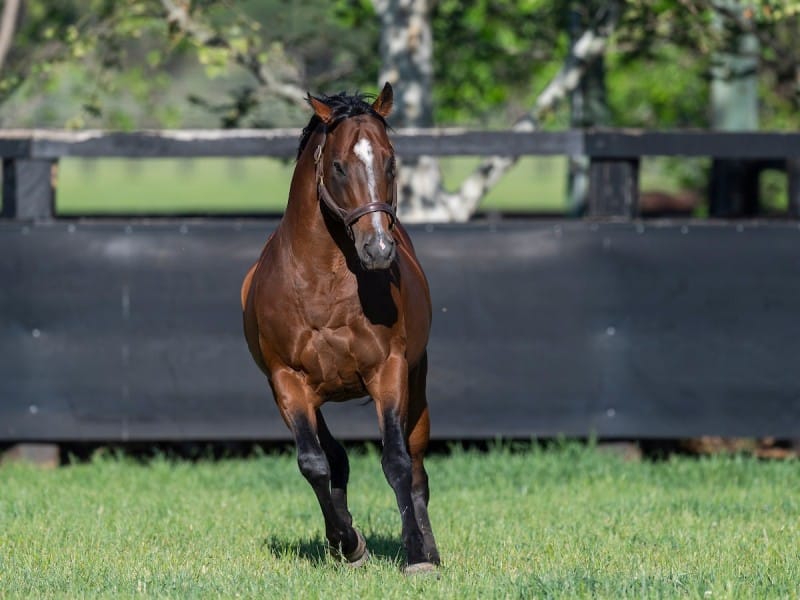
Snitzel reclaims sires’ title in posthumous premiership triumph
Champion sire Snitzel capped his final season in remarkable fashion, reclaiming Australia’s general sires’ title posthumously while Home Affairs, Bivouac and Proisir earned important recognition with their respective premierships.
Member Exclusive Member Exclusive Marathon mindset – Mitch Freedman hits full stride in time for spring
Mitch Freedman has produced the finest season of his training career with fewer horses, proving a disciplined philosophy borrowed from an elite sporting team can deliver results on the eve of spring.
