
Analysis: The line may be drawn, but ATC-Racing NSW court case asks more questions than it answers
Those seeking reform to racing in NSW may be hailing the Australian Turf Club’s win against Racing NSW, but as Justice Francois Kunc pointed out, the disagreements over where racing’s power balance sits seem destined to continue.
“Where do I draw the line?”
Justice Francois Kunc pondered several times during the three-day NSW Supreme Court hearing last month about where the limit of Racing NSW’s power extended to, under the state’s Thoroughbred Racing Act, when it comes to matters of race clubs, and specifically the Australian Turf Club.
Of all the technical arguments put forward by both sides of the key case, the argument over what powers the Act gave Racing NSW and what powers it didn’t was always the core question.
In his decision on Wednesday, Justice Kunc drew that line.
He determined that under the Act, Racing NSW’s powers were limited to the supervision and regulation of the racing of galloping horses as referred to in the Australian Rules of Racing.
It did not, according to the ruling, extend to matters beyond that, including concerns about the financial condition and corporate governance of race clubs.
While there are other matters at play, this definition of what constitutes horse racing under Racing NSW’s functions, as set out in section 13 of the Thoroughbred Racing Act, was crucial, as was Racing NSW’s powers as set out under section 14.
The specific aspect of the Act which deals with Racing NSW’s right to appoint a club administrator, 14(2)(g) drew Justice Kunc’s attention.
“It is not in the interests of RNSW or the race clubs for there to be room for doubt about critical matters,” he said.
“These issues are not necessarily straightforward. I respectfully suggest that they merit careful attention on the part of all those involved in this important industry and including, if thought necessary, amendment of the Act.”
The law has little scope to accommodate grey areas and there is clearly a need to better define what Racing NSW’s powers are. There is an opportunity to address this in the review of the Act being undertaken by former health minister Brad Hazzard.

Given the febrile political environment in NSW racing at the moment, it would be easy to characterise this as a battle of two sides and as a victory for those pursuing reform in the state.
In an industry of strong personalities, it would be simplistic to characterise this as a blow to one ambition or a boost to another. This was never Peter V’landys or Saranne Cooke versus Tim Hale or Annette English.
As Justice Kunc said, this was not a matter of whether Racing NSW did the right thing or not, it was a judgment on whether this specific appointment of an administrator was valid. It was a reflection of what the law says now, not what one party believes it should be.
He ruled that it wasn’t based upon the above reasons, plus the fact that Racing NSW erred in not properly considering a KordaMentha report into the solvency of the ATC as presented by the club during the show-cause process.
It is worth highlighting that, as well as the strong possibility that the ruling is appealed by Racing NSW, it wasn’t a complete clean sweep for the ATC.
The ATC failed to prove three alternative reasons it put forward for the administrator’s improper appointment, including that provision 14.2 conflicted with the Corporations Act and was impliedly repealed by the Clubs Merger Act.
But in answering some questions, Justice Kunc’s decision also raised many others.
What does the decision mean for those clubs previously placed into administration by Racing NSW?
What does it mean for Racing NSW’s power in a host of other areas, not directly related to ‘the galloping of horses’?
More broadly, how does this define the relationship between Racing NSW and its clubs?
Does that uncertainty prompt Racing Minister David Harris to seek to clarify that through a revised Thoroughbred Racing Act?
It also puts into perspective the importance of the Australian Rules of Racing, which are administered by Racing Australia, an imperfect organisation that is controlled by the two biggest states via veto.
It could be readily concluded from this case that the Thoroughbred Racing Act, the legal framework on which a billion-dollar industry was built, is no longer fit for purpose. This dysfunction has allowed the current power struggle to fester.
Having drawn a legal line, Justice Kunc was also well aware that his judgment would not be the final chapter of this story.
“Quite apart from these proceedings going further, the evidence suggests that this judgment will not end the disagreements between RNSW and the ATC.”
That is one conclusion we can bank on.
Author

Related Articles

VRC back in black as board elections loom
Victoria Racing Club has returned to annual profit for the first time in six years, with topline figures revealed to media soon after it was confirmed Neil Wilson will be replaced by Vin Cox as chairman, and before four board seats are put up for election at December’s annual general meeting.
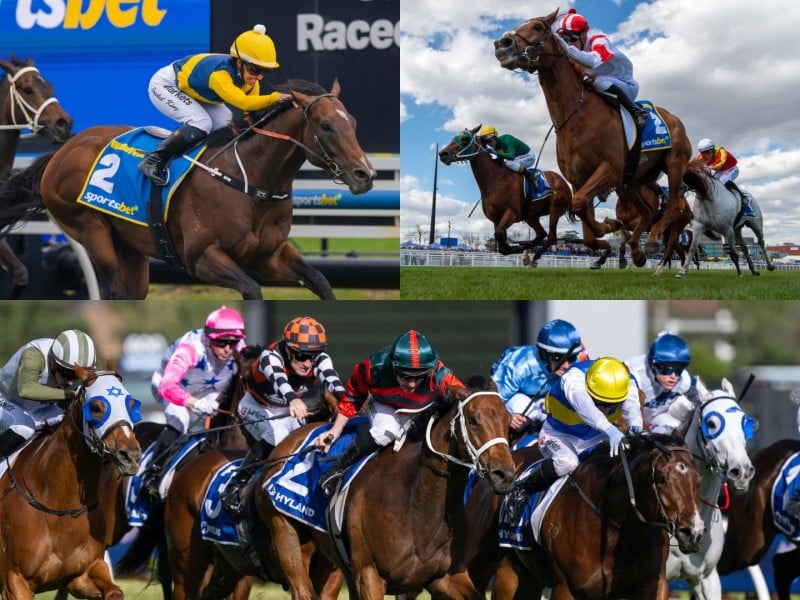
Gallery: Stars of Saturday – Caulfield Guineas day
All the action from Caulfield Guineas Day from the perspective of the photographers from The Image Is Everything.
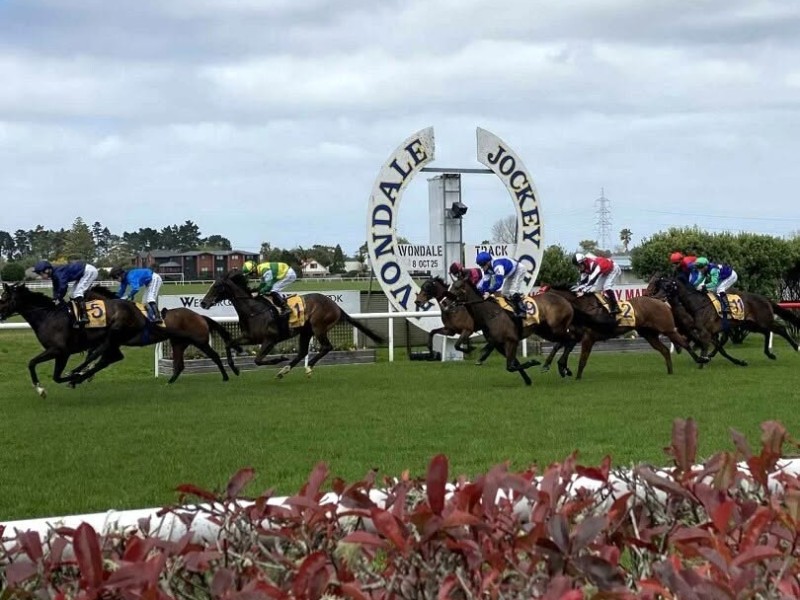
Avondale Jockey Club takes fight for survival to the NZ High Court
A surprise legal development in the battle for the future of Auckland’s Avondale Jockey Club could have wide-reaching ramifications for the future infrastructure plans of the New Zealand racing industry.
