
🔒 🔒 As governments look for a wagering solution, they must acknowledge they are part of the problem
Around one third of the increased wagering losses by Australians over the past six years can be attributable to new taxes collected by state governments. Bren O’Brien says any measures to reduce the impact of gambling harm must look at the impacts of increased regulation and taxation on punters.
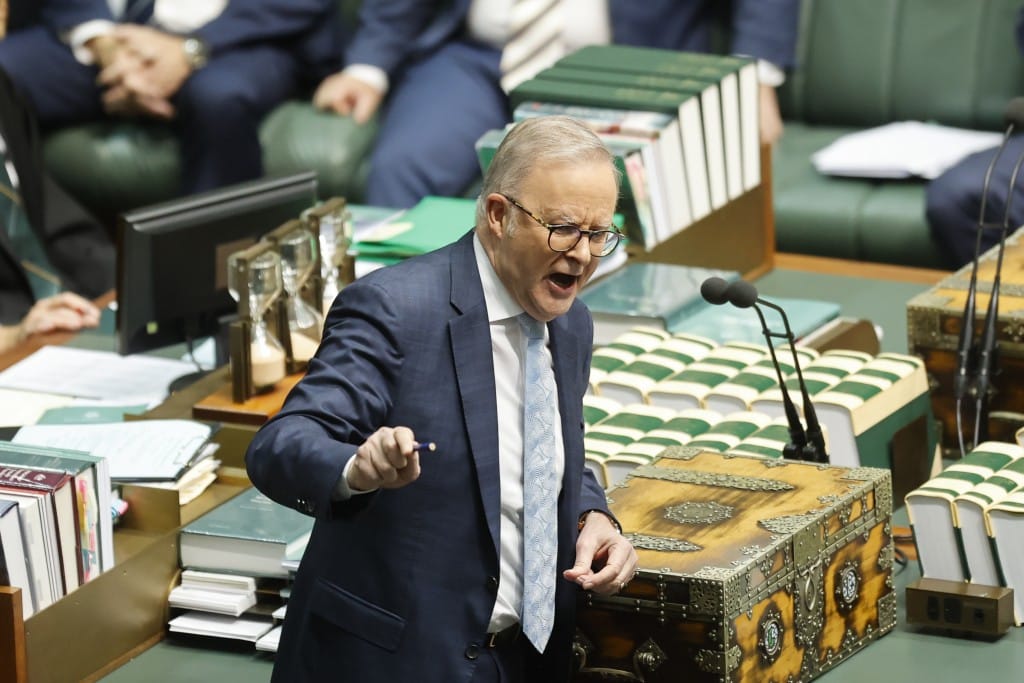
Comment: For nearly a decade, Australian governments have used taxation as a measure of keeping the booming wagering industry in check.
Not only has that arguably been ineffective, but it is also contributing to the gambling harm which is at the centre of the current political storm regarding reform of the industry.
It has been a long-term wagering industry talking point, particularly since the introduction of state-based point of consumption taxes, that increased tax is ultimately damaging to punters, but that does not mean it isn’t true.
The figures tell the story.
The impact analysis of the current reforms before parliament, which are based on the universally referred to Australian Gambling Statistics (AGS), show the amount of money lost by Australians on wagering has grown from $3 billion in 2010/11 to $8.4 billion in 2023/24.
While the veracity and accuracy of the AGS numbers, which have been primarily sourced from state treasury figures, has been questioned by people from inside and outside the industry, the fact that wagering is responsible for 26 per cent of losses in Australia has been used as leverage for reform.
But let’s look a little closer at the figures, as well as those of the receipts from Point Of Consumption Taxes by state governments.
In 2018/19, when POCT regimes were in their infancy, the estimated total wagering loss by Australians was $5 billion. In 2023/24, that rose, according to AGS, to $8.4 billion.
As The Straight recently reported, last financial year, state and territory governments banked $1.27 billion in POCT, revenue that largely did not exist in 2018/19.
While the figures do not align exactly, we can see that while wagering-related gambling losses have risen $3.4 billion since 2018/29, around a third of those losses, $1 billion to $1.1 billion, went into state government coffers.
There are a couple of aspects worth considering in those calculations. Firstly, some of that POCT would have been taxed on generosities, which strictly aren’t losses, while state governments do not hold on to the entirety of those receipts.
In Queensland and Tasmania, 80 per cent of POCT receipts go back to the racing industry, while it is 50-50 in Victoria and 30 per cent elsewhere, including NSW.
In much of the country, POCT-based funding has been used to replace the revenue the racing industry used to get via the parimutuel joint venture style agreements.
What we can say is that the state treasuries have benefited from POCT, which represents around 0.85 per cent of total state-based taxation revenue and 11.9 per cent of overall gambling revenue.
The ones effectively paying the tax are not the bookmakers, but the punters, who have seen higher market percentages as well as other measures implemented, as wagering companies look to sustain their margins and profitability.
POCT is just one of the additional costs which have crept into the system and increased the volume of money lost by Australian punters.
Other fees, including product and race fields, have continued to increase across racing and sports.
This is not a sympathy tune for the bookies. In raw terms, they have benefited enormously from the liberalisation of wagering over the past 15 years. It is also not to excuse them from the reported behaviour which has led to such lurid headlines over the past week.
But you only have to look at the recent annual reports from the likes of PointsBet to see the cut that others take from the wagering ecosystem.
PointsBet reported that across a year, 47.5 per cent of its net win amount from customers went to POCT, GST and product fees. Other bookmakers report even higher figures and the percentage is increasing year-on-year.
Bookmakers are publicly and privately-owned profit-driven companies. As has already been stated, they will look to preserve margin.
They can do this either by substantially reducing costs (we have already seen this with rounds of high-profile redundancies) or increasing “price”, effectively how much they take from customers.
The second aspect has a direct correlation to overall wagering losses by Australians and to the case for gambling harm as has been made on the national agenda in recent weeks.
Again, this is not to say that bookmakers are taxed unfairly, just an acknowledgement that the more you tax them, the greater the harm imposed on punters. Unless the ultimate aim is to tax them out of existence.
The trouble with a federal approach to this issue is that the bulk of gambling-related tax revenue is collected by the states. POCT emerged because the wagering industry had largely found a way around an antiquated system by heading to the Northern Territory.
It was an imperfect reaction to an imperfect federated system, which sees state governments heavily reliant on the gambling losses of its constituents.
Where the federal government does have a lever to pull is in areas it does regulate like advertising, consumer protection and financial crimes.

The wagering industry has used this disconnect between state and federal governments to expand its advertising footprint to saturate the public, which has become tired of its messaging, especially when it comes to the exposure of children to wagering markets.
To a certain degree, the current political mess is of its own making. While gambling advertising has reduced in the three years since the You Win Some, You Lose More report, it still remains a sore point with a lot of Australians.
There is also a legitimate argument that the cost of marketing and advertising is ultimately carried by the punters.
In the financial crimes aspect, a recent AUSTRAC edict that any cash gambling transaction over $5000 (it used to be $10,000) be subject of a large transaction report, has been utilised as leverage for bookmakers to move on what they term ‘high-risk’ punters.
Punters spoken to by The Straight say these and other anti-money laundering measures have been used by bookmakers to turn away high-volume, low margin punters.
AUSTRAC’s current spotlight on the wagering industry certainly has the bookmakers nervous, but it also creates much greater friction from a customer perspective.
In the consumer protection area, one of the measures included in the legislation currently before parliament is an extension of the scope of BetStop, the national self-exclusion register.
The legislation puts the cost of this extension of resources back on the wagering industry. That may well be a fair measure, but the cost will not be borne by the bookmakers, it will likely flow straight back to punters.
At some point, more cost in the system and lower returns for punters disincentivises investment and turnover falls.
We see this in action in the ACT at the moment, where a 25 per cent POCT tax, the highest in the land, is delivering less revenue back to the government than the previously lower tax regime.
But lower turnover does not mean lower levels of gambling harm. Those in an addiction cycle are less sensitive to “price” than the customer whose punting dollar doesn’t deliver the enjoyment, or bang for the buck as it once did. Fewer people losing money more quickly is not a desirable outcome.
It is the role of governments, both state and federal, to legislate and regulate an industry which has such potential for harm. But it is also its role to recognise that the harm which is its duty to mitigate, can be exacerbated by continued rising taxes and regulation.
Any reform of the industry must concede that governments, state and federal, are part of both the problem and the solution.
Author

Related Articles

🔒 🔒 NSW regulators investigating Apollo Tech collapse
Wagering tech company Apollo Tech has entered liquidation, prompting a NSW regulatory investigation into its collapse and possible impact on online bookmakers, as investors question where their money went.

Ex-Brisbane Lions teammates warned over illegal gambling promotions
Ex-AFL players Mitch Robinson and Rhys Mathieson promoted offshore operator Vegastars on Instagram and YouTube, prompting official warnings from regulator ACMA as focus turns to the regulated market ahead of pending crackdowns on influencers in Australia.

Flutter to cut up to 1400 UK and Ireland jobs as gaming tax rises bite
Sportsbet’s parent company will shed up to 1400 roles to offset steeper UK duties, with the cuts part of a group-wide cost overhaul.
