
🔒 🔒 Chris Waller on scale, racing politics, innovation and loyalty
Coming off a record-breaking season on several fronts, Chris Waller says his stable has reached its maximum size and he is focused on refining his operation rather than expanding. In an exclusive interview, he also weighs in on New Zealand racing reform and the changing approach to two-year-olds in Australia.
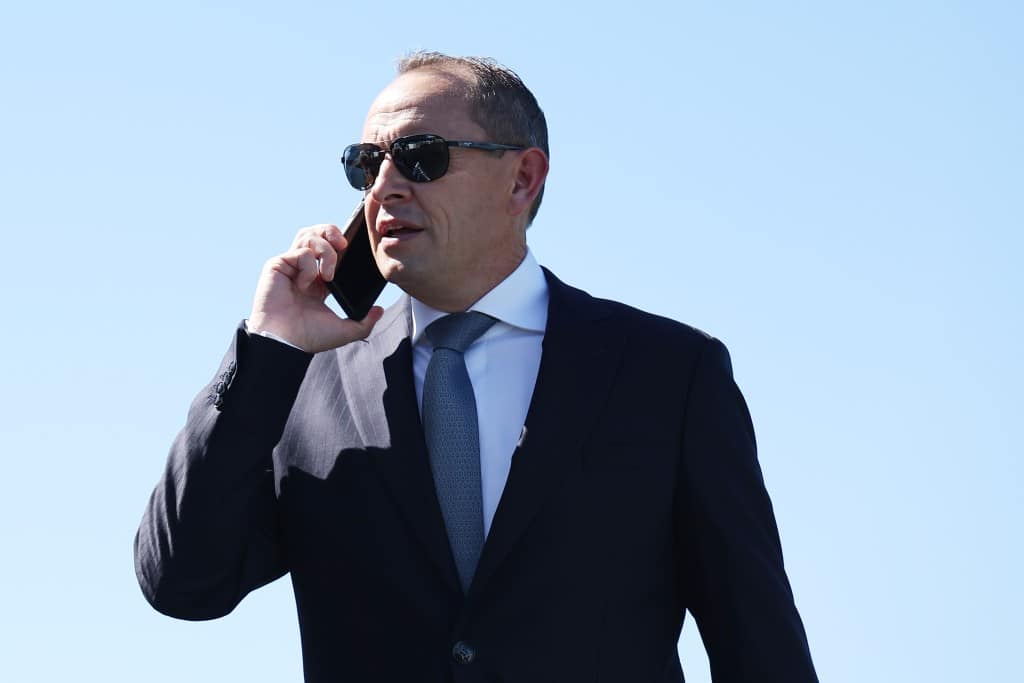
In an era of racing where scale has proven the panacea for modern training businesses, the biggest of them all, Chris Waller, says he has no plans to expand his premiership-winning stable.
Waller’s stable runners earned $80 million in prize money last season, smashing the record set the previous year by his nearest rival Ciaron Maher and sealing his 16th straight Sydney premiership.
But speaking in an extensive interview with The Straight, the man himself has no desire to increase the number of horses he has in work.
“I think I’m maxed out in terms of numbers. I want to just stay at this number and not get any bigger. I just want to do the little things better,” Waller said this week.
“I think there’s still room for improvement for that, but in terms of size, no, we’ve got enough numbers, simple as that.”
In an interview just days into the new racing season, Waller also:
- called on New Zealand Thoroughbred Racing to slash administration costs by as much as half;
- weighed in on the decline of two-year-old starters across Australia, and
- indicated that loyalty, both given and received, was pivotal to the ongoing success of his tri-state training business.
Waller trained 379 winners nationally last season, 38 more than Maher, and finished 13th on the statewide table in Victoria and sixth in Queensland with 74 victories and achieved a significant milestone with his 200th Group 1 in May.
With the horsepower at his disposal again this season, Waller is well-positioned to come out on top in 12 months’ time and he appears as driven as ever to make incremental improvements to his business.
But he doesn’t believe adding more horses to his operation is the way to do it, a decision which could be perceived as a relief to his training peers, and those industry figures who believe the dominance of Australia’s big stables is to the industry’s detriment.
“If you interview me every 12 months, I’ll say the same. I think there’s still a little bit of improvement with the little things. I think I’m getting better,” he says.
“I think just working a little bit smarter. I’ve learned that you don’t need numbers just to get bigger and increase your prize money. Concentrate on what you’ve got, do the little things right.
“There are areas where I’m not as strong as others and I keep working on bridging those gaps.”
He also has no plans to alter his city-centric business model to chase more winners in the bush outside a few of NSW’s major country cups such as the annual feature races at Wagga, Grafton, Albury and Port Macquarie.
“I choose not to race our horses in the country. We concentrate on city racing and even most Saturdays at the provincials, we’re very light on numbers,” he says.
“I respect we’re a powerful stable, but I also respect not to interfere with country racing too much.
“I guess my clients have come to learn that’s my approach and it seems to fit well with most of our clients as well.
“That’s not to say we don’t send horses up to Queensland. That might be country horses and I’d rather win a city race or a city maiden at Doomben than a country maiden at Bathurst.”
Waller’s 20-year rise to Sydney’s and Australia’s dominant trainer has coincided with the reign of Racing NSW chief executive Peter V’landys and the huge increases in prize money levels in Sydney – and across Australia.
The competition for owners, boxes and horses remains intense, but Waller says it was just the same more than two decades ago when trainers of the ilk of Jack Denham, Guy Walter, Bill Mitchell and John Hawkes were in full flight.
“Nowadays, when you actually train a winner you notice it’s going into your bank account in a big way. Whereas when I started, it was tough,” he said.
“There were trainers struggling and I was one of them. I think for a young trainer coming in now, it’s never been better in terms of rewards because you’re running on a pretty tight budget when you start training, so when you train winners, you notice it.
“Even before I started, you had to be a punter to survive. I don’t bet (now) because I don’t have to.”
The decline of two-year-old racing
The Straight recently published an article which found that the Australian industry’s participation with two-year-old racing had declined by half in 25 years.
The smaller foal crop is a factor, but data also showed that just 7 per cent of the two-year-old crop hit the track in 2025/26, down from 12.4 per cent in 2002/03.
Perception, rather than reality, has Waller as a trainer who is notoriously patient with his young horses.
He has won Breeders’ Plates, a Magic Millions, Todmans, a Golden Slipper and ATC Sires and the Champagne Stakes.
But even now Waller admits to being conservative with his horses.
“I’ve got an opinion on what works for me. I used to get to the Golden Slipper day, or towards the end of the two-year-old season, and say, ‘well, I don’t have a runner in the Golden Slipper. I haven’t got any big-name two-year-olds’,” Waller reflects.
“‘How am I going to compete next year once all these good horses come back at three? Does that mean I’m going to be struggling next year?’
“All I’ve seen is my three-year-olds go from strength to strength, and you just breathe a huge sigh of relief once they turn three because there’s huge rewards for two-year-olds, but only a few.”
Waller shared his opinion at a time when rivals Gai Waterhouse and Adrian Bott, renowned trainers of two-year-olds and who have won two Golden Slippers in partnership in the past seven years, revealed they were placing less emphasis on juvenile racing and were displaying a greater degree of patience with their young horses.
“When I started training, I couldn’t afford to go through my horses. I had to make sure I had the stables full, make sure those horses came back next year. By fluke, it’s just worked out really well for me,” Waller said.
“We’ve had some awesome three-year-olds, and we’ve had some good two-year-olds that haven’t come back at three, but we’ve had more three-year-olds that have just jumped out of the ground and gone to a whole new level at three by looking after them.
“It wasn’t by design. I had to keep my stables full. We had 20 stables, and you’d need 40 horses to fill those stables.
“If the horses reached their use-by date, there was nothing to fill that stable. You had to make use of it, and it was a good way to learn.”
Waller also revealed he was trialling the Sleip App, a lameness technology solution which Racing nSW is looking to introduce on a mandatory basis.
The challenges back home
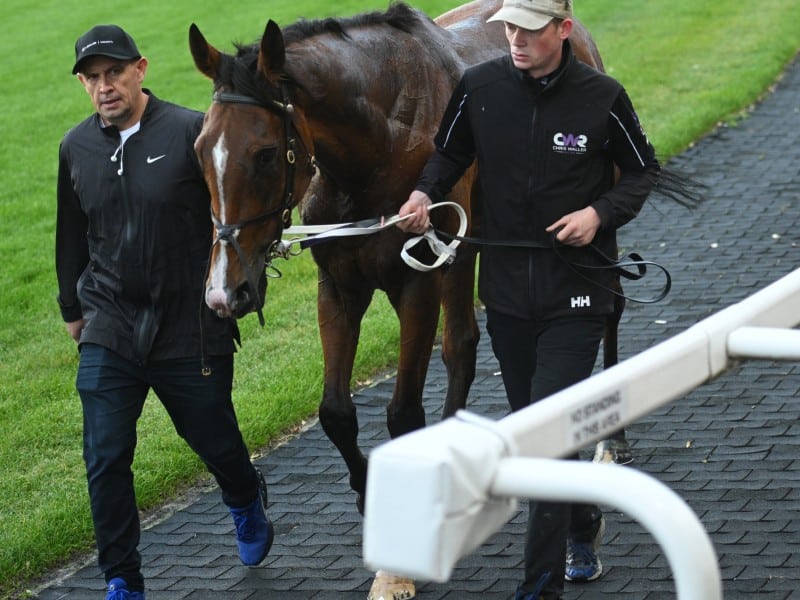
A proud Kiwi, Waller has observed the decline of his home country’s thoroughbred industry as the battle for administrative power continues.
Waller, a member of the Sir Peter Vela-chaired TAB New Zealand Racing Advisory Committee, believes New Zealand Thoroughbred Racing needs to cut its administration costs by 50 per cent.
“It would be great if they could get their administration costs down by half, and put some of that money back to the participants,” Waller said.
“It would be great if they could utilise their facilities a little bit better, and unlock the value of them. That is contrary to what would have happened at Rosehill had they sold it. Self-interest is there in terms of losing your track.
“That’s not easy, but New Zealand is in dire straits and really needs to come together and work on a sustainable future.”
Waller said some tracks will need to close because the cost of running them is too great.
“Those tracks have to be in question, but it’s also been great to see Ellerslie and the Auckland Racing Club go ahead,” he said.
“They sold some land, they kept their racecourse in the middle of a beautiful city, and they’ve got a very financial club and a racetrack that’s been rebuilt with an all-weather surface that can cope with rain, meaning they don’t lose race dates.
“I think all of New Zealand can look at that and learn from it. That’s my take on it.”
The long-mooted rationalisation of New Zealand tracks was again put on the agenda last month with the release of Project Stamina, a co-authored New Zealand Thoroughbred Racing and Harness Racing NZ report recommending racecourses are closed and some sold off.
“If anyone ever wants to cross me in terms of business, they get deleted.” – Chris Waller
A separate advisory committee report, which was circulated in June, warned the industry faced a number of existential challenges that require fundamental changes to governance, asset ownership and funding to survive.
“You’ve got a declining industry, but the costs keep going up. Less horses mean fewer jobs and administration. They’ve just got to get that right and tighten that up,” he said.
“It’s just like any business. If you’re not making money, you need to have a look at it and say, why? Cost is the first thing that comes into it.”
Loyalty is what matters
Waller never forgets his past, often recalling the difficult days trying to make his way with a handful of horses from far fewer boxes at Rosehill than the 160 he occupies today. This interview is no exception.
He said the trimmings of success haven’t changed him, admitting that he’s not an overly social person, a characteristic that his owners have come to accept.
But those people he includes in his close business (and personal) circle have been there for many years.
“I’ve tried to keep my relationships long-term with owners and staff and service providers,” he said.
“We still use the same horse transport from when I first arrived in Sydney. We still use the same feed provider that when we first arrived in Sydney, the same vet, the same bloodstock agent.
“That’s not to say there’s been challenges along the way with all of them, but you work on your relationships, and training horses is a full-time job, and if you’ve got the best service providers and the trust in those people, it goes a long way.
“If anyone ever wants to cross me in terms of business, they get deleted.”
Loyalty remains a foundation of those relationships.
“It’s the trust and the journey that I appreciate with my staff and those people I mentioned. I’ve got the same horse dentist, I’ve got the same physio, I still buy my gear (saddles and bridles) from the same person,” he said.
“We basically use the same farms with a few extras as we’ve grown. We’re just very loyal to our people that work for us, and they’re so important to me.”
Author

Related Articles
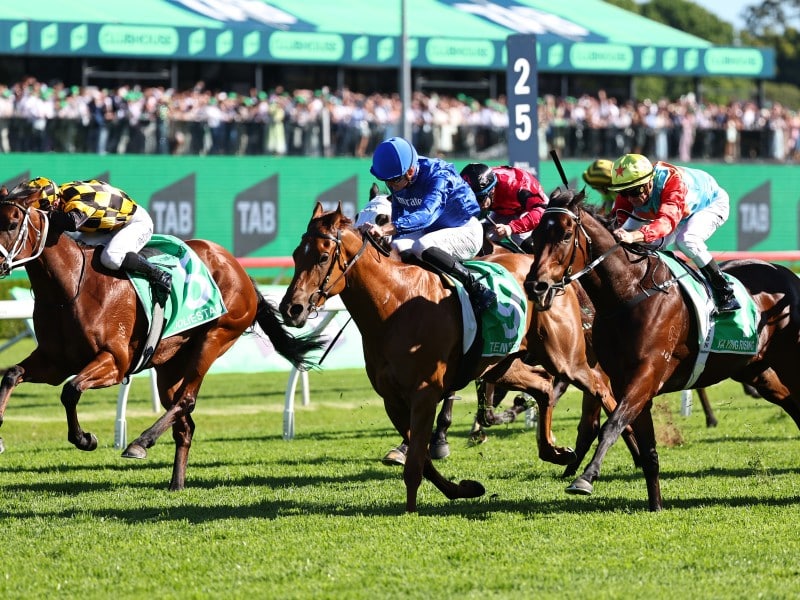
Tempted upsets Ka Ying Rising in epic Everest
Tempted has lowered Ka Ying Rising colours in an epic edition of Australia’s richest race, the $20 million The Everest, handing Godolphin one of its most significant Australian results.
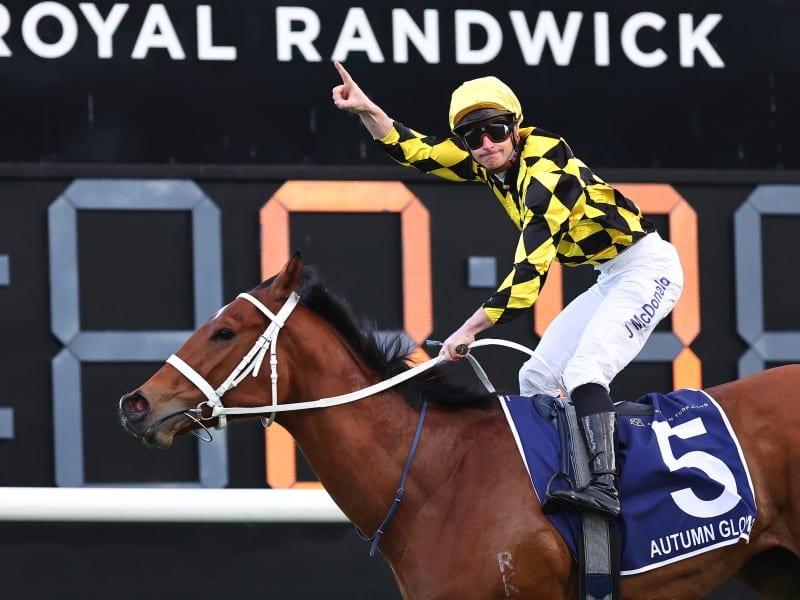
Autumn Glow beats Ceolwulf for fifth Group 1 with Royal Ascot in view
Autumn Glow claimed her 14th win from 15 starts as the Chris Waller-trained mare took the King Charles III Stakes, with a Royal Ascot trip in June still on the table.
Kingswood wins dramatic Caulfield Cup as fall claims Oaks-winning star Ohope Wins
A dramatic Caulfield Cup saw an upset victory for Kingswood for trainer Gavin Bedggood and jockey John Allen, and a fall which saw jockey Mark Zahra hospitalised and dual Group 1-winning mare Ohope Wins euthanised.
