
Eliot Forbes: Are we incentivising the right things?
Respected industry figure and executive Eliot Forbes argues racing’s biggest challenges are interconnected and the industry needs to align incentives, manage unintended consequences and put the welfare of the horse at the centre of any solution.
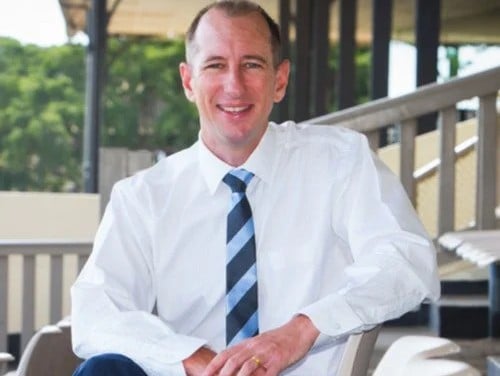
Eliot Forbes is chief executive of the Racing Integrity Board of NZ, chair of International Forums for the Aftercare of Racehorses (IFAR) and a member of the IFHA Council on Anti-Illegal Betting and Related Financial Crime. This column was recently posted on his LinkedIn profile and has been republ;ished with permission.
One of my reflections after the recent Backing The Punt conference is that many of the challenges facing the racing and wagering industry cannot be understood, let alone solved, in isolation.
Racing is a complex system.
Governments, wagering operators, racing authorities, regulators, clubs, breeders, owners, trainers and other participants all have different objectives, incentives and pressures. At the same time, racing has a unique and non-negotiable ethical obligation to care for the horses at the centre of our sport.
And none of this occurs in isolation from the society in which racing operates. Community expectations continue to evolve, shaping what is considered acceptable and ultimately the social licence on which racing depends.
Most people in that system make perfectly rational decisions based on the information, incentives, and responsibilities in front of them.
Yet individually rational decisions don’t necessarily produce good outcomes for the industry as a whole.
Rational decisions, unintended consequences
Taxation and illegal wagering provide one example. Through my work with the International Federation of Horseracing Authorities (IFHA) Council on Anti-Illegal Betting and Related Financial Crime, I have seen the growing sophistication and reach of illegal wagering markets and the challenges they present for racing internationally.
Governments understandably seek an appropriate tax contribution from wagering. Racing seeks product fees and sustainable funding. Licensed wagering operators need viable businesses.
But these settings do not operate independently. Taxation, product fees, regulation and the competitiveness of the legal wagering market interact. If their combined effect materially reduces the attractiveness of the regulated market, one unintended consequence can be customers migrating to illegal offshore operators that pay no tax or product fees and provide little or no integrity information.
This is not an argument for any particular taxation or regulatory setting. It is an argument for understanding how different interventions interact across the system and remaining alert to unintended consequences.
I think the same principle applies within racing itself.
Industry pressure for increased stakes or greater expenditure can be immediate and intense. Responding to those pressures can appear entirely rational in the short term. The consequences of an unsustainable cost base, inadequate investment in capability or other strategic trade-offs may not become apparent for years.
The most immediate signal in a system is not necessarily the most important.
From short-term responses to system design
If we want to think at an industry level, I believe we increasingly need to adopt a systems mindset. That means moving beyond short-term responses to the problems in front of us and towards the intentional design of systems that encourage the outcomes we want over the long term.
That requires a more sophisticated view of the racing and wagering ecosystem.
We need to acknowledge competing interests rather than pretend they don’t exist or simply “pick a side”. We need to recognise the full range of financial, regulatory, integrity, welfare and reputational risks. We need to understand where incentives lead people and organisations. And we need effective feedback loops that tell us when the system isn’t producing the outcomes we intended, allowing us to adjust course.
The horse at the centre
The horse provides perhaps the most important example.
As Chair of the International Forum for the Aftercare of Racehorses (IFAR), I have become increasingly convinced that our responsibility for the horse cannot sit at the periphery of racing’s model.
Racing creates strong incentives around breeding, ownership, training and racing. Historically, the structures supporting horses beyond their racing careers have been less developed.
That is a system design issue.
More fundamentally, it speaks to the ethical basis on which racing operates. Our use of horses for sport creates an obligation to provide for their care and welfare, including beyond their racing careers. That obligation is not optional and it cannot simply end when the economic relationship does.
Social licence is a shared responsibility
This matters because one of racing’s most important assets doesn’t appear on any balance sheet: the public acceptance that allows us to operate. We often describe this as our social licence.
Everyone involved in racing benefits from society continuing to accept our use of horses for sport. Yet no individual participant, club or administrative body owns that social licence. Our collective actions can strengthen it or diminish it.
If racing wants to remain socially sustainable, we therefore need more than an economic case for our existence. We need a credible ethical one.
That means acknowledging our obligations for equine welfare, continually working to minimise risk and accepting responsibility for the quality of the horse’s life beyond its racing career.
Designing for the outcomes we want
Wagering taxation, illegal betting, industry expenditure, horse welfare, aftercare and social licence can appear to be quite separate challenges.
A systems perspective suggests otherwise.
They all require us to think carefully about what behaviours we incentivise, where the costs and benefits ultimately fall, what unintended outcomes we may be creating and whether our feedback mechanisms allow us to recognise when the system needs to adapt.
Good systems don’t happen by accident. They need to be designed around clear goals, appropriate incentives and effective feedback.
For racing, perhaps the leadership challenge is to move beyond solving the problem immediately in front of us and ask:
Does our system design incentivise the outcomes that will allow racing to flourish for the next half-century?
Eliot Forbes is chief executive of the Racing Integrity Board of NZ, chair of International Forums for the Aftercare of Racehorses (IFAR) and a member of the IFHA Council on Anti-Illegal Betting and Related Financial Crime. This column was recently posted on his LinkedIn profile and has been republ;ished with permission.
Related Articles
🔒 🔒 Perth Racing flags profitability challenge despite gains
Perth Racing has reduced its annual loss but remains under pressure to turn stronger revenue, increased activity and major investment into sustainable returns as the WA racing industry awaits the findings of an independent funding and sustainability review.
New Zealand equine safety initiative targets earlier injury-risk detection
The New Zealand Equine Safety Initiative will combine development, training and veterinary records with movement data and blood research, aiming to give breeders, trainers and veterinarians earlier warnings of injury risk.
‘He had a good blow’ – Ka Ying Rising on song for second Everest
There were fewer dramas with Ka Ying Rising after a Randwick barrier trial on Tuesday than there was a year ago, leaving trainer David Hayes and jockey Zac Purton happy their star sprinter is on track for his second shot at The Everest.
