
🔒 🔒 Questions remain after ACMA confirms racing carve-out from gambling influencer crackdown
Racing channels and programming have been granted limited exemptions from an impending ban on athletes, celebrities and influencers appearing in wagering advertising from January 1, but the scope and impact of the changes remain unclear.
Racing will be the only setting where wagering operators can keep using athletes, celebrities and influencers in their advertising from January 1 following initial guidance from the Australian Communications and Media Authority (ACMA) on the ban on “notable persons”.
However, the broad definition of “notable person” and the narrow definition of what is considered a racing program, channel or online content service have raised concerns that the ban may stymie the promotion of racing.
The issue has been the centre of discussion between racing and wagering executives in recent days.
ACMA clarified that the racing exception has two tests, that the advertising must relate solely or principally to racing and must also be broadcast on a dedicated racing program or channel, or provided on a dedicated racing online content service.
The regulator named racing.com and Channel 9’s Melbourne Cup coverage as an examples of a dedicated racing program.
The exception depends on the advertisement and where it runs, not on who appears in it.
That would place question marks over whether formats like racing preview shows sponsored by wagering companies could be broadcast on non-racing free-to-air or online platforms such as YouTube.
It also casts doubts over whether wagering brand ambassadors such as ex-jockeys or trainers could be featured in interviews discussing betting.
Also under a cloud is the ability for wagering companies to use tipsters, whose profile determines them as notable persons, within their own apps.
ACMA clarified that only minor or incidental non-racing content would be permitted, assessed case by case, thus negating a loophole where racing programming could be used to promote sports betting.
The examples cited include a professional rugby league player used in a racing advertisement on a channel dedicated to racing, which would be likely allowed while an Olympian and TV personality appearing in a wagering ad during a program that shows live races alongside NRL and AFL coverage. would likely be ruled as illegal under the ACMA-released guidance.
The explanatory memorandum to the legislation says the exception recognises the intrinsic link between wagering and racing.
It also cites the reasonable expectation that people engaging with racing content are likely to be seeking out wagering advertising.
But the other concern is in the broad definition of who may be considered a notable person.
It covers current and former professional athletes, celebrities, social media influencers and prominent individuals, plus any class of people the Minister for Communications determines. It applies across television, radio, news websites, online games and social media.
ACMA has set no minimum follower count or verification level for influencers. One of its examples is an esports commentator with fewer than 10,000 followers who may still be notable because of their recognition within that community.
“In general, where a person is engaged (including through payment or other benefit) in their personal capacity to promote wagering advertising, they are more likely to fall within the scope of the notable person definition,” it read.
“Therefore, if a person with a social media presence has been paid by a LIWSP (licensed wagering service provider) to appear in advertising it is likely that they are a notable person.
“There is no prescribed number of followers or subscribers that a person must have to be considered an influencer. A relevant consideration will be their ability to influence actions or decision-making of others because of attributes, such as profile or reputation.”
Operators must also withdraw advertising if someone becomes notable during a campaign.
That raises a question: if talent employed by a wagering brand becomes notable because of their role, would they then be banned from featuring in advertising?
The obligations and penalties fall on licensed wagering operators, not on those involved.
ACMA has also confirmed that while in-venue and uniform sponsorship is banned, any contracts entered into before the reforms start are grandfathered until December 31, 2031.
It means notable athletes may still be seen wearing wagering branding.
The guidance follows a separate exemption for racing-focused publications under the advertising opt-out restrictions, part of the package that passed parliament in August.
Wagering influencer Ben Scarf, who had 222,000 Instagram followers on an over-18s account, told The Straight in September he expected to be captured by the definition. At the time, he was considering moving overseas or setting up his own bookmaker.
“There’s no way I don’t come under that category,” Scarf said.
ACMA said it may issue formal guidance later. Once the rules start, it will publish compliance alerts and investigation reports.
Author

Related Articles

Entain ‘delighted’ with NZ online casino rights as it flags new growth market
Entain’s global chief executive and chief financial officer have talked up the company’s three New Zealand online casino application rights and tied the new market to TAB NZ and to the group’s growth outlook for 2027.
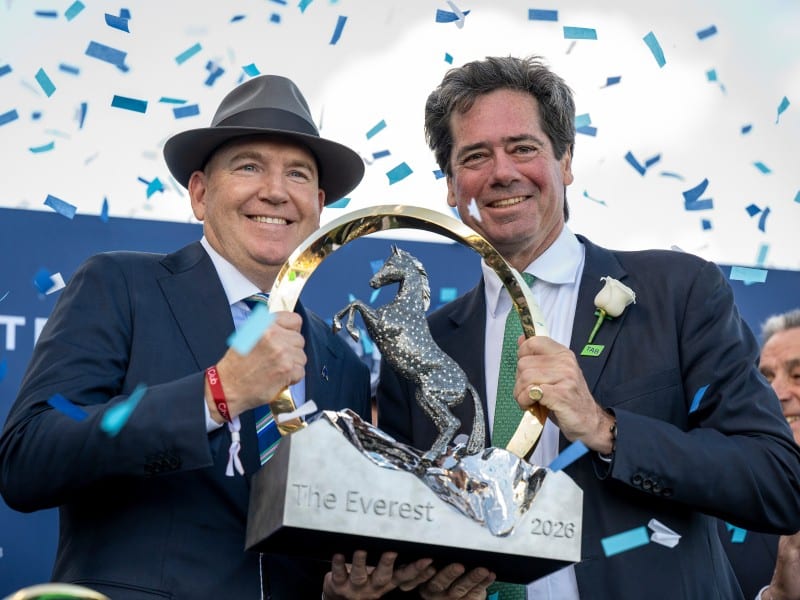
Tempted’s tote dividend tumbles late as Everest sets World Pool record
A record HK$113.2 million (AU$20.7 million) was bet into World Pool on Saturday’s The Everest, a record for a single race, but dramatic late price fluctuations, including for the winner Tempted, have prompted questions from impacted punters.

Tabcorp reportedly holds early talks with DAZN over possible Foxtel acquisition
Gillon McLachlan has reportedly sounded out Foxtel’s owner over a possible acquisition by Tabcorp, 18 months after DAZN bought the broadcaster from News Corp.
