
🔒 🔒 Racing Queensland posts lower surplus but growth in wagering powers a profitable year
Growth in returns from wagering helped keep Racing Queensland in the black in 2025/26, with a $6.6 million profit excluding government grants.
Racing Queensland has reported an $8.2 million operating surplus for 2025/26, down from $34.4 million a year earlier after a fall in infrastructure grants.
Its annual report, released on September 25, shows total revenue fell 5.8 per cent to $433.6 million as grants and other contributions dropped from $54.4 million to $1.7 million.
However, revenue excluding those grants rose 6.4 per cent, from $406.0 million to $431.9 million.
Chair Matthew McGrath said the grant-excluded result was a $6.6 million profit, compared with a $20 million loss in FY25.
“This was supported by an uplift in June Betting Tax receipts arising from scheduled audit and compliance activities,” McGrath said.
“While this uplift is considered non-recurring and the underlying profit was more modest, the overall improvement demonstrates RQ’s financial performance moving in the right direction.”
Significantly for the industry’s sustainability, betting tax contributions rose $18.7 million to $262.4 million.
RQ receives 80 per cent of Queensland Betting Tax revenue under the relevant legislation; the payments represented about 60 per cent of its FY26 revenue. Separately, its wagering revenue increased from $118.4 million to $122.9 million.
Turnover on Queensland racing climbed from $5.6 billion to $5.9 billion, recovering part of last year’s 9.3 per cent decline, when wet weather disrupted meetings.
Queensland’s share of Australian racing turnover rose from 16.6 to 17.7 per cent, although total turnover remained below the $6.1 billion recorded in FY24.
Thoroughbreds drove the lift, with $3.9 billion wagered on Queensland races, up 8.1 per cent. Greyhound turnover was $1.4 billion, up 0.1 per cent, while harness turnover slipped 0.7 per cent to $569 million.
The Queensland Winter Racing Carnival attracted close to $412 million in thoroughbred wagering, an 11 per cent increase.
The $52.8 million decline in grant income largely reflected infrastructure funding recognised in FY25.
Total expenses for RQ were largely unchanged at $425.4 million, down from $426.0 million the previous year. Prize money and breeders’ bonuses rose $4.4 million to $260.1 million, while club-related expenses fell $9.6 million to $76 million. Spending on club capital works declined from $26.9 million to $14.4 million.
RQ’s broader measure of payments to participants, which includes club payments and jockey and driver fees, eased from $368.9 million to $364.7 million.
Thoroughbreds received $183.0 million in prize money and breeding scheme payments, up from $182.4 million; greyhounds received $45.9 million and harness $31.2 million, both higher than in FY25.
Cash generated from operations fell to $9.1 million from $51.3 million. RQ ended the year with $108.3 million in cash, up from $103.8 million, although $5 million of the balance was government infrastructure funding held for projects rather than operational cash.
The financial year also brought extensive flooding across Queensland, with acting chief executive Lachlan Murray saying $1 million was announced for flood relief through the Training Assistance Fund.
“The resilience of the Queensland racing industry – particularly in the central and northwest – was tested during this period, and the activation of this support ensured there was immediate financial relief for those who needed it, with the welfare of our animals and participants the number one priority,” Murray said.
RQ reported $6.2 million of spending on animal-welfare activities, including $3.3 million funded by prize money levies.
The Queensland Apprentice Jockey Program was implemented during FY26, and the Racing Institute opened at the Gold Coast Turf Club in May. According to the annual report, enrolments in RQ’s registered training organisation increased 17 per cent to 220, including 141 students in racing courses.
McGrath, appointed chair in March after leading the Queensland Racing Review 2025, said 14 initiatives in the government’s Next Lap plan had been delivered by June 30, with another 77 in progress.
At Eagle Farm, enabling works began to replace the John Power Stand, including a new Brisbane Racing Club office in the Tote Building. RQ is also developing a night-racing strategy for the Gold Coast and Sunshine Coast turf clubs, with Toowoomba to be incorporated after its lighting upgrade.
The Queensland Government’s $200 million Racing Future Fund was received after June 30 and is earmarked for strategic projects across the three codes in 2026/27. It was not part of the FY26 grants or the $8.2 million surplus.
“Whilst challenges will always emerge, the opportunities are immense across all three codes with racing continuing to maintain a vital importance to the state of Queensland,” McGrath said.
“The last five years have seen RQ’s revenue increase from $354.1 million to $433.6 million, whilst increasing payments to participants primarily through prize money and annual club payments from $229.3 million to $364.7 million over the same period.
“Importantly, we continue to maintain a strong focus on investment in club infrastructure across country, provincial and metropolitan regions across the state through infrastructure funding while maintaining a sustainable financial position.
“The past five years have seen almost $260 million spent on racetracks, spectator facilities, and stabling and kennelling complexes, with a pipeline of exciting projects on the horizon as outlined in The Next Lap.”
Author

Related Articles
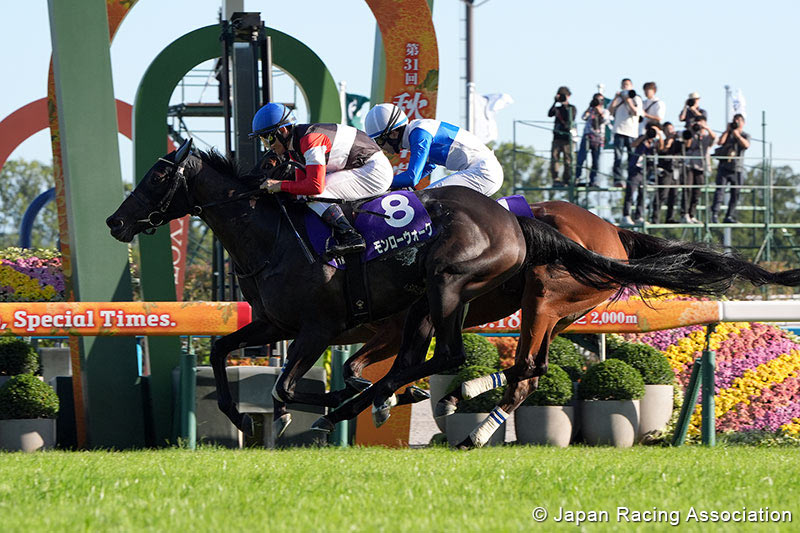
Monroe Walk becomes latest Japanese Group 1 winner out of an Australian mare
Monroe Walk, a Kizuna filly out of Thousand Guineas winner Amphitrite, remained unbeaten in the Shuka Sho at Kyoto, equalling the course record at her first Group 1 start.
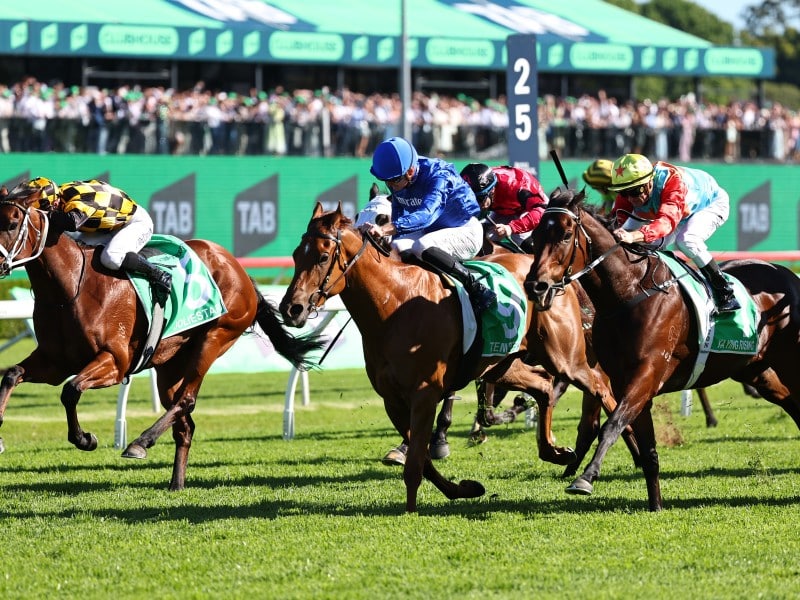
Tempted upsets Ka Ying Rising in epic Everest
Tempted has lowered Ka Ying Rising colours in an epic edition of Australia’s richest race, the $20 million The Everest, handing Godolphin one of its most significant Australian results.
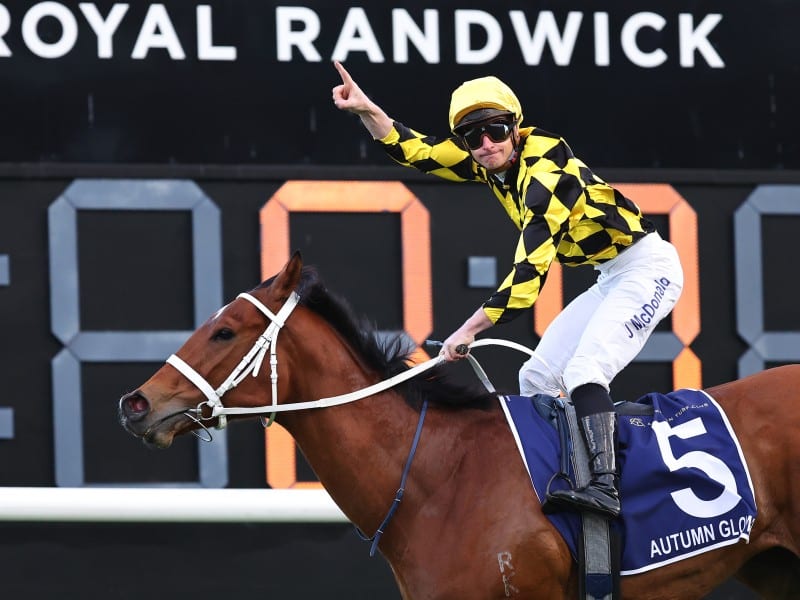
Autumn Glow beats Ceolwulf for fifth Group 1 with Royal Ascot in view
Autumn Glow claimed her 14th win from 15 starts as the Chris Waller-trained mare took the King Charles III Stakes, with a Royal Ascot trip in June still on the table.
