
Run The Numbers – A commercial unicorn
Any stallion running at 12 per cent stakes-winners-to runners is always going to prove a commercial hit, but when you add in the scarcity factor of fertility limitation, it creates a formula where you can expect records to be broken. Such has been the tale of the latest yearling crop by Newgate’s Extreme Choice.
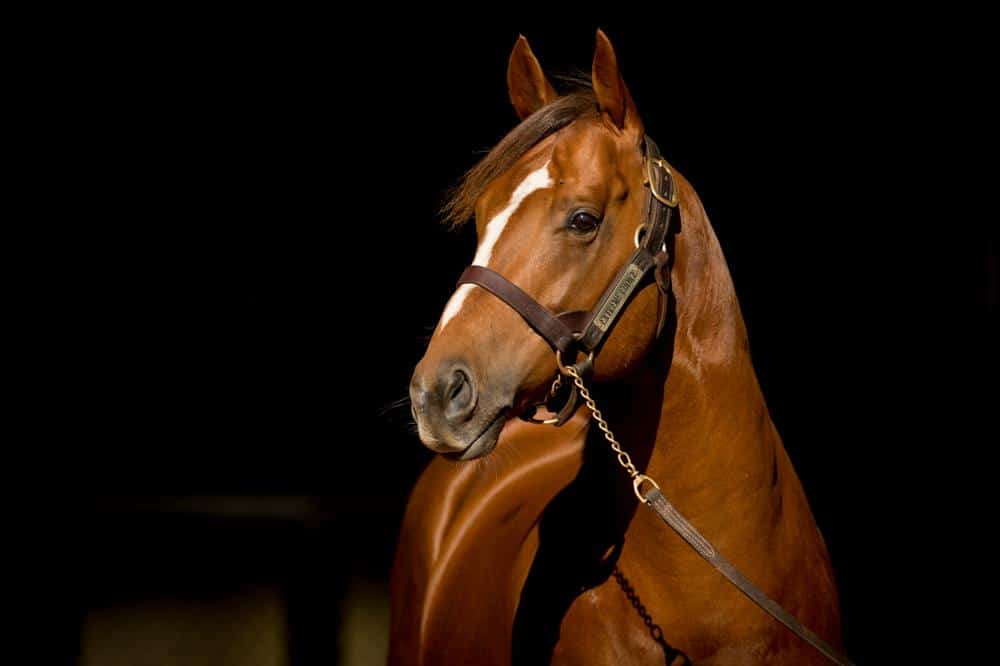
At the peak of an extraordinary bloodstock bubble in 1984, the yearling progeny of superstar stallion Northern Dancer averaged nearly US$3.5 million at the Keeneland sales.
In an era where books were restricted by mutual agreement and industry custom, he sired only 645 foals across 23 seasons, with the largest crop of 36. The rarity of the opportunity to buy a yearling by the great stallion drove demand and prices to seemingly unfathomable levels, when the Robert Sangster/Coolmore syndicate were fending off competition from the Dubai royal family, plus a host of large American investors.
Equine management and book numbers have exploded since that time as the number of stallions has decreased. In Australia and New Zealand this year, there were 31 different stallions who had 50 or more yearlings sell at the 2026 sales.
Leading the way was Home Affairs, who had 99 yearlings sell, while Better Than Ready had 93 and I Am Invincible 73.
Snitzel, who had 71 yearlings sell, the same as Toronado and Capitalist, grossed the highest of any stallion in Australia or New Zealand, with $42.2 million in sales. In what was his penultimate crop, it was the second-highest season gross, three million less than last year.
His great rival I Am Invincible was second with $40.2 million, an amount achieved despite the fewest Vinnie’s being put on offer since 2015.
But the most significant record on the 2026 yearling sales was set by a stallion who did not feature in the Top 50 when it came to yearling sale numbers.
Of Extreme Choice’s progeny, 34 were offered from a foal crop of 44, with 32 sold. Combined, they grossed $25.475 million at an astonishing average of $796,093.
That figure, a tick short of $800,000, is the highest seasonal yearling average of any locally based stallion in Australasian history. It is also a clear record for any stallion with more than 10 yearlings offered in a season, highlighting the virtues of scarcity.
It eclipses the previous mark set by his grandsire Redoute’s Choice in 2008, when he averaged $733,262. Looking at the other commercial powerhouses of recent times, I Am Invincible’s highest seasonal average came in 2023 at $675,489, while Snitzel’s highest was $656,909, set in 2025. His own sire, Not A Single Doubt, averaged $563,214 with his second-to-last crop.
Even Frankel, who has a steady stream of northern hemisphere-conceived progeny through Australian sales, averaged $506,315 this year. His best season, in which he had more than 10 progeny sell at sales in Australia, was $544,265 (he averaged $928,428 with five yearlings in 2016).
Among Extreme Choice’s record-breaking yearling crop this year were nine seven-figure yearlings, or 28.1 per cent of those sold.
In 2023, when this crop was conceived, Extreme Choice stood at $275,000, meaning the average return was 2.9 times the service fee. Of the 32 sold, just five sold for under their service fee.
That means, not accounting for expenses of raising a foal and getting it to a yearling sale or the cost of acquiring the mare, that the pure average profit was $521,094 per yearling. It is believed to be the first time a stallion has averaged beyond $500,000 per yearling.
Second on that metric was Snitzel, who stood for $247,500 and averaged $591.862, followed by Too Darn Hot, whose $44,000 service fee skyrocketed into a yearling average of $358,320. Zoustar, Anamoe and I Am Invincible all had pure return on investment (ROI) above $250,000 on average.
Of the 190 stallions we included in the 2026 sales data, all but 11 returned a positive pure ROI figure, but that needs to be treated with caution.
Firstly, it doesn’t account for the expenses of production and the cost of the mare. It also only accounts for those horses that were sold, not those who were passed in or did not make the yearling sales, while it also assumes all breeders paid the full retail rate.
However, the service fee-to-yearling average is useful as a topline measure of investment versus return.
Across the 190 stallions, the median yearling return was 2.95 times the service fee. It’s interesting when you consider that Extreme Choice’s return ratio is actually slightly below the rest of the market, even though it was highly profitable.
The best return of those that had more than five yearlings sell came from Cambridge Stud’s Embellish, who had six of his progeny sell at an average of NZ$67,500. That is 13.55 times his 2023 service fee of NZ$5000.
Next on the list was another Cambridge resident, Sword Of State, whose 50 yearlings sold averaged NZ$159,450, 10.63 times his service fee.
Another Kiwi-based stallion, Waikato’s Ardrossan, also fared well on this measure with his average of $99,401 across 56 sales representing 9.94 times his service fee.
Of the Australian-based stallions, the leader was Yulong’s Alabama Express, whose yearling average-to-service fee ratio was 8.56.
Second on the list was Armidale Stud’s Needs Further, whose progeny averaged $45,727, 8.3 times his service fee, while Too Darn Hot’s average return was a multiple of 8.14 on his service fee.
Author

Related Articles

Run The Numbers – King’s latest successes put female jockeys on brink of 50 Australian Group 1 wins
As Rachel King builds her own formidable Group 1 record, she is also helping female jockeys power towards a significant milestone: 50 Group 1 wins in Australia. Run The Numbers dives into the major contributors from Diane Moseley to Siena Grima.
Run The Numbers – The elevated state of the global yearling market
With US$536 million spent across 12 sessions, the recently completed Keeneland September Sale was the highest-grossing yearling sale in history. Run The Numbers looks at whether it speaks only to the American market or reflects a broader global demand for elite bloodstock.
Run The Numbers – An influence runs Deep into the next generation
Legendary Japanese sire Deep Impact made a major mark on Australian racing from less than 50 runners. Does the emergence of Sheza Alibi point to that influence continuing to his sire sons as well? Run The Numbers takes a look.
