
Run The Numbers – The ongoing collapse of Australian two-year-old racing
While Australia may hold a reputation for its two-year-old racing, the most recent figures point to an ongoing slump in participation, which is having a knock-on impact across breeding and bloodstock. Run The Numbers investigates.
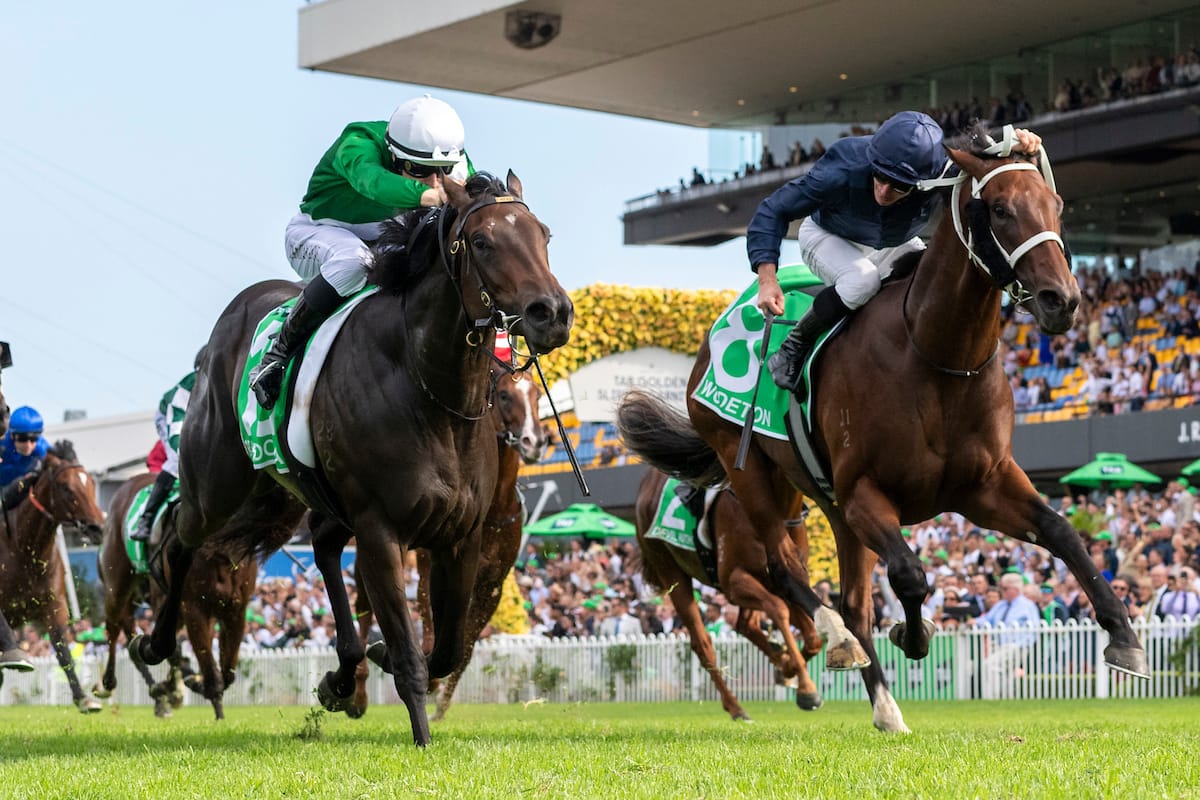
Two-year-old racing in Australia is in a dramatic decline, with latest figures suggesting there will be fewer two-year-old winners in 2024/25 than there have been in any racing season this century.
In 2023/24, there were 2335 two-year-old starters in Australia, the lowest in at least 40 years, and a significant drop of 17.5 per cent from the 2840 two-year-old starters in 2019/20.
That represented just 8 per cent of the active racing population, another historical low, down from an average of close to 11.4 per cent over the past 35 years.
What that shows is that it is not just the slumping foal crop that is impacting the number of two-year-old starters, but the desire of trainers and owners to get their horses up for a two-year-old season.
Those 2335 juveniles who took to the track in 2023/24 represented, as a figure, 17.6 per cent of the 2021 Australian foal crop of 13,251. That is the lowest rate of two-year-old participation rate since 2008/09, when the foal crop was 18,758.
The downward trend in two-year-old participation has been particularly evident in the post-pandemic era, with trainer preferences and programming playing a significant role.
Although the current season still has another week to run, the numbers continue to decline. We estimate the number of two-year-old starters this season will be 8 per cent lower than in 2023/24, or around 2150.
Key 2YO stats since 2012/13:
*projected
We also counted the number of two-year-old winners to date this season and found there have been 449, the lowest seasonal number this century and a 13.5 per cent annual drop from last year. As recently as 2018/19, that number was 674.
Significantly, those 449 horses have accounted for 573 individual victories, down from 649 last year, and a peak of 863 seven years ago. Even accounting for the variability in that two-year-olds can contest open-age races, the opportunities for juvenile victories have dropped by some 31.4 per cent since 2018/19.
Due to the ongoing stasis of the Australian pattern, the number of blacktype races available to two-year-olds has not changed to reflect this decline in representation. The number of juvenile stakes races in Australia has stayed steady between 72 and 74 for every season since 2012/13.
What that means is that in 2012/13, one in every 42 two-year-old winners in Australia won a stakes race, while in 2024/25, this will be one in 29. Put simply, in pure numbers, there is much less competition to win a juvenile stakes race than there has been for well over 40 years.
Season by season winning stats for two-year-olds in Australia
*Season incomplete
The other impact is felt in the diversity of sire representation. Given the information above, and the fact that the number of active stallions has been falling for 15 years, it would follow that there are fewer sires with two-year-old winners.
So far in 2024/25 there have been 136 individual sires who have had Australian two-year-old winners. That is the lowest this century, down from the previous smallest of 149 last season and 160 the season before that.
There is also a historically low number of first-season sires with runners, just 30, down from 35 last year and from a peak of 58 in 2020/21. The number of runners from those sires, 466, Is the lowest it has been since 2016/17, with the average number of seasonal runners at 506 since 2012/13.
The winners-to-runners rate for those first-season sires is 21.7 per cent, down from 26.4 per cent last year and is the lowest since 2016/17.
What all that points to is a greater concentration of winners among the top first-season sires, with an average this season among those active of 3.4 winners, while it was historically high at 3.8 last season. The average since 2012/13 has been 2.7 winners per active first-season sire.
Like many other aspects of the market, it is becoming increasingly polarised.
The decline in two-year-old participation certainly makes it harder for those emerging sires to make a mark with their first crops on the track as two-year-olds. This has a knock-on impact to their commerciality both in the breeding barns and in the sales ring.
First-season sire stats in Australia since 2012/13
*Season incomplete
Author

Related Articles
🔒 🔒 Hinton heads to Hunter – Racing NSW chief executive and prominent breeders to break bread at Newgate
Racing NSW acting chief executive Graeme Hinton will visit the Hunter Valley next month as major thoroughbred farms attempt to mend relationships between the regulator and the breeding sector.
New Zealand faces up to industry ‘implosion’ with 40 per cent of Group 1s under threat
Racing jurisdictions, led by New Zealand, will use a key Asian Pattern Committee meeting in February next year to argue that changes need to be made to the way Group 1s are rated to protect their status as the country faces a brutal cull of its elite races.
British and Irish foal crop falls for a third straight year
Weatherbys’ Return of Mares puts the combined thoroughbred foal crop for 2026 at 11,312 in Britain and Ireland, down 17.2 per cent on 2023, with Britain falling hardest.
