Seven days in … wagering

In this edition:
- A hostile takeover – betr ups offer as PointsBet tries to shut down bidding process
- Jason Scott backs a new Pony
- Waterhouse VC – The regulatory paradox
- ‘Simply unacceptable’ – Betfair earns wrath of ACMA over spam breach
- Officials move to combat late tote betting fluctuations
- Bookies battle for club deals – Ladbrokes secures Bendigo, Picklebet picks Warwick
- Pressure grows on federal government as talks resume on gambling advertising reform

Just a note before we get stuck into the usual weekly analysis, that we are slightly rebranding our three subject matter-related newsletters every week.
They will now be tagged as ‘Seven days in …’ providing a review and analysis of the week’s events in either breeding, wagering or racing. We feel this offers a clear contrast to our daily newsletters, which sum up the events of the day from Monday to Friday. You will still get the same industry-leading reporting and analysis, just under a new banner.
Right …
The wagering markets in Australia, the United Kingdom and the United States differ in many ways, but one common resistance force against their unchecked growth is regulation.
As Tom Waterhouse pointed out in his monthly newsletter for Waterhouse VC this week, regulation in major developed markets serves three key purposes: protecting consumers, maintaining market integrity, and generating sustainable tax revenue/funding. In principle, these aims are aligned. In practice, they can come into conflict.

The regulatory paradox – Waterhouse VC
We have dealt with the challenges of regulation in Australia in many different contexts since we launched The Straight in late 2023. The increasing oversight of the federal government has been a particularly hot topic, given the profile of proposed gambling advertising reforms, which are set to be prominent during this parliament as well.
But beyond that, bodies like the Australian Communications and Media Authority are empowered to enforce Australia-wide laws surrounding aspects like marketing communications/spam and self-exclusion.
This week, ACMA levied a $871,660 fine against betting exchange firm Betfair over spam breaches, having pinged Tabcorp $4 million for similar breaches in May as well as a $1 million for Unibet and $500,000 for PointsBet.

These laws hold the behaviour of a restricted industry like wagering in check and heavy fines are a significant disincentive to future transgressions.
On another level are the compliance prosecutions of AUSTRAC, which levies much more substantial penalties for breaches. Entain faces the prospect of fines in the hundreds of millions over its failures to adequately monitor money laundering and terrorism financing risks.
These types of requirements keep wagering executives up at night, and given the money that passes through them, so they should. They form an important aspect of maintaining the social legitimacy of the industry.
But how far is too far?

In the United States, a market which opened up much later than Australia, but is on much sharper growth arc, there a host of regulatory interventions underway to slow that growth. And to raise revenues. A lot of that is pointed directly at the punter, particularly those at the sharp end.
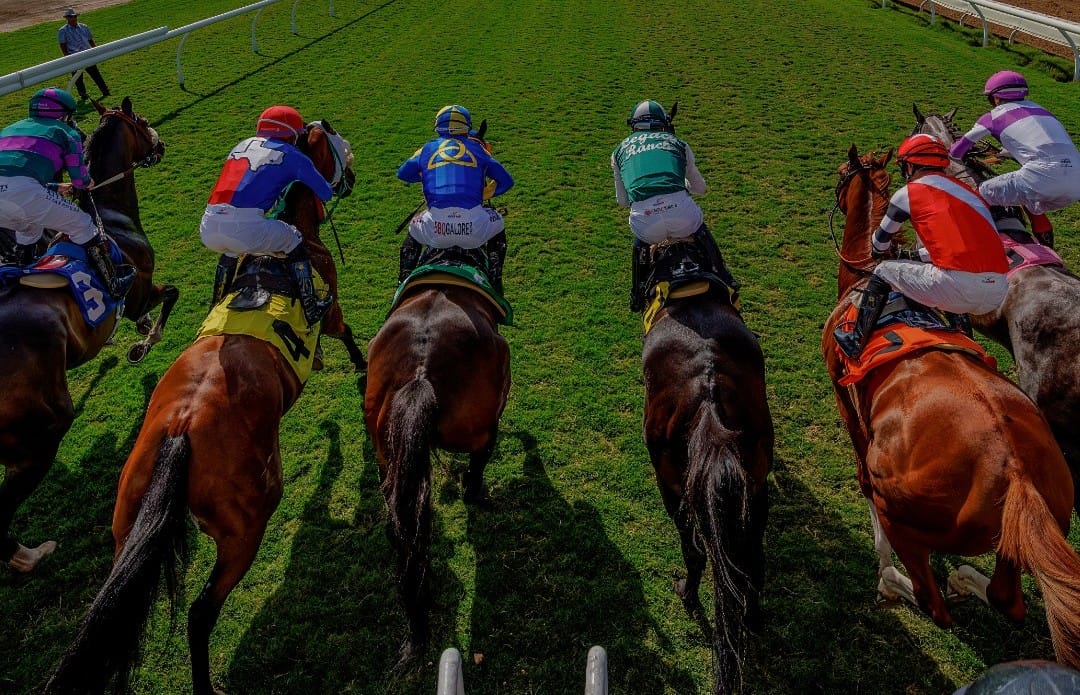
This week we reported how Del Mar has introduced a closure of its tote win pools two minutes before a race to curb the impact of sophisticated professionals using computer-assisted wagering (CAW) methods.
Then there is the ongoing impact of the One Big Beautiful Bill Act, which as we reported recently, features a reduction of tax deductable gambling losses which could have a catastrophic impact on professional gamblers in the US, where gambling wins are taxed.
At the state level, New Jersey has introduced a law that effectively criminalises proxy betting, or what Australians call “bowling”. The language in the legislation has been drafted so broadly that there are fears that someone sharing their sports or racing tips could potentially be seen as part of a conspiracy to breach that law.
Unintended consequences are always a danger with any regulation. One of the key consequences, as previously covered by The Straight, is the likelihood that increased regulation of gamblers will push them down a funnel towards grey market operators, of which there are plenty.

That is covered off by Waterhouse’s newsletter as it the outsized impact of this effect when it comes to the racing industry, citing the UK’s current challenges as an example.
Waterhouse VC’s analysis and insight is very much aligned to our own. I’d urge you to subscribe to their newsletter if you are interested in these types of topics.
I’m not sure if there is such a think as a page turner when it comes to corporate takeovers, but the battle of PointsBet is approaching that territory.
We’ve covered it a lot over the past few months, but the latest twist has seen PointsBet seek an order to stop betr getting its finalised bid in front of shareholders, answered with an upping of the stake by the Matt Tripp and Andrew Menz-led outfit.

Elsewhere, former Racing Queensland CEO Jason Scott has bobbed up back in the wagering landscape, with The Booki Group. We can expect to hear more of Scott and the Booki Group as they seek to rapidly expand their footprint beyond the current PonyBet brand.
And corporate bookies continue to build their influence among race clubs and representative bodies, with Ladbrokes making inroads into Victoria, and Sportsbet and PickleBet into red territory in Queensland.
Enjoy your wagering week,
Bren O’Brien
Managing Editor and Founder
The Straight
Author