
Run The Numbers – The filly and mare advantage
The victories of Joliestar and Sheza Alibi at Randwick on Saturday mean that 14 times this season, a filly or mare has upstaged the colts and geldings in an open-age Group 1 in Australia. Is this dominance becoming more common? Run The Numbers investigates.
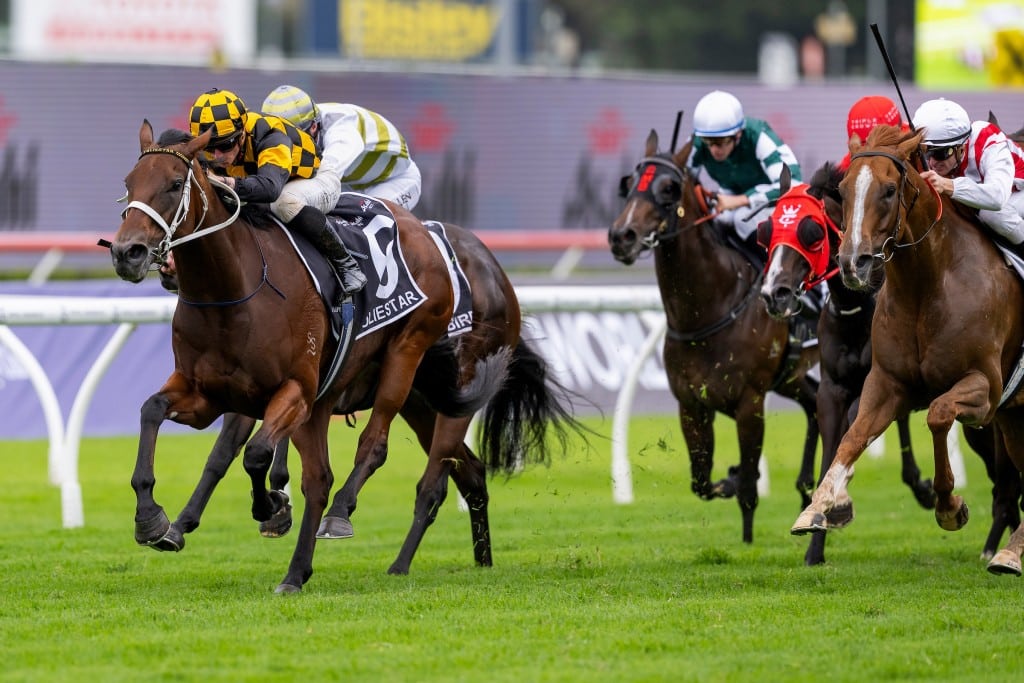
Any time a filly or mare knocks off the colts and geldings in an open-age/sex Group 1, there will be those who will spark up the old debate about whether the 2kg allowance afforded them in these races is a fair reflection of the current state of play.
We covered this issue in depth a couple of years back (May 2024) on The Straight, with data to that point, sourced from noted industry data and form analyst Daniel O’Sullivan, showing that from 2009 until 2024, mares enjoyed a slightly higher strike rate (eight per cent) in open age/sex Group 1s than entires (7.8 per cent) and geldings (6.7 per cent).
Accounting for a theoretical (conservative) impact that the 2kg allowance is equivalent to half-length margin, then the number of open age Group 1 races won by mares would have been reduced by 21.4 per cent.
This data did not include races won by the champion mares Winx and Black Caviar, whose dominance proved a slightly pointless ignition spot for this discussion over the years.
On Saturday, Sheza Alibi demolished her rivals in the Doncaster Mile, a handicap, which saw her carry 49kg. That would have been 51kg if she had been a colt.
Not even the most bullish projections could have seen her 4.3-length margin of victory overturned on any recalculation of the race based on an even allowance for both sexes.
It was just the second time this Australian racing season from 39 open-age Group 1 races contested that a three-year-old filly had upstaged her older rivals. The other instance came when Marhoona won The Galaxy.
Three-year-old fillies contesting open age Group 1 races, let alone winning them, is a relative rarity in Australian racing. Before Marhoona, you have to go back to Stefi Magnetica’s win in the 2024 Stradbroke Handicap.
But as O’Sullivan pointed out in 2024, fillies do have a high strike rate in open age/sex Group 1 races, around 12 per cent from 2009 until 2024. With plenty of black-type options for fillies, those tested against open Group 1 tend to be at the top end.
Sheza Alibi’s win came less than 40 minutes after Joliestar’s success in the TJ Smith Stakes. It means that of the past 12 open age/sex Group 1 races held in Australia, eight have been won by fillies and mares.
It is runs like these which get the discussion over the mares/fillies’ allowance going once again, but is this just a run of results, or does it point to a longer-term trend?
As mentioned, this season alone, there have been 14 fillies/mare successes in open age/sex Group 1s at a winning percentage of 35.9 per cent. That is the third highest for any season in the past decade, with the highest percentage of Group 1 races of this profile to be won by fillies and mares having come in 2023/24 when it was 42.2 per cent.
Record of mares and fillies in open age/sex G1 races by season
| Season | Won by Mares/fillies | Overall races | % |
| 2025/26 | 14 | 39 | 35.9% |
| 2024/25 | 16 | 47 | 34.0% |
| 2023/24 | 19 | 45 | 42.2% |
| 2022/23 | 10 | 46 | 21.7% |
| 2021/22 | 17 | 45 | 37.8% |
| 2020/21 | 14 | 46 | 30.4% |
On our figures, since the start of the century, there have been 1094 open age/sex Group 1 races run in Australia and fillies/mares have won 273 of these. That is a 24.95 per cent success rate.
In comparison, since the start of the 2020/21 season, there have been 268 races of this profile run in Australia, with mares and fillies having prevailed in 90 of them. That is a winning rate of 33.6 per cent.
In the 2010s, a decade which featured both Black Caviar and Winx, fillies/mares won 25.8 per cent of open-age-sex Group 1 races in Australia.
In the 2000s, that percentage was much lower, at 18.3 per cent. There was one particularly dry spell around 2008/2009 where mares won just one of 57 open age/sex Group 1 races.
This data does lend credence to the argument that the mares and fillies have bridged the gap over the past 20 years. In percentage winning terms, they are winning nearly twice as many of these races in 2025/26 as they were 20 years ago.
It is worth noting that the above does not account for participation rates. Without delving further into the data, something we will seek to do at another time, we can’t determine if mares and fillies are more represented in open-age Group 1 races than they once were.
What is also notable is that champion mares do tend to have much longer careers than their male counterparts and this skews data.
Of the top five most prolific open-age/sex Group 1 winners since 2010, four of them are mares, Winx, Black Caviar, Verry Elleegant and Via Sistina. These champions benefited from returning year after year to win weight-for-age races (with that 2kg allowance).
Record of mares and fillies in open age/sex G1 races by decade
| Decade | Won by mares/fillies | Overall G1s | % |
| 2020s | 90 | 268 | 33.6% |
| 2010s | 110 | 427 | 25.8% |
| 2000s | 73 | 399 | 18.3% |
Author

Related Articles
Run The Numbers – The mistruths about non-Group 1-winning sires
After Wordsmith became the eighth non-Group 1 winning racehorse to sire a Group 1 winner in Australia this season, Run The Numbers looks at how commonplace this pattern has been over the years.
Run The Numbers – Jigsaw’s streak a two-in-a-million chance
While one famous equine winning streak came to an end earlier this month, at the weekend, another rolled on as Jigsaw extended his run to seven straight victories. We look at Australian racing’s best current streaks.
Run The Numbers – Streets ahead in the damsire stakes
Idle Flyer’s victory in the Queen of the Turf Stakes provided her late damsire Street Cry with his fifth Australian Group 1 winner in that role this season, well clear of any other stallion as the remarkable record of the produce of his daughters continues to build.