
Drugs, bookies and bonus bets – Bateman’s sensational claims force racing industry defence of generosities
The racing industry’s reliance on bookmaker generosities to boost revenue has come under the spotlight in a Senate Committee hearing, which earlier heard evidence that bookies offered illegal incentives, including drugs and escorts, to gambling addicts.
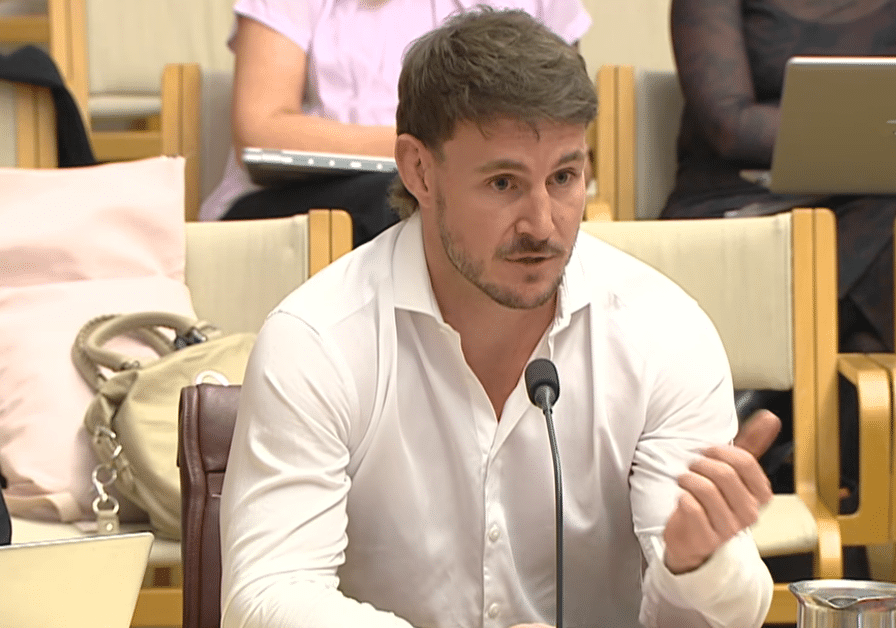
Australia’s leading racing executives have defended the use of generosities to bolster punter engagement and industry turnover, despite significant concerns raised in a Senate Committee, which had earlier heard evidence that a gambling addict was offered drugs by a VIP manager of an unnamed bookmaker.
Racing Australia chief executive Paul Eriksson and his counterparts at Racing Victoria and Racing NSW, Aaron Morrison and Graeme Hinton, appeared before the Committee on Monday along with Thoroughbred Breeders Australia CEO Andrew Hore-Lacy.
They were there to provide the racing industry’s broad support, with a couple of small exceptions, for the changes to wagering advertising put forward by the federal government.
But the session was instead dominated by discussions over the desirability of inducements and or generosities, and the benefit that the racing industry derives from them.
Earlier in the day, former NRL player Luke Bateman revealed to the committee that during his period of gambling addiction, he had been offered drugs by a VIP manager of an unnamed bookmaker and had consumed drugs with executives of another bookie.
Others before the committee, including the Alliance for Gambling Reform’s Tim Costello, also detailed examples of drugs and escorts being offered by VIP managers.
The revelations sharpened the focus of the Committee, which is chaired by Labor Senator Varun Ghosh, with Greens senator Sarah Hanson-Young as his vice-chair.
In light of the earlier hearing, Hanson-Young led the questioning of the racing executives over the use of inducements by wagering operators.
Morrison said “inducements” was a term used in regard to encouraging someone to open an account, which was broadly illegal in Australia, as opposed to fostering engagement with a current customer.
“We would talk about generosities as being different from inducements. Inducements as we understand it have been banned in terms of inducements to sign up and open accounts. They’re not permitted under other regulations and legislation,” he said.
“If you’re talking about generosities as we know them, money back specials for second or third or enhanced odds, we see those as being legitimate promotional tools that enhance the product offering, but they are two very different things.”
Morrison revealed that 30 per cent of turnover is generated through generosities such as bonus bets and deposit matches, and indicated a ban on that aspect would prove disastrous for the racing industry.
“That activity is (an) activity that we generate fees on to support the funding of the industry. I think it’s something like 30 per cent of the turnover of wagering operators comes through recycled generosity. So it would be a very significant number from a financial perspective,” he said.
Asked specifically about the revelations that bookmakers may have supplied drugs and escort services to punters, the three executives described such behaviour as”abhorrent” and illegal.
“I think each of us would be consistent in our response. I’m sure we don’t support any kind of predatory behaviour,” Morrison said.
“We don’t support any harm that’s caused through gambling, we’re making the point that the vast majority of people are engaging with wagering, particularly on racing as informed adults, consenting adults without harm.
“We’re disappointed to hear about some of these examples and as we’ve said earlier we find a lot of them to be abhorrent, we don’t condone them.”
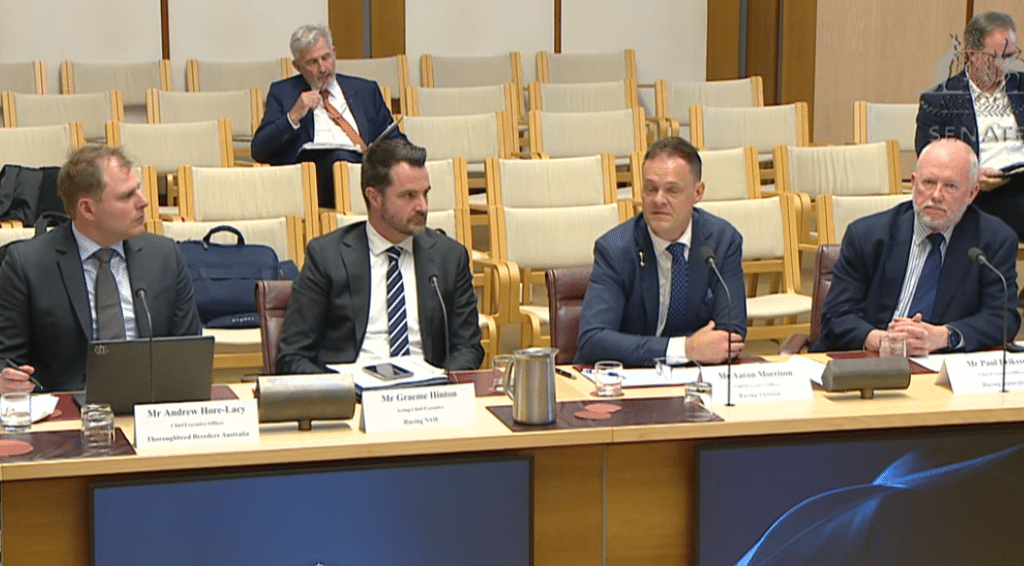
Hinton said he believed the changes made around consumer protection in recent years would make it less likely that cases like Bateman, who lost $1 million because of his addiction, could arise.
“It’s important also to note that a lot of the consumer protections in place today weren’t in place at the time that Mr Bateman suffered from that,” Hinton said.
“We’re very empathetic for what had happened and certainly find the behaviour and the conduct of the wagering operators, if true, to be unacceptable and abhorrent.
“But it’s important to note in today’s regime, Mr Bateman or anyone in those circumstances could have placed themselves on BetStop and the wagering operators have a number of in-built protections today.”
However, Senator Sarah Henderson raised more recent examples of how inducements were being used.
All four men before the committee said they had not heard of accusations of VIP managers providing drugs or escort services before Bateman raised them.
“We don’t condone behaviour that is predatory, that drives people to spend beyond their means,” Hinton said.
“We’re big believers that our industry is funded on wagering and wagering should be an entertainment expense. We believe that people should be encouraged to educate themselves on that and understand that if that is the basis upon which people wager, it creates a sustainable industry and that’s what we want.”
Separately, Eriksson was forced to concede that an error was made in the Racing Australia submission to the Committee, which said it supported “opt-in” marketing.
Senator David Pocock also questioned RA’s unsourced data in its submission which said wagering made up 10 per cent of gambling turnover. Senator Pocock said that the government’s own impact analysis indicated wagering represented around 20 per cent of total spend.
Earlier, the Committee, which is looking at whether further changes should be recommended to the current legislation before parliament, was stunned by Bateman’s evidence.
Speaking alongside a panel of anti-gambling/harm minimisation advocates, the former Canberra Raiders player detailed his own experience with how inducements helped feed his addiction.
“There were times where I would be flown interstate and taken to race days, put in marquees with alcohol and food provided all day, things like that,” he said.
“But also before getting there, your VIP manager would offer you, go, ‘Hey mate, what drugs do you want? Do you want a couple of bags for this weekend? We’ll organise that for you.’”
In his testimony before the Senate Committee, Bateman also claimed on separate occasions that he had been invited to parties and had taken drugs with wagering industry executives.
“I went to an exclusive event through a betting company that was hosted in a, I would say like a rental on the canals of the Gold Coast,” he said.
“The entire sort of C-suite of the company was there, all the management team, administration, and they were sort of all in the back room doing drugs together.
“This is like the CEO, the founders, the VIP managers. And at that stage, I would have been a 23-year-old.”
Bateman, who retired from the NRL in 2019, is now 31.
“I would put my hand up and say, I was a willing participant in that. These are men in positions of power with influence who should be looking out for your welfare. And this is the kind of behaviour that they are drawing you into, encouraging you into and coaxing you into and normalising,” he said.
The evidence made national headlines and put the wagering industry into damage control. Sportsbet and Tabcorp will appear before the Committee on Tuesday morning.
Author

Related Articles

Racing.com retains South Australian racing rights in new four-year deal
Racing Victoria has tightened its grip on the distribution of South Australian thoroughbred racing after securing a four-year extension to its media rights agreement with Racing SA, locking in Racing.com’s coverage through to 2030.

Member Exclusive Member Exclusive When AI comes calling – Could Australia’s racecourses become data centre targets?
As artificial intelligence drives an unprecedented data centre boom, Australia’s racecourses may find themselves competing in a new property market where power, connectivity and land are prized commodities.

Powerful racing industry group heads to Canberra as wagering reform debate intensifies
The chief executives of Racing Australia, Racing Victoria, Racing NSW and Thoroughbred Breeders Australia will represent racing’s interests at a key Senate inquiry next week into the federal government’s proposed changes to wagering advertising laws.
