
Does Racing NSW’s rapid executive baton change help or hinder Graeme Hinton?
In the four days since Peter V’landys confirmed his departure, Racing NSW’s board has already chosen the man to replace him as chief executive. Graeme Hinton was the obvious choice, but Bren O’Brien questions whether the haste of his appointment might undermine how his leadership is perceived.
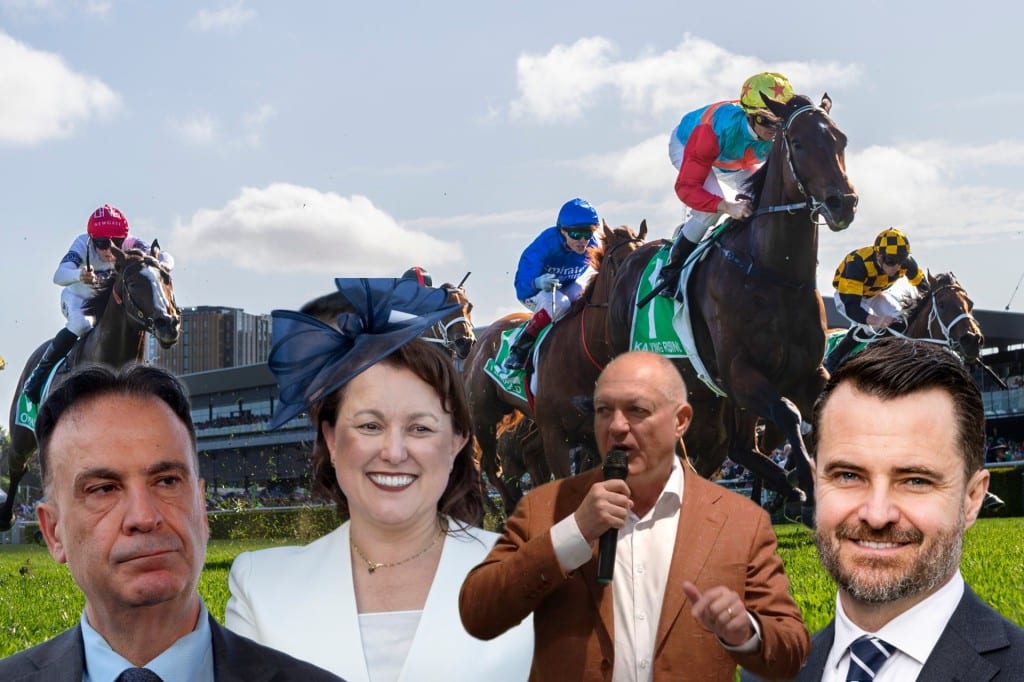
Comment: The contrasts in the time it takes to appoint a CEO of an Australian racing body are remarkable.
At Racing Queensland, Lachlan Murray has been acting as CEO for over 18 months and is expected to continue until at least the end of the year, with the recruitment process to find Jason Scott’s replacement having only just begun.
In WA, where Ian Edwards is on his way out, the government isn’t expecting to fill the RWWA chief executive job until at least August next year, having given Mike Saunders the interim gig until the end of July 2027.
The last time Racing Victoria filled the top job in 2024, it took four months to name Aaron Morrison, officially, as the man to replace Andrew Jones.
At Tasracing, Andrew Jenkins was acting CEO for 13 months before getting the role permanently in early 2023, while in South Australia, Nick Bawden officially got the CEO job in December 2024, two months after his predecessor Vaughn Lynch said he was leaving.
In New South Wales, there were four days — a long weekend in some parts of the country — between Peter V’landys confirming his departure and his long-term Racing NSW COO and interim CEO Graeme Hinton being anointed his successor.
This was a baton change that a Jamaican relay team would have been proud of, such was its speed.
Hinton was an overwhelming favourite to secure one of the most powerful roles in Australian racing, but the expectation was that there would be a process, even if it ended with the man who had held the interim role since V’landys ‘try before you buy’ long-service secondment to rugby league.
Hinton’s ‘job interview’ started in late May, the day V’landys confirmed he would take up what was supposed to be a temporary role. He set about a more ‘approachable’ style of leadership. He came together with Morrison for a senate committee hearing in Canberra regarding pending gambling changes.
Hinton’s performance that day was strong, certainly compared to Racing Australia CEO Paul Eriksson, and it was clear that he had a strong grasp of the key issues at play.
Given he has spent over a decade as the hard-working offsider to the most prominent racing official in the country, there was never any doubt over whether Hinton had the experience to do the job.
The questions, particularly from those who had sought the end of V’landys’ long period in charge, were whether he is too aligned with the strategies and methods of his former boss.
But while it may be easy to categorise the desire for change as personality driven, the misgivings raised by critics about the way Racing NSW has been run have had as much to do with the process and the system as with the people involved.
The Rosehill debate may have started out about the future of a metropolitan racecourse, but it quickly evolved to become an examination of Racing NSW under V’landys.
While it resolved little, it revealed a lot about the gaps that exist between some participants and those who run the industry in New South Wales.
It also revealed that the Thoroughbred Racing Act, first passed in the 1990s, was no longer fit to govern the operations of Racing NSW.
Designed for a regulator, it did not evolve to meet the needs of an enriched commercial industry powerhouse.
The Rosehill Committee recognised this and recommended a review. Racing Minister David Harris agreed to a review and Brad Hazzard was tasked with examining whether the Act was fit for purpose.
Hazzard spent 10 months compiling the report before submitting it in late July. Over two months later, it is still sitting with state cabinet, with Harris unwilling to discuss what it might involve.
There was an expectation, perhaps unrealistic, that the racing minister and the Racing NSW board might wait until the Hazzard report’s release before confirming who would be the new CEO.
Seemingly aware that a power vacuum would be a threat to continuity, Racing NSW’s board met and gave Hinton a unanimous thumbs-up, with Monday’s media release coming before the gushing farewells to V’landys had even stopped.
Critics will question the governance processes of a board that gave such speedy assent to an appointment to such a crucial position. As mentioned, the speed of the decision is certainly in contrast to racing bodies elsewhere. You’d think there was a sweet spot somewhere between four days and 18 months.
The racing minister waved it on through, with Harris saying he welcomed the appointment of Hinton and that he “brings valued experience and expertise to the role, and I look forward to working with him.”
Opposition racing minister Dave Layzell also praised Hinton.
That may all be true, but was there a point where the Minister could have asked, ‘what’s the haste?’
Hinton wasn’t going anywhere and there is merit in Racing NSW taking a breath before pressing on with an appointment, especially given he won’t officially step in until December 1. For her part, Racing NSW chair Saranne Cooke said it had been a long-term succession plan and the board had consulted industry.
There is a sense that an impending release of the Hazzard report might have accelerated the process, although it is unlikely anything will be changed in a legislative sense until after the state election in March.
Stepping into V’landys’ shoes will be far from easy for Hinton. While all senior executive roles in racing are political, the nature of the Racing NSW role and the profile of his predecessor make this one acutely so.
Those agitating for reform won’t be pleased by either the outcome or the process which has occurred. They will have to maintain the faith that the Hazzard review will deliver the systemic changes they believe are crucial to the integrity and governance of the industry.
The events of the past three years in NSW racing made it clear change is required. That change was never about the person in the chief executive’s chair, it was about the way power was distributed by the Act.
Hinton’s challenge is to show he has both the strength of his own convictions and the vision to see how racing and Racing NSW must evolve to meet future challenges, including the likelihood of greater legislative guardrails.
Author

Related Articles
Racing NSW board unanimous in appointing Graeme Hinton as new chief executive
Graeme Hinton will formally take over as Racing NSW chief executive on December 1, the day after Peter V’landys ends his 22-year tenure. Racing NSW says it consulted industry stakeholders before confirming Hinton as its next executive leader.
Craig Baker to join NZTR in key racing role
Craig Baker will join New Zealand Thoroughbred Racing on October 27 as NZTR works through racing plans and wider industry changes, with Charlotte Mills’ advisory contract set to end.
Gallery – Stars of Saturday (and Sunday)
All the action from a bumper weekend of stakes racing at Caulfield and Rosehill from the perspective of the photographers from The Image Is Everything.
