
Federal government tables long-awaited response to gambling reform report
Nearly 1050 days after the release of the You Win Some, You Lose More report, the Albanese government has finally tabled a response, confirming further details of its gambling reform agenda.
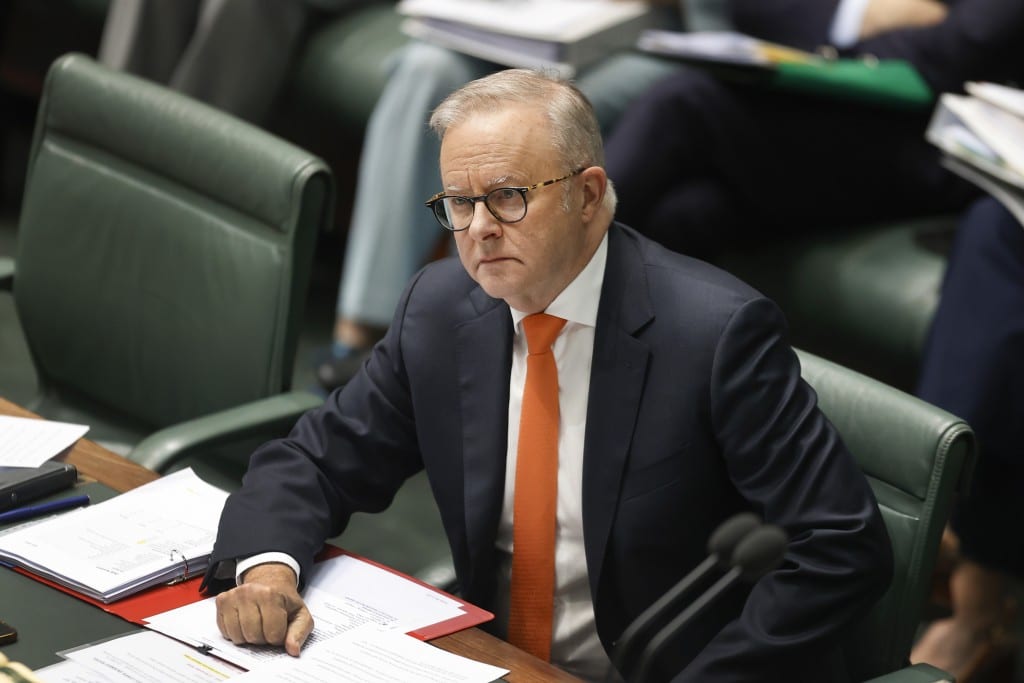
The Albanese government has finally issued its response to the You Win Some, You Lose More recommendations, tabling a nine-page document before parliament that outlines its intended gambling reforms, three years after the bipartisan report was released.
The extensive You Win Some, You Lose More report, chaired by the late Labour MP Peta Murphy, identified 31 recommendations for consideration, having found online gambling to be a significant and escalating public health issue.
After a 1049-day delay in actioning the recommendations, Prime Minister Anthony Albanese outlined his intended reforms on April 2, putting forward a suite of changes to the Interactive Gambling Act, which will come into force on January 1 and focus on wagering advertising.
New rules will prohibit gambling advertising during live sport on broadcast television between 6am and 8.30pm, ban wagering promotions in sports venues and on uniforms, restrict broadcast advertising volumes and outlaw the use of celebrities and odds promotion.
Online wagering advertising will also be banned unless strict “triple‑lock” age‑verification safeguards are met.
The report response confirmed that racing media and publications will be exempt from the rules.
“Consistent with the Online Gambling Inquiry, dedicated racing channels, programs, and racetracks (e.g. racing.com, racing programs and telecasts) will be exempt from the proposed reforms in recognition of the intrinsic link between racing and wagering activities,” the report said.
“Dedicated betting websites and venues (e.g. TAB outlets) will also be exempt.”
While that will be a relief for racing authorities, the overall impact on revenue, estimated at around $60 million a year, will be felt in racing funding via reduced Point Of Consumption Tax receipts from state governments.
The federal government also committed to boosting enforcement against illegal offshore gambling, including expanded website blocking, greater cooperation with banks to disrupt payment flows and stronger obligations on digital platforms to remove illegal gambling content.
Another key focus is strengthening BetStop, the national self‑exclusion register, through increased promotion of the service, enhanced compliance and user protections, and exploring the possibility of embedding BetStop information in mandatory gambling advertising warnings.
The response also targets emerging and harmful products operating in regulatory grey areas.
Online Keno, which the government describes as highly repetitive and high-risk, will be banned entirely.
Reforms are also planned to address foreign‑matched lotteries and “trade promotion” lottery schemes linked to paid-reward clubs, which currently fall outside federal consumer protections.
Additional measures include expanding financial counselling services for people affected by gambling harm, rolling out a national public awareness campaign aimed at high‑risk groups, and criminalising match‑fixing offences consistently across Australia to protect the integrity of sport.
The response highlighted that some recommendations fall under state and territory jurisdiction, and other governments have been urged to act in parallel.
The publication of the response on the same day as the federal government budget has been viewed as a cynical exercise by those seeking greater reforms, including the comprehensive gambling ban recommended by the You Win Some, You Lose More report.
Author

Related Articles
The 100 – List reveals punters barred by Tabcorp
Tabcorp has banned 33 punters for accessing its services in the past 12 months, taking its total list of excluded punters to 100, as it faces regulatory scrutiny over its anti-money laundering compliance.

McLachlan’s grand plan for Tabcorp has its ‘punch-in-the-mouth’ moment
Gillon McLachlan’s honeymoon as chief executive of Tabcorp has ended. With AUSTRAC having commenced an investigation into the wagering giant, his well-advanced plans for the company’s future may have to change course. The impacts will be felt well beyond the walls of the publicly listed company, writes Bren O’Brien.

‘Clear and obvious error’ – Punter denied six-figure payment on winning bets
An Australian punter who was denied a windfall of more than $110,000 and subsequently had his account closed has failed in a bid to get a key industry regulator to get the bookmaker to stand by the winning bets.