
Member Exclusive Member Exclusive Wagering and racing’s political vulnerabilities laid bare in a high-stakes Senate hearing
The wagering industry headed to Canberra this week hoping for clarity but instead walked away with a black eye. Bren O’Brien looks at what the likely path forward is for advertising reform, and the impact on the racing industry, given the events of the Senate inquiry.
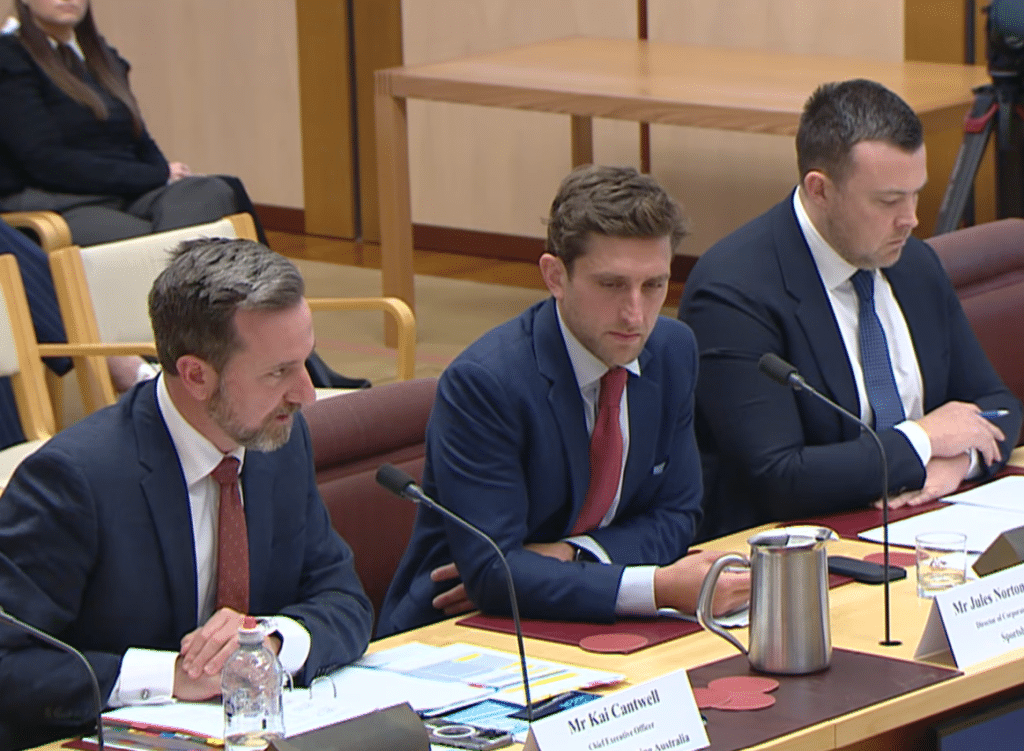
Analysis: It would be easier to argue that representatives of the wagering and racing industry who fronted up at the Senate Committee inquiry into the federal government’s proposed changes to wagering advertising were on a hiding to nothing.
The intention from both parties was to provide broad support, with some exceptions, for the amendments put forward by Communications Minister Anika Wells to parliament last month to a couple of key pieces of gambling-related legislation.
However, it ended up shining a searchlight into the darker corners of an industry with skeletons in the closet, creating even more political pressure for greater reforms.
Those seeking greater changes, headed by The Greens and crossbench Senator David Pocock, used the platform to highlight their case for a national regulator and a ban on any form of generosity, showcasing shocking examples of problem behaviour from gamblers and problematic behaviour from wagering operators.
The testimony of former NRL player Luke Bateman was compelling and grabbed national headlines. Football players being offered illicit substances by bookmakers is indefensible, regardless of how historic the allegations may be.
The reform brigade was successfully able to form a public argument that if this is the behaviour of the current industry, how can they be trusted not to advertise their services to our kids? They see the only way of achieving compliance as a comprehensive ban on all wagering advertising, as outlined in the You Win Some, You Lose More report.
Senators Hanson-Young and Pocock prosecuted that case with vigour, with the former particularly strident in her critique of the industry, describing its social licence as “hanging by a thread”.
But, while it was a black eye for wagering, and by extension racing, the upshot is how this inquiry may shape the future path of wagering reform in Australia.
That can be best measured by looking at the way in which the Coalition senators engaged with the Committee. Should the government get its support, then the opinions of The Greens and independent senators won’t matter, and the bill will pass.
While the questioning from the likes of Liberal Senator Dean Smith was quite measured, fellow Liberal Sarah Henderson, who appeared via phone, was quite strong in her focus on the industry’s behaviour, particularly around the use of what she termed inducements.
She also asked whether wagering operators would be comfortable with mandatory setting of deposit limits, which had not been previously canvassed and is seen by both the racing and wagering industries as disastrous to their bottom line.
The Coalition has not been clear about what its specific policy around wagering reform may be but has used the tension around the debate to ramp up pressure on the government and perpetuate a view that the government, especially Prime Minister Anthony Albanese, is too close to the industries – wagering, sport and media – that it is seeking to regulate.
Henderson’s comments do point to the fact that the use of generosities, which Racing Victoria chief executive Aaron Morrison admitted contributes around 30 per cent to racing’s turnover, may come on the political agenda in the coming months.
There seemed less of an appetite from the Coalition for the possibility of a national regulator, something that is not supported by either the racing industry or the wagering industry, although the revelations during the inquiry may change that.
There is political mileage to be gained by beating up on bookies and the arguments put forward that the industry has changed and is doing a better job of regulating itself don’t appear to hold political weight in Canberra.
The other aspect which both the racing industry and the wagering industry need to learn from this is that the argument that poker machines do more damage holds little relevance in this context.
Firstly, politicians do not make the same distinction that the industry does. Secondly, it is a pointless argument in this context anyway, as this is a discussion about advertising.
That’s crucial as advertising is one of the few aspects of the wagering industry that the federal government can regulate (along with financial crimes). The rest is left to the states.
Poker machines, the domain of the states, can not advertise in the same way, so there is no context for the federal parliament to hold any such similar inquiries.
Further on this, both industries would do well to ensure they are on the same page of statistics as those they are appearing before.
The racing representatives relied on national gambling turnover figures to say that racing and sports wagering only contributed 10 per cent of losses in Australia.
The federal government’s own impact analysis, released in April, indicated that when it came to gambling losses, a different measure from turnover, the proportion was actually 26 per cent and had grown from 10 per cent in 2011/12.
Pokies, a high-frequency product, naturally generate more turnover, but the impact analysis said they were responsible for 62 per cent of gambling losses, not near 90 per cent.
Given the political discussion was framed in the context of gambling harm, not gambling activity, then Senator Pocock rightly shot down Racing Australia chief executive Paul Eriksson’s 10 per cent assertion.
While it was at least helpful to see Racing Australia, Racing Victoria, Racing NSW and Thoroughbred Breeders Australia executives side by side presenting a united racing front, there is still considerable work to be done on a comprehensive response on this issue from the thoroughbred industry.
Unfortunately, the timing of their testimony, soon after the explosive allegations raised in the morning, meant that instead of presenting a clear and cogent case why racing as an industry provided huge economic and social benefits to society, there were lots of furrowed brows and use of words like “abhorrent”.
That circumstance is no fault of those involved, but a reminder of how politically explosive gambling reform can be, and that racing’s close alliance with that industry comes at a cost in that context.
As for the broader wagering reform debate, there is an argument from those both inside and outside of the wagering industry that if it had given more ground on advertising restrictions, then this whole inquiry situation may have been avoided.
In the words of one industry insider: “That bloody-mindedness on the only thing the community cares about – namely watching the NRL or the AFL without seeing a gambling ad – has brought 100 other unpleasant items into sharp relief.”
It may be more nuanced than that, but the events of the past couple of days should certainly be a realisation from both the wagering and racing industries that any public political discussion of this issue is going to be used for its full political value by those who oppose them.
While the Australian wagering industry insists its house is in order, it is far from spotless, and while that persists, then there will always be political value in dragging its worst behaviour into the spotlight again.
Author

Related Articles
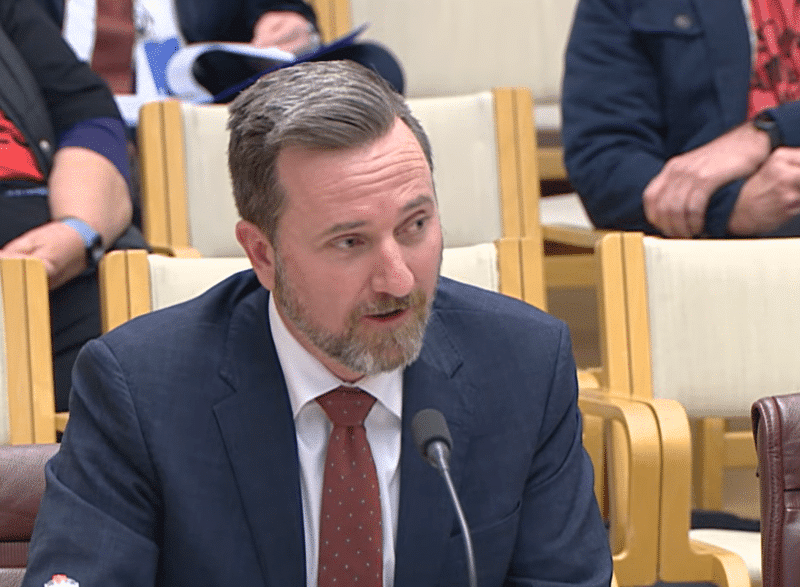
Senate spotlight lands on wagering giants, as conduct and reform face parliamentary scrutiny
Sportsbet and Tabcorp have pushed back against explosive allegations about industry conduct aired at a Senate inquiry, as the wagering industry warns proposed advertising reforms could have unintended consequences of moving punters offshore and damaging related industries such as racing.
Prediction markets test Australia’s gambling and financial regulation
As prediction markets reshape the global wagering and investment landscape, an Australian corporate regulator has moved to warn about the risks of using offshore platforms beyond domestic laws and oversight.
Fast code class action heads to trial on Monday
The Supreme Court will determine if Sportsbet has to refund thousands of bets placed via its in-play Fast Code service in a class action case set to begin on Monday.
