
Cox’s plate full, with racing at the centre of VRC plans
Vin Cox will assume the coveted Victoria Racing Club chair role in December, emerging from interstate and a deep racing background rather than the office towers of Melbourne’s Collins Street, writes Tim Rowe.
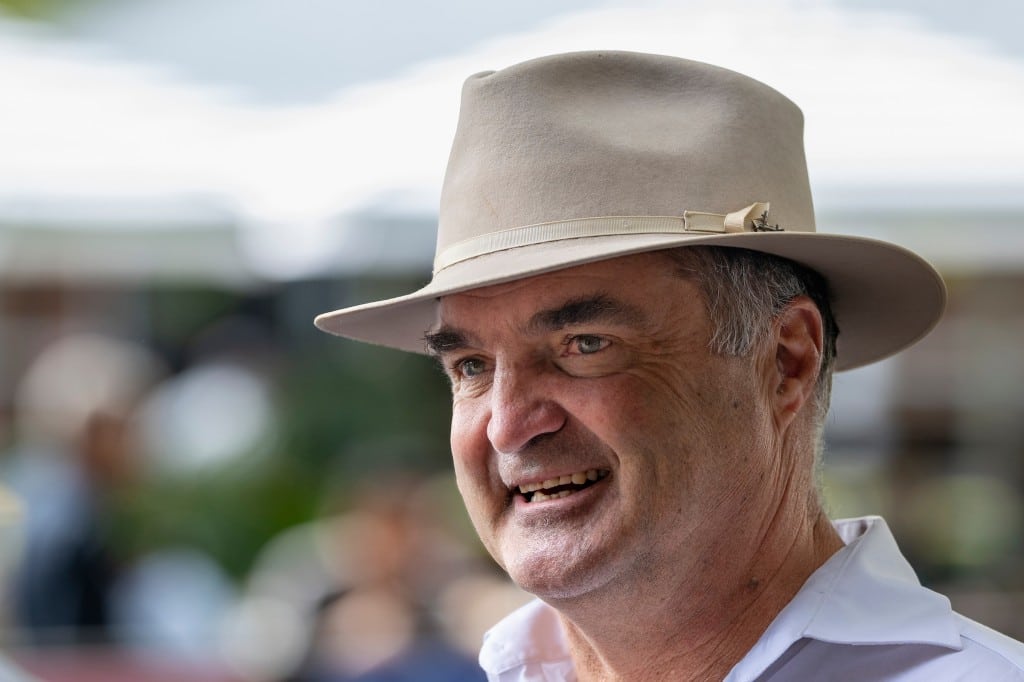
In global thoroughbred circles, Vin Cox’s name resonates thanks to the reputation he has forged and the numerous high-profile industry roles he’s held.
Magic Millions, Godolphin Australia and Yulong, names synonymous with domestic and international racing and breeding, have been Cox’s professional homes over the past 15 years, making him one of the more recognisable faces inside the thoroughbred bubble.
For the past six years, Cox has lent his knowledge and skills to the Victoria Racing Club, joining the board in 2020 at the height of the pandemic, to help oversee the management at Flemington racecourse and act as a custodian of the Melbourne Cup.
It hasn’t been the easiest of times for the famous club.
With the demands of full-time executive employment behind him, Cox is about to take on more responsibilities at the VRC, having been named as chairman-elect.
It was confirmed this week that he will replace Melburnian Neil Wilson, who will step down from the VRC at the club’s annual general meeting on December 15, allowing the incumbent one final view of the Melbourne Cup Carnival from the chairman’s seat high up in Flemington’s Club Stand.
Wilson, who had previously been the club’s chief executive, joined the VRC board in 2012 and also acted as its honorary treasurer before assuming the chair’s role in 2020.
The appointment of Cox, a Gold Coast-based, 30-year VRC member, will push his name outside the racing bubble and into Melbourne’s ‘society’ set where the boardrooms of racing, AFL and the business of Collins Street regularly intersect.
It’s a long way from Mudgee, an agricultural town in the NSW Central West known for its wineries, country racing and rugby league, where Cox grew up around vineyards and horses.
He follows in the footsteps of names such as Amanda Elliott (2016-2020), Andrew Ramsden (1998-2003), David Bourke (1991-1998), Sir Alec Creswick (1969-1977) and Sir Chester Manifold (1951-1962).
Rather than focusing on what’s ahead for the club, Cox was keen to acknowledge the VRC under the guidance of Wilson while predicting a vastly improved financial position for the club and its more than 35,000 members.
The VRC reported a net loss of $7.2 million in 2024/25.
“Having come onto the board at the height of Covid, when we couldn’t sell tickets, and we’d borrowed a lot of money to build the Club Stand, under Neil Wilson’s guidance primarily, to be in the position that we’re in today is just fantastic,” Cox told The Straight.
“And I’m very fortunate to be at the back end of some very bold decisions that our board made during that journey, and to put us in the position that we’re in now.”
What Cox brings to the top of the board table as chairman will be interesting.
He serves on the VRC’s Racing Sub-Committee and he also chairs its Masterplan Committee.
His racing knowledge is important, particularly with the VRC’s chief executive Kylie Rogers not coming from a racing background, and conceding she is still on a learning curve.
Speculation about the potential merger between two or all three of Victoria’s metropolitan race clubs, the VRC, Melbourne Racing Club and Moonee Valley Racing Club, continues in the background.
Proponents argue it would be a major cost-saver to the industry; opponents aren’t as convinced that what’s on the spreadsheets would be the reality.
Cox wouldn’t be drawn on such scenarios.
“That’s something I wouldn’t really want to comment on at this stage. I’m not chair (yet),” he said.
Despite batting away the question, Cox has shown in the past he isn’t afraid to enter racing politics, being a vocal critic of plans by the Australian Turf Club to sell Rosehill racecourse.
ATC members voted against the Peter McGauran-led plan to offload the Sydney track, but the fallout from the bitter debate will be felt by the club for many years to come.
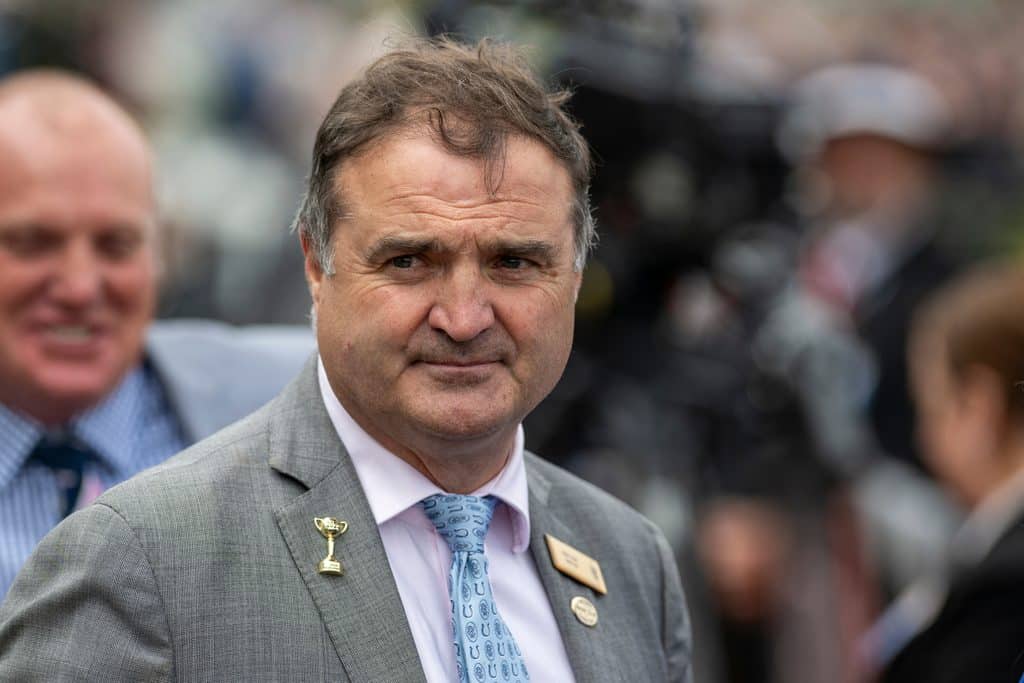
The Pattern is another issue that Cox, through his various roles in the breeding and bloodstock space, has had his say on.
As chair of the VRC, he will also have an impact with the Victoria Derby in danger of losing its Group 1 status, prompting the club last month to inject an immediate $1 million into prize money for the three-year-old Classic.
“The VRC is very supportive of the Pattern and its primacy in racing and bloodstock the world over,” he said.
“We invest in legacy racing significantly, and it’s something we regard very highly.”
Asked specifically about the Derby, he said: “The Victoria Derby is one of the great races on the Australian calendar. It is regarded widely as the premier racing day on the Australian racing calendar, and its status as a Group 1 race is hugely important to the VRC and Racing Victoria, and I would say the national Pattern.
“So, we want to see it maintain its Group 1 status, and we’ll do everything in our power to ensure that it lifts its status and maintains that primacy.”
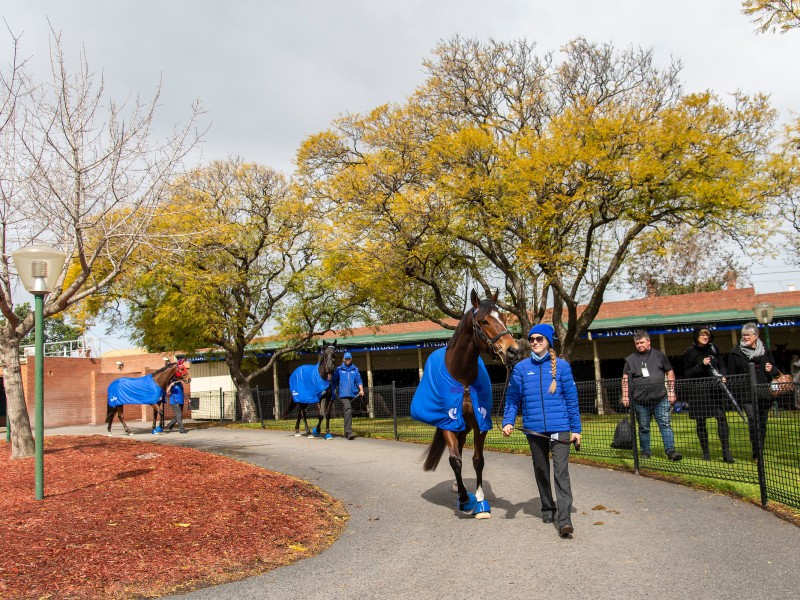
Under Cox’s watch, training at Flemington – Melbourne’s only metropolitan stables – will be retained.
“It’s a very important part of what we do for the industry, and it’s part of the fabric of Flemington,” he said.
“Working with Racing Victoria, we look forward to continuing that at Flemington. Having that centre within the confines of the city is great. It’s good for the club, it’s good for racing.
“And it’s a training facility that is world-class, and certainly highly regarded by the incumbent trainers at Flemington.”
For all that, and the VRC’s role in racing for 52 weeks a year, the club is judged almost wholly and solely on Melbourne Cup week.
“In a lot of ways it is, and it’s a responsibility that we as a board and the VRC guard very, very dear, and as we should,” Cox said.
“The eyes that are on our carnival is a great platform for us to promote a great industry generally, but to also represent Victoria and Australia.
“It’s obviously one of the iconic events on the Australian national calendar.”
Author
Related Articles
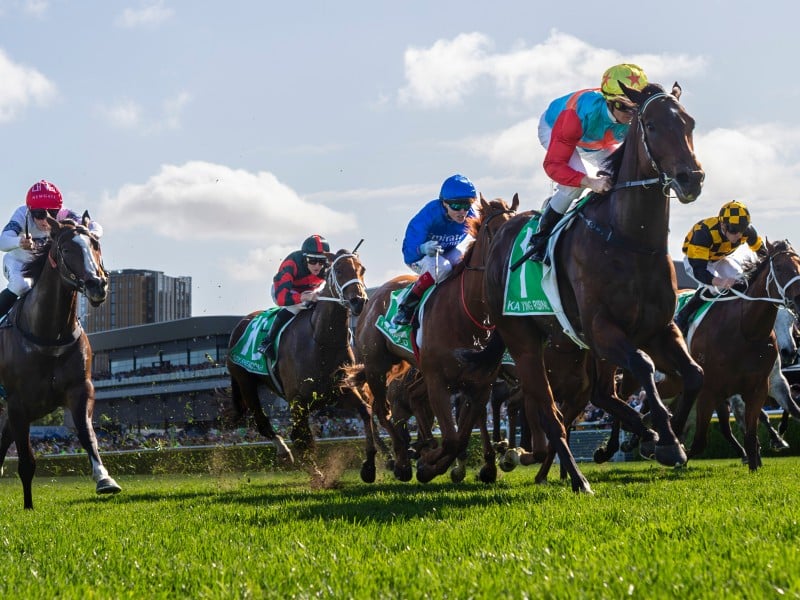
🔒 🔒 The Everest’s new summit – Can the slot model sustain its next phase?
As The Everest approaches its 10th edition, even the most ardent critics of Racing NSW could not deny the success of a one-time “pop-up’ race that has become the Group 1 centrepiece of racing in NSW. But how does the race evolve into its second decade, and will the slot format sustain that industry engagement?
The scope and size of employment in Australia’s thoroughbred industry
Australia’s thoroughbred industry carries considerable political and social weight, contributing not just as a sporting pastime but as a fully fledged industry. But exactly how big is it, and exactly how many people does it employ? We have pulled together the latest national estimates and state-by-state figures.
🔒 🔒 Perth Racing flags profitability challenge despite gains
Perth Racing has reduced its annual loss but remains under pressure to turn stronger revenue, increased activity and major investment into sustainable returns as the WA racing industry awaits the findings of an independent funding and sustainability review.
