
🔒 🔒 The Everest’s new summit – Can the slot model sustain its next phase?
As The Everest approaches its 10th edition, even the most ardent critics of Racing NSW could not deny the success of a one-time “pop-up’ race that has become the Group 1 centrepiece of racing in NSW. But how does the race evolve into its second decade, and will the slot format sustain that industry engagement?
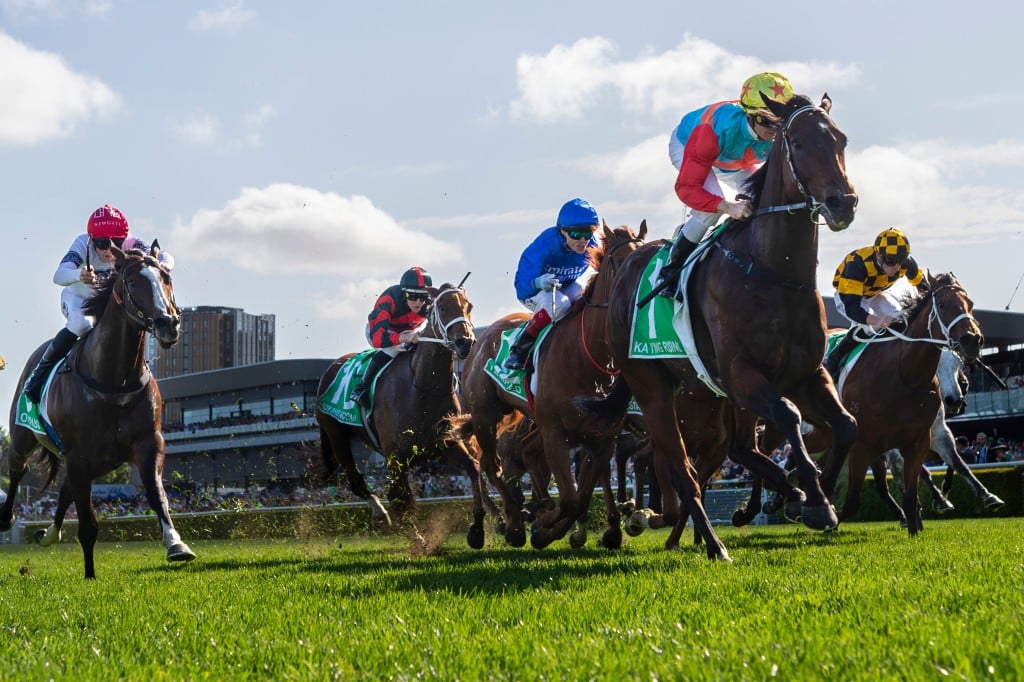
Analysis: When Peter V’landys looked to the United States and found a slot format he believed could reinvent the Sydney spring, he found the greatest disruption to Australian racing since the Golden Slipper.
Leaving arguments about the pattern aside, with the industry’s own significant investment and a healthy contribution from slot holders wanting to be part of the experience, V’landys and his team found an innovation which has worked on almost every level.
The novelty about The Everest wasn’t necessarily the prize money, although that helped; it was the slot concept.
That created ongoing discussion about the race in the preceding months, giving slot holders time in the sun as well as a shot at the prize.
The negotiations around the slots became news in themselves, helping garner publicity for a fledgling race driven by grand ambitions.
As the novelty recedes, the longer-term test is whether the model continues to offer enough value to keep slot holders investing and horse owners willing to negotiate with them—and whether the allocation of slot rights supports that.
While the presence of a dominant favourite in Ka Ying Rising has had an impact – more on that later – the negotiation process has now become largely condensed into the final two weeks before the race.
In the last three days, five runners in the 12-horse field have been confirmed in a flurry of deals done.
Late deals and short-priced favourites do not, by themselves, establish that the model is weakening. They do sharpen the question of what makes participation worthwhile for holders without a leading winning chance.
The impact of Ka Ying Rising only sharpens that challenge. The Australian Turf Club (ATC), which is currently under Racing NSW administration, has leased its slot for two years to the Hong Kong Jockey Club.
One upside for the ATC, which other slot holders do not have, is the additional revenue Ka Ying Rising’s presence generated via World Pool contributions.
The presence of the world’s highest-rated horse has undoubtedly boosted the race’s global profile, but it has left the other slot holders looking for horses likely to run for second.
This year, given how dominant Godolphin’s slot selection Tempted was in winning her lead-up race, the other 10 horses could be reasonably seen as competing for third. On the current betting market, that pair represent 94 per cent in terms of probability.
The threat that a totally dominant sprinter could pose to The Everest’s slot concept was raised early in its journey.
The Everest concept took flight less than five years after Black Caviar’s unbeaten 25-start career and while Winx was compiling 33 consecutive wins, albeit over longer distances.
Had a Ka Ying Rising emerged in the early stages of The Everest, it could have damaged the slot holders’ motivation to continue.
That is less of a threat now given the race’s established presence, but you wouldn’t blame the other slot holders for feeling a little miffed that the ATC got the running on this one.
What would have been genuinely fascinating would have been a silent auction for slot holders to bid for the right to negotiate on Ka Ying Rising. That way, they could put their money where their mouth is.
For a new slot holder like Mulberry Racing, the timing has proven unfortunate when it comes to finding a genuine winning chance. Last year, it chose its own horse Jedibeel, who finished 12th, while this year it has gone with Savvy Hallie, currently a $51 shot.
Alongside Mulberry, Godolphin and the ATC, the 2026 slot-holder roster includes Inglis; Newgate and GPI Racing; Chris Waller Racing; Coolmore; Fairway Thoroughbreds; James Harron; Max Whitby, Neil Werrett, Col Madden and Steve McCann; TAB; and Yulong Investments.
That list includes highly involved racing, wagering and breeding individuals and companies.
Racing NSW set the licence fee at $700,000 plus GST in its 2023 conditions. Twelve fees at that level amount to $8.4 million before GST, against the race’s $20 million purse.
In 2025, it was reported that Racing NSW had granted the original slot holders rights for life. Yet the slot relinquished by The Star was offered for a minimum three years through an expression-of-interest campaign.
The Everest’s published prize money schedule awards $7 million to first, $2.9 million to second and $2 million to third. Each runner finishing seventh to 12th is allocated $700,000. The conditions also list a $250,000 welfare-fund contribution.
That bottom-half allocation matches the $700,000 licence fee before GST. However, a holder’s recovery of the fee depends on its agreement with the horse’s owners. The whole allocation need not flow back to the holder.
The prize money schedule therefore cannot establish the return to a slot holder. The commercial test is what the holder retains under its agreement with the horse’s owners, alongside any promotional value it gains from participating.
While Racing NSW describes the Everest Carnival as the “single biggest contributor of attracting a new and younger audience to racing” in its 2024 strategic plan and describes The Everest and the Golden Eagle as its two most wagered-on races, “by some margin”, those measures of the event’s wider value do not establish the return to an individual slot holder.
But a durable model needs both investment in the licence and a supply of owners willing to accept the terms attached to using it.
Keeping holders willing to pay is one challenge. Making room for new participants who could bring more to the race is another.
Multi-year commitments gave Racing NSW an answer to an important problem when The Everest was new: confidence that holders would keep paying beyond a single running.
V’landys contrasted that approach with the US Pegasus race in a 2023 interview, arguing that one-year slot commitments had left that event struggling.
If holders keep paying, promoting the race and securing competitive runners, there is a strong argument for keeping the arrangements in place. Transfers and leases could let newcomers in without displacing existing investors.
But if a newcomer could bring more to the race than an existing holder, would transfers and leases be enough to give it a chance? Periodically reopening slots could create that opportunity. Changing holders would only be worthwhile, however, if it brought more investment, stronger promotion or better access to competitive horses—not simply a different name on the slot.
Attracting brands from outside racing would show the event’s appeal beyond the industry. But being new to racing would not, on its own, make a bidder a better slot holder.
Racing NSW has already asked prospective holders what they would bring to the race. When it offered The Star’s vacated slot in 2025, it invited offers that would benefit “the growth and engagement of The TAB Everest and thoroughbred racing generally”.
That is the question for The Everest’s next decade: not whether the slot concept is still novel, but whether the holders continue to earn their place. Keeping them makes sense as long as they deliver. Reopening slots makes sense only if someone else can bring more.
Author

Related Articles
The scope and size of employment in Australia’s thoroughbred industry
Australia’s thoroughbred industry carries considerable political and social weight, contributing not just as a sporting pastime but as a fully fledged industry. But exactly how big is it, and exactly how many people does it employ? We have pulled together the latest national estimates and state-by-state figures.
🔒 🔒 Perth Racing flags profitability challenge despite gains
Perth Racing has reduced its annual loss but remains under pressure to turn stronger revenue, increased activity and major investment into sustainable returns as the WA racing industry awaits the findings of an independent funding and sustainability review.
New Zealand equine safety initiative targets earlier injury-risk detection
The New Zealand Equine Safety Initiative will combine development, training and veterinary records with movement data and blood research, aiming to give breeders, trainers and veterinarians earlier warnings of injury risk.
