
O’Shea’s four-month disqualification reinstated after Racing Appeals Tribunal backs local law
John O’Shea’s four-month disqualification, imposed by Racing NSW stewards after his verbal altercation with Racing NSW vets, has been effectively reinstated after the Racing Appeals Tribunal backed the regulator’s right to charge him under a local law of racing.
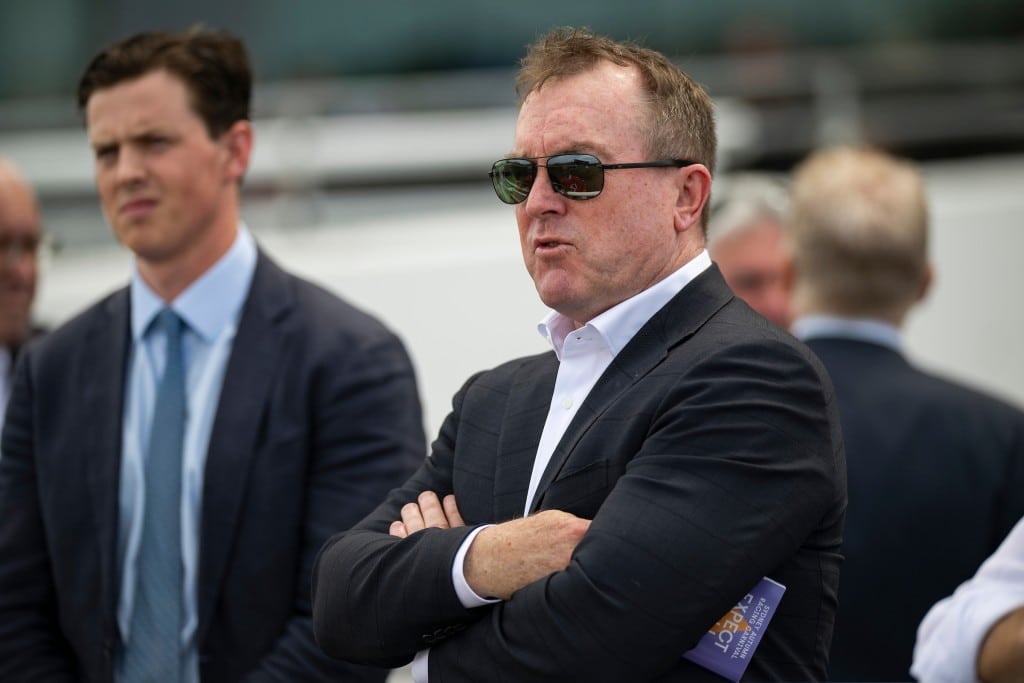
A complex legal case has seen a four-month disqualification re-imposed on trainer John O’Shea over a verbal altercation with Racing NSW vets, with the Racing Appeals Tribunal determining the local law he was charged under was a valid rule.
The matter stemmed from a disagreement between O’Shea and members of Racing NSW’s veterinary team at Rosehill races on February 21 after Bev’s Nine, trained by O’Shea and Tom Charlton, was a late scratching.
O’Shea had what was described as an “animated and aggressive” interaction with Racing NSW vet Claire Moore, which prompted the intervention of Dr Carly Garling.
A complaint was subsequently made about O’Shea’s interactions with Drs Moore and Garling, prompting a stewards inquiry, and O’Shea was charged and then disqualified for four months on March 17.
O’Shea had initially had his sanction reduced to two months on March 31, with his legal team having successfully argued at an initial appeal that Racing NSW’s local rule under which he was charged and initially disqualified was in conflict with the Australian Rules of Racing.
However, that ruling by the Appeal Panel of Racing NSW has since been overturned by a decision of Geoffrey Bellew at the Racing Appeals Tribunal, handed down on Monday, which determined that the local rule can stand.
“What the respondent has done is make a local rule, as it is empowered to do, which is operative within its own jurisdiction. That local rule does no more than prescribe that AR 228(c) is an offence to which a mandatory disqualification shall apply,” he said.
Bellew also considered whether Local Rule 108(5) was consistent with AR 283, which proscribes penalties for offences, but he found that “the provisions are directed towards entirely different rules, and thus entirely different conduct”.
“They are clearly capable of standing together, and effect can be given to both,” he said.
Bellew also determined that the local rule only permitted punishment in the form of disqualification, not suspension or fine, while he did accept that special circumstances had been established that would allow him to reduce the period of disqualification from the mandated six months.
The other issue he considered was the appropriate penalty. In doing this, he considered not only O’Shea’s guilty plea and his assistance to stewards but the manner of the offences.
“References to the appellant having been aggressive (which, by his pleas, he accepts) render this offending a great deal more serious than simply ‘mouthing off’,” he said.
“Dr Garling stated that the appellant’s conduct made her feel ‘unsafe’, ‘intimidated’, and ‘uncomfortable’. She described feeling ‘discriminated against’ and “abused and belittled in her workplace” by the appellant, whom she said spoke in an ‘angry, aggressive, hostile and degrading’ tone.
“Dr Moore found the appellant’s conduct ‘threatening’. There is no reason to reject those descriptions of the appellant’s behaviour.”
Bellew accepted the evidence offered by Ron Quinton and Peter Snowden as to the content of the conversation between O’Shea and the two vets, but said “the particulars describe an incident of somewhat greater gravity”.
“Moreover, neither Mr Quinton nor Mr Snowden are in a position to challenge the subjective reactions of Dr Garling and Dr Moore which remain important,” he said.
Bellew described O’Shea as “reacting in a generally offensive and entirely inappropriate fashion to a decision with which he was displeased”.
He acknowledged that O’Shea’s actions subsequent to the confrontation, including apologies issued to the two Racing NSW vets, have shown remorse.
He received four months for each offence, with the disqualifications to be served concurrently.
O’Shea has been stood down since March 17, meaning, unless there is further legal appeal, he will be unable to apply for his trainers’ licence to be returned until at least July 17.
Author

Related Articles
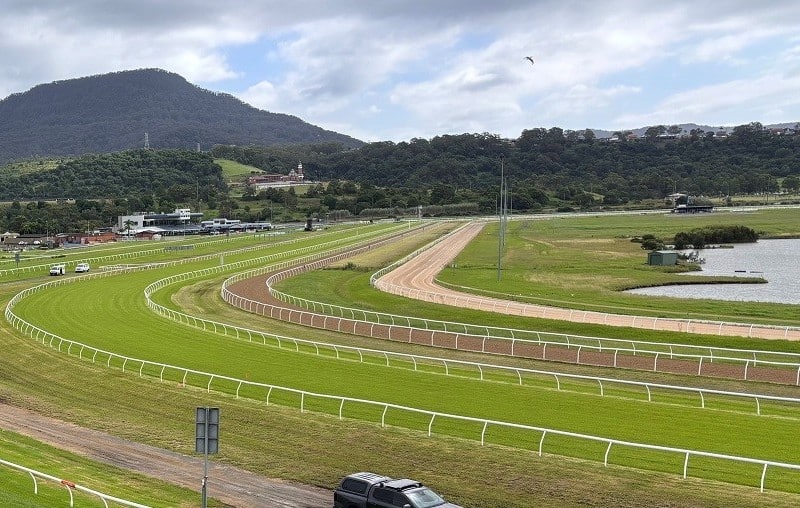
Illawarra Grange launch signals potential wet-weather shift for NSW racing
A new $8 million inner track at Kembla Grange is expected to reshape programming across NSW’s South Coast by reducing washouts and strengthening training and racing capacity in all conditions.
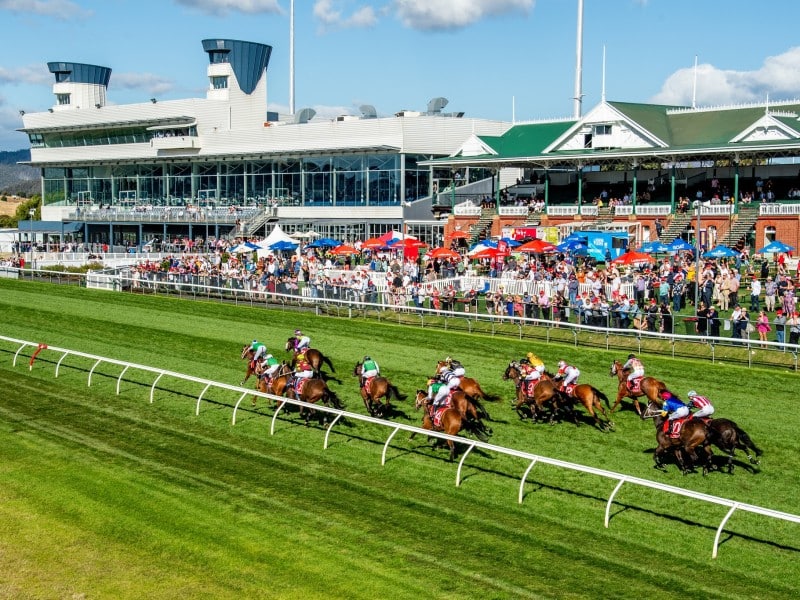
Barrier blunder: spreadsheet error led to Hobart Cup shortfall
A review of the circumstances which saw the Hobart Cup run 38 metres short of its advertised distance has found a litany of errors led to the blunder, but cleared the chief steward’s decision to allow the race to proceed despite knowing the barriers were in the wrong position.
Stokes, OTI claim back-to-back SA Derbies
Kiwi import Wigmore caused a major Group 1 upset in the South Australian Derby, giving trainer Phillip Stokes and owners OTI a second-straight win in the Classic.